Michael Tobin
Author Interview - Michael Tobin
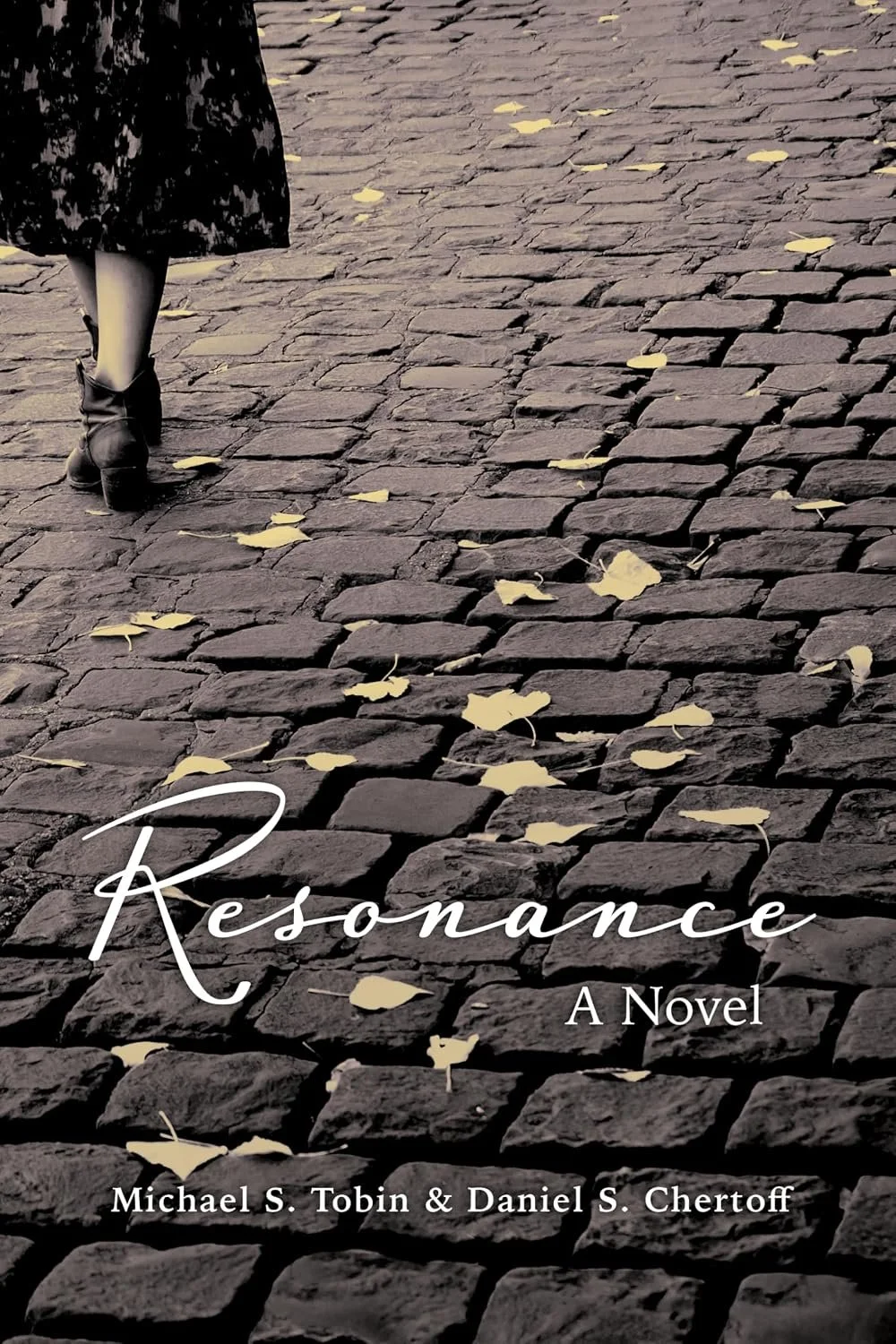
Author of Resonance, A Novel
Paris, 1971.
In the basement of Shakespeare and Company, Sophie Hadad—a restless Wellesley student from Charleston, West Virginia, motherless and adrift—uncovers a forgotten valise. Inside is the diary of Anna Grinberg, a Jewish sculptor born in Warsaw in 1900, orphaned when her father is murdered in a pogrom and her mother dies of the Spanish Flu.
Paris, 1922.
Anna arrives with nothing but her will to create. Her diary is fierce and intimate, alive with the pulse of les années folles—the wild years of Montparnasse, when painters and sculptors crowded the cafés and expatriate writers reinvented English literature. She struggles to carve out her place among Pascin, Bourdelle, and Frenkel; finds allies in Sylvia Beach and Adrienne Monnier; and collides passionately with Ernest Hemingway. Even amid that reckless vitality, she begins to sense the gathering shadow of another storm over Europe.
Half a century later, Sophie bends over Anna’s words and feels them pressing against her own life—exposing her evasions, challenging her defiance, and forcing a reckoning with identity and belonging.
Resonance unfolds in two voices: Anna’s impassioned journal — lyrical and immediate — and Sophie’s sharp, searching contemporary narrative. Together, they tell a story of art, exile, and survival.
Author Interview - Michael Tobin
Author I draw inspiration from:
Hermann Hesse, Siddhartha

Author Interview - Michael Tobin | Author I Draw Inspiration From
Favorite place to read a book:
Where I'm currently writing from—my glass room with a view of the desert
Book character I’d like to be stuck in an elevator with:
Siddhartha, by Hermann Hesse, Character: Siddhartha. If I met him in an elevator—a strange place to meet an enlightened boatsman—I would turn to him and say, "Excuse me, sir, may I ask you a question?" He would nod affirmatively. "Inside you live many lives," I would say, "including a pained and rejected father. He was the last iteration of yourself before you reached peace. Why did you have to suffer the loss of love to reach inner harmony?
The moment I knew I wanted to become an author:
I began reading at a young age and fell in love with books, especially the Oz series. When I was 10, my teacher asked me to write the script for the school play. Why me? I have no idea. Then, when I was 12, my English teacher, Miss Epstein, tasked two other students and me with an open-ended challenge: "Write a story about whatever you wish." I wrote a three-act play about the Warsaw Ghetto Uprising. Her comment to me: "Beautifully written, passionate, filled with heroic characters... but somewhat impractical for a stage production." I had a few hundred actors on stage at one time.
Hardback, paperback, ebook or audiobook:
Hardback: Nostalgic. Shakespeare in paperback doesn't work, takes up too much room on my limited bookshelf space. Paperback: light, easy to carry, and easy to give away. ebook: no weight, I can carry a library in my pocket, I can make notes, but it's not a book. You can't curl up in a chair on a rainy Sunday with your iPhone or Kindle.
The last book I read:
Huckleberry Finn by Mark Twain. I hadn't read it since high school and then I most likely read the Cliff Notes. I loved the moment when Huck sees the humanity in Jim, the runaway slave.

Author Interview - Michael Tobin | The Last Book I Read
Pen & paper or computer:
Computer. I started typing from a young age, and I was an early adopter of the original .dos word processor. I can't read my own handwriting. I don't suffer from writer's block because I trust the unconscious and creative process. Whatever I write—no matter how illiterate it may seem—has sparks of potential within it. It's my job to give it a voice.
Book character I think I’d be best friends with:
I'm in love with two women, Sophie and Anna, the main protagonists of Resonance. Sophie: because she's quirky, brilliant, tortured, and alive. Anna: because she's fierce, creative, determined, tormented, and remains a proud Jewish woman.
If I weren’t an author, I’d be a:
What I have been for 51 years—a psychologist, a wonderful career to understand emotions, suffering, and transformation. I have multiple ideas for novels based on my clinical work.
Favorite decade in fashion history:
The late 60s and early 70s. You could reinvent yourself with a bandana, an old Army uniform, and a striped train engineer's hat.
Place I’d most like to travel:
Paris and Nepal. Paris for the art, culture, food, and beautiful people, and Nepal, because for many years I loved climbing in the Himalayas.
My signature drink:
Gin and tonic, Petite Sirah, and a particular kind of almond milk
Favorite artist:
Leonard Cohen and Rembrandt.
Number one on my bucket list:
Rent an apartment for a month in Paris and write in cafes.
Anything else you'd like to add:
My wife was diagnosed with Alzheimer's in 2018. I rediscovered the writer in me after her diagnosis. Mourning became a catalyst for creativity. I could write a book about the relationship between grief and the creative process.
About Michael S. Tobin:
Michael Tobin
Michael S. Tobin has spent fifty-one years listening to people’s stories and just as long imagining his own. A clinical psychologist and award-winning author, he began writing at twelve with a three-act play on the Warsaw Ghetto—a child’s attempt to understand courage and loss. His memoir won the Silver Prize in the Nonfiction Book Awards, his novel The Veil earned third place in the BookLife Prize, and his essays have been awarded by The Free Press and Letter Review. He writes, he says, “to create characters who live at the edge of beauty and brokenness.”