
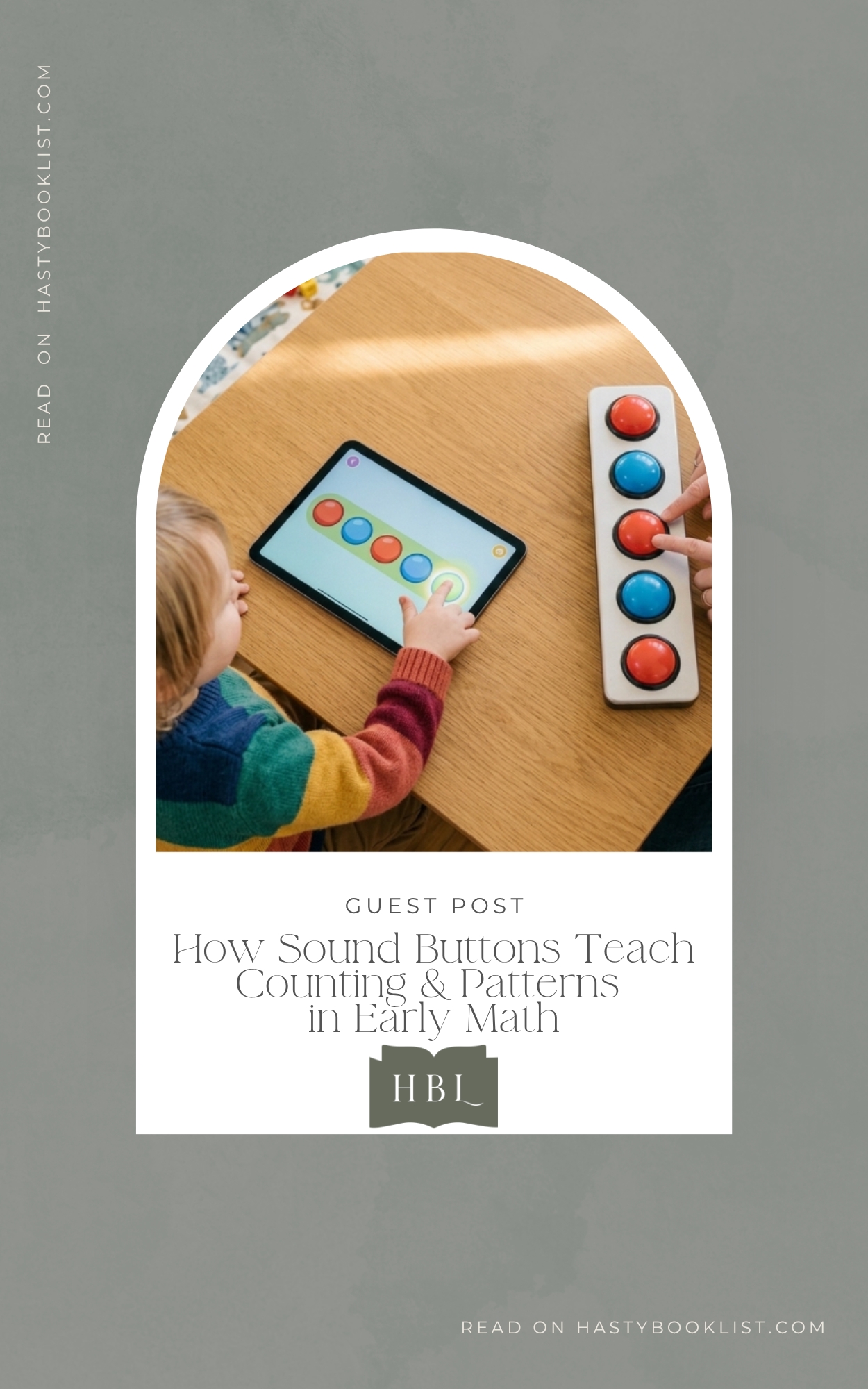
How Sound Buttons Teach Counting and Patterns in Early Math
A child who taps a button five times hears five. That simple link between action, sound, and number is where real counting begins. Many kids can recite one to ten long before they understand what those words mean.
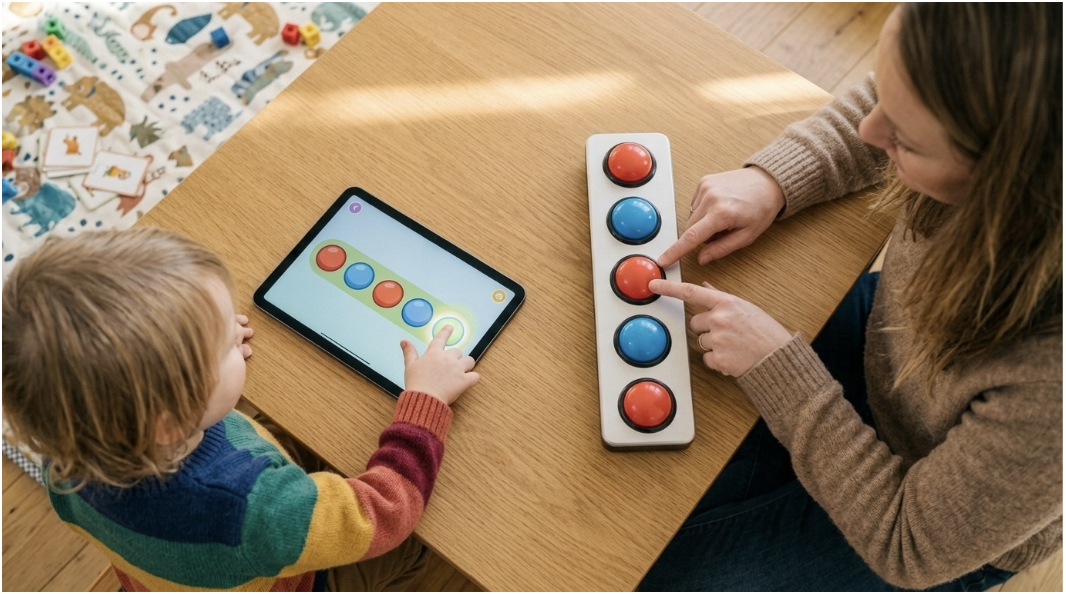
Sound buttons close that gap in a playful way. Each tap equals one count, so numbers stop being just words. Patterns work the same way, with sounds repeating in an order kids can hear and predict. Counting and patterning are two early math skills that shape much of what comes later.
Why Do Sounds Help Young Children Learn to Count?
Counting asks children to match one number word to one object. Teachers can give every tap its own sound with Soundbuttonslab.com, a free site where they grab simple sound buttons for counting and pattern games. That sound makes counting active. Children don’t just watch an adult point at objects. They press, listen, and say numbers aloud, which keeps them focused and engaged.
When every tap makes a sound, children can hear a number grow instead of just seeing it. Hearing gives them a second way to follow along. A child who loses track visually can still follow the sounds.
This matters because one-to-one matching is harder than it looks. Young kids often skip objects or count the same block twice. A button lets them tap once per number, which slows them down in a helpful way.y.
What Does Research Say About Counting and Patterns?
Early math skills matter more than many parents realize. A long-term study led by Bethany Rittle-Johnson followed 517 children from low-income families between ages 4 and 11. The researchers found that counting and pattern knowledge in preschool helped predict fifth-grade math achievement.
That finding puts patterns in a new light. Many adults see patterns as a simple craft activity with colored beads. In reality, spotting and extending patterns builds thinking that supports later math. When a child predicts what comes next, they are reasoning about order and rules. Sound buttons make that reasoning fun, quick, and easy to repeat every day.
Which Counting Games Work Well With Sound Buttons?
The best counting games are short and hands-on. Each one below needs just a button or two and a few minutes. Try these with small groups or at home:
Tap and Count
Ask a child to tap a button a set number of times, like four. Count each tap out loud together. Then switch roles and let the child choose a number to tap. Checking your taps keeps them listening closely.
Count the Sounds
Have kids close their eyes while you tap a button several times. When you stop, they say how many sounds they heard. This builds counting without any visual help. Start with small numbers and slowly add more as they improve.
Count On From a Number
Say a starting number, like three, then tap the button twice. Kids count on from three and land on five. This early addition skill feels natural when each tap represents one more. It is a gentle bridge between counting and addition.
Skip Counting With Beats
Use a soft sound for most taps and a louder sound on every second tap. Kids say the louder numbers out loud, like two, four, and six. The sound pattern helps them hear the rhythm of counting by twos. Later, try every third or fifth tap.
How Can Sound Buttons Teach Patterns?
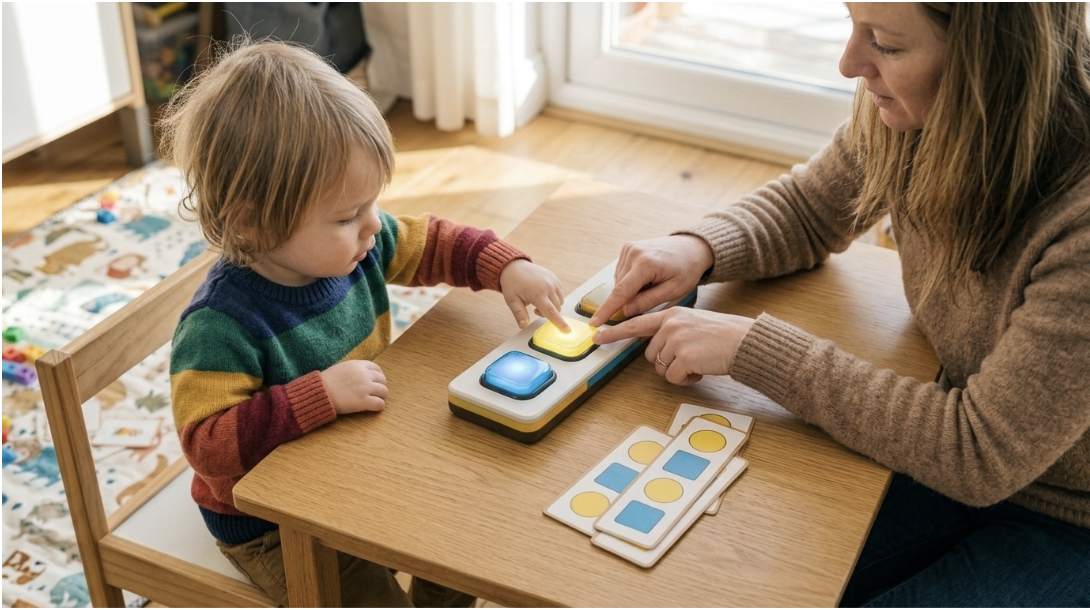
Patterns are simply things that repeat in a predictable order. With sounds, that order becomes something kids can hear. Start with a simple AB pattern using two buttons, like a ding and a clap. Play ding, clap, ding, clap, then pause and ask what comes next.
Once kids master AB, move to ABB or ABC patterns. Ding, clap, clap is harder to remember, which stretches their thinking. Next, let children create their own patterns for you to copy. Making a pattern takes more understanding than simply following one. You can also play a pattern with one mistake and ask kids to find it. Spotting the broken spot shows they truly understand the rule.
How Do You Keep Math Sound Games From Getting Too Noisy?
Sound games can quickly turn into button-mashing chaos. A little structure keeps the fun focused on learning. Give each child a clear turn, and keep extra buttons out of reach until it is their moment.
Choose soft, pleasant sounds for counting games. A gentle ding or pop is easier to count than a loud horn. Set a simple rule, like one tap means one number, and repeat it often. Short sessions also help. Five to ten minutes of focused play usually teaches more than a long, noisy session. End each game with a cheerful sound so kids look forward to the next one.
What Signs Show a Child Is Making Progress?
Progress in early math often shows up in small, steady steps. You do not need a test to notice it. Watch for these signs during sound button games:
The child counts each tap without skipping or repeating numbers.
They can count sounds with their eyes closed.
They predict the next sound in a pattern correctly.
They create their own patterns and explain the rule.
Each sign shows deeper understanding. Celebrate these moments, and slowly raise the challenge as skills grow. Kids who feel successful usually stay eager to keep playing and learning.