
Little House Books in Order
There’s something timeless about the Little House books. For many readers, they represent a warm introduction to storytelling—quiet, meaningful, and rooted in everyday life. This beloved collection of children’s literature follows the early life of Laura Ingalls Wilder and her family as they move across the American Midwest, building homes, facing hardships, and creating a life from the ground up.
But here’s where things can get confusing: the books were not written in strict chronological order. While each story stands on its own, the overall journey of Laura, Ma Mary, Pa, and the rest of the family unfolds more clearly when read in the correct sequence. Because of this, many readers feel unsure about where to begin or how to approach the series for the best experience.
So today, I’m sharing a complete guide to Little House Books in Order, so you can follow Laura’s story as it was meant to be experienced—rich, continuous, and deeply connected from one book to the next.
Little House Books in Order
The Little House series follows a real-life timeline that does not perfectly match the order in which the books were published. That means if you read them out of order, you may miss important character development, emotional milestones, or historical context.
A clear structure helps readers follow Laura’s life more naturally—from her earliest childhood memories to her adulthood and life with Almanzo Wilder. When read in order, the house books create a seamless narrative that highlights growth, change, and resilience.
Reading them correctly also allows you to better understand relationships—like the dynamic between Laura and Mary, the challenges of frontier life, and how the family adapts as they move from place to place, including the town of De Smet in the Dakota Territory.
What Is The Little House On The Prairie Book About
At its core, the Little House series tells the story of Laura Ingalls’ childhood as her family travels and settles throughout the American Midwest. From the woods of Wisconsin to the open prairies of Kansas and the plains of the Dakota Territory, each book captures a different chapter of pioneer life.
These stories highlight what daily life looked like for families at the time—building homes, farming land, preparing food, and surviving harsh winters. Whether it’s the early days in the house in the big woods or later experiences in the town on the prairie, the books offer a deeply personal look at American history.
They also emphasize themes that still resonate today:
Family and togetherness (especially the bond between Laura, Mary, and baby Carrie)
Resilience in the face of hardship
Adaptation to new environments and uncertainty
From moments like sending Mary to the college for the blind to everyday routines with Ma Mary, these stories balance emotional depth with simple, meaningful storytelling.
Who Wrote The Little House On The Prairie Books
The Little House series was written by Laura Ingalls Wilder, and it is largely based on her real childhood experiences growing up in the late 1800s.
Wilder began writing these books later in life, drawing on her memories of life as a pioneer child. Her storytelling captures both the beauty and difficulty of frontier life, blending personal history with carefully crafted narrative.
The result is a series that feels authentic and immersive—giving readers a firsthand look at what it was like to grow up in a time when survival depended on hard work, family support, and a deep connection to the land.
Why Is The Little House On The Prairie So Popular
Strong family-centered storytelling
One of the biggest reasons the Little House books remain so beloved is their focus on family. The relationship between Laura, Mary, and baby Carrie, along with their parents, creates a sense of warmth and connection that readers return to again and again.
Moments with Ma Mary, Pa, and the girls—whether they’re celebrating small joys or facing difficult challenges—highlight the importance of togetherness and support.
Historical insight into pioneer life
The series offers a vivid look into American history. Readers experience what it was like to live on the frontier, from building homes to surviving blizzards in the Dakota Territory.
Books like On the Banks of Plum Creek and By the Shores of Silver Lake provide rich detail about how families adapted to new landscapes and environments.
Simple, descriptive writing style
Wilder’s writing is straightforward yet deeply descriptive. She brings everyday moments to life in a way that feels accessible to younger readers while still engaging for adults.
This balance is part of what makes the house series such a powerful introduction to reading.
Educational value for younger readers
Beyond storytelling, the series is incredibly educational. It introduces readers to:
American history
Geography of the Midwest
Cultural practices of the late 1800s
It’s one of the reasons these books are often included in school curriculums and recommended reading lists—right alongside discussions of the best children's book authors.
How Many Little House On The Prairie Books Are There
There are nine main books in the Little House series, along with additional related titles and spin-offs. These nine books form the core storyline of Laura’s life, from early childhood to adulthood and her life with Laura and Almanzo during the Happy Golden Years and beyond.
What Is The Order Of The Little House Books
Here is the correct chronological reading order of the Little House books, along with what to expect from each one.
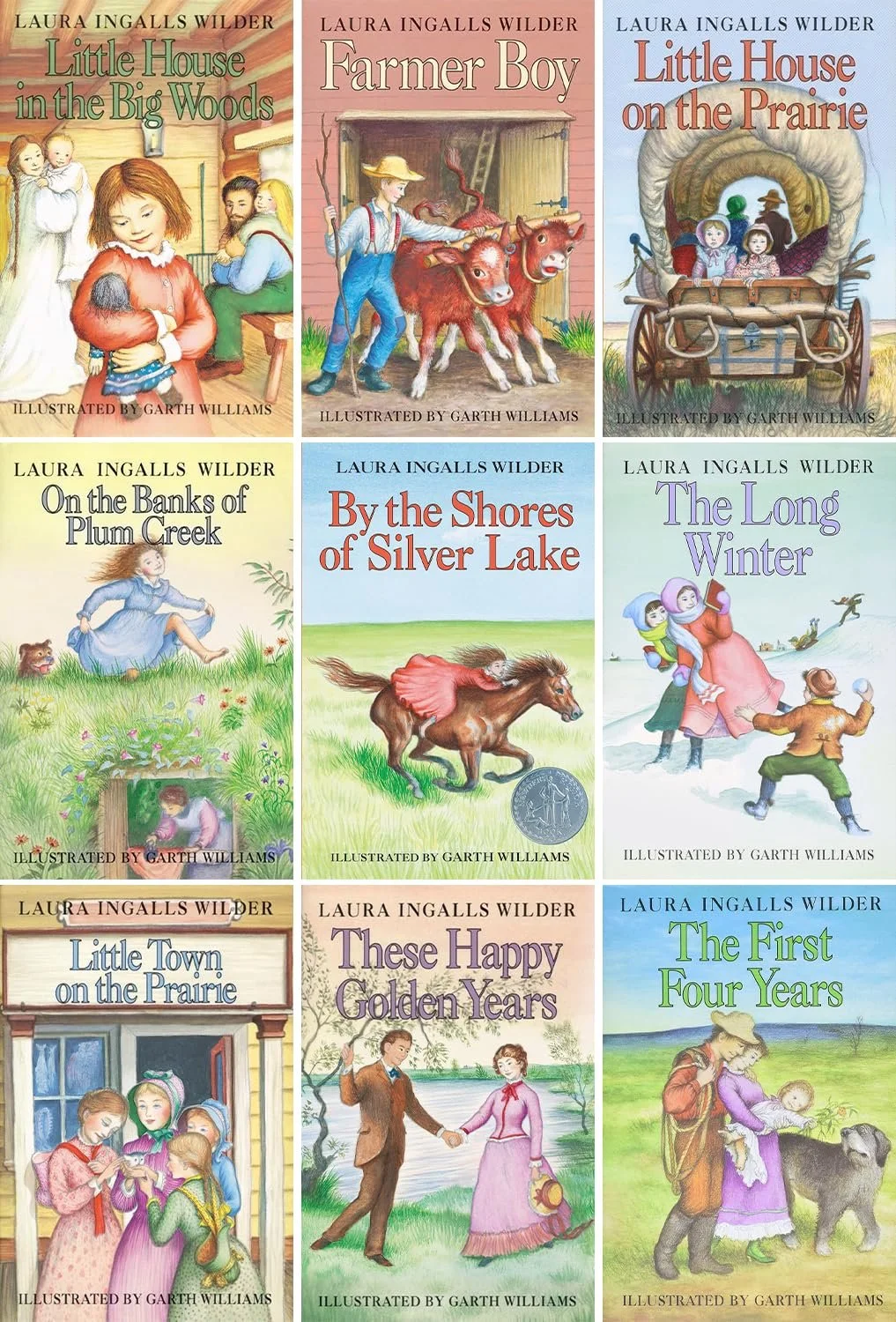
Little House in the Big Woods
This is where the journey begins. Set in Wisconsin, this book introduces readers to Laura, Mary, and baby Carrie as they live in a log cabin surrounded by forest.
The story focuses on daily life—food preparation, chores, and family traditions—offering a cozy and intimate look at early pioneer living in the house in the big woods.
Little House on the Prairie
In this installment, the family decides to sell their home and move west to Kansas. This is the iconic house on the prairie story that many readers associate with the series.
Here, readers see the challenges of settling new land, building a home from scratch, and navigating life in unfamiliar territory.
On the Banks of Plum Creek
The family relocates to Minnesota, where they build a dugout home along Plum Creek.
This book introduces more community interaction and explores how Laura and Mary begin attending school. It also highlights the unpredictability of nature and farming life.
By the Shores of Silver Lake
This book marks a major transition. The family moves to the Dakota Territory, specifically the town of De Smet.
It also includes one of the more emotional storylines, as Mary loses her sight and the family begins sending Mary to the college for the blind.
The Long Winter
Set in De Smet, this book focuses on one of the harshest winters the family experiences.
It’s a powerful story of survival, resilience, and community as the family faces months of isolation and limited resources.
Little Town on the Prairie
Now settled in De Smet, Laura becomes more involved in town life.
This book explores adolescence, friendships, and social events, offering a glimpse into life in a growing prairie town.
These Happy Golden Years
This is where Laura’s relationship with Almanzo Wilder takes center stage.
Readers follow the development of Laura and Almanzo’s relationship, leading to their engagement and eventual marriage during the Happy Golden Years.
The First Four Years
This final installment focuses on Laura and Almanzo’s early married life.
It shows the realities of starting a life together on the prairie, including financial struggles, farming challenges, and personal hardships.
Farmer Boy (Companion Book)
Although not part of Laura’s direct timeline, Farmer Boy tells the childhood story of Almanzo Wilder.
It provides valuable context for his character and background, making it a worthwhile addition to the reading experience.
Bringing It All Together
Reading the Little House books in order transforms the experience from a collection of standalone stories into a cohesive, deeply meaningful journey. You see Laura grow from a young girl in the woods to a young woman building a life with Almanzo Wilder.
You also gain a fuller understanding of the historical context—from the banks of Plum Creek to the evolving community in De Smet. The series captures both the beauty and difficulty of pioneer life, making it just as relevant today as when it was first written.
And if you find yourself loving the structure of a long-form narrative like this, you might also enjoy exploring other collections, like this guide to the best book series for adults, which offers a more modern take on immersive storytelling.
The Little House series remains one of the most enduring collections in children’s literature—not just because of its historical setting, but because of its heart. It’s about family, resilience, and finding joy in even the simplest moments.
Whether you’re revisiting these books or discovering them for the first time, following this Little House Books in Order guide will help you experience Laura’s story exactly as it unfolds—one chapter, one home, and one memory at a time.