
Open House Chicago 2026: Our Near West Side Staycation
A weekend of Chicago architecture, hidden historic spaces, neighborhood restaurants, and a few unexpected discoveries.
One of my favorite things about living in Chicago is that even after years of exploring the city, there are still so many places I haven't experienced. I've always loved Chicago's architecture, its fascinating history, and the way its neighborhoods can feel like entirely different cities within the same city. And there is perhaps no better excuse to explore all three than Open House Chicago.
This year, Eric and I decided to turn Open House Chicago 2026 into a three-day Chicago staycation, checking into a hotel in Fulton Market and spending the weekend exploring the Near West Side. We planned our itinerary around 13 participating sites, with a few neighborhood restaurants, cocktails, and leisurely meals worked into the schedule.
What started as a weekend dedicated to architecture turned into something much more interesting. We explored buildings that survived the Great Chicago Fire, learned about the city's immigrant communities and public housing history, visited working urban farms, and discovered some wonderful Chicago businesses. We also waited in line for an hour and a half to see a theater we've been curious about for seven years.
And, because no trip ever goes exactly according to plan, we stumbled upon a few unexpected favorites along the way.
Here's how we spent our Open House Chicago 2026 weekend, including the buildings we visited, where we ate, what surprised us, and what we'd do differently next year.
What Is Open House Chicago?
Open House Chicago is an annual architecture festival organized by the Chicago Architecture Center that gives visitors an opportunity to explore some of the city's most interesting buildings and spaces. Many participating locations are not typically accessible to the public, making the event an especially wonderful opportunity to discover Chicago beyond its familiar landmarks.
From historic churches and cultural institutions to contemporary offices, design studios, and industrial buildings, Open House Chicago celebrates the architecture and communities that make this city so extraordinary.
One of the things I appreciate most about the event is that it encourages you to explore neighborhoods you might otherwise overlook. Rather than visiting the same Chicago attractions you've seen a dozen times, you can spend an entire afternoon discovering buildings you've passed hundreds of times without knowing what was inside.
For Open House Chicago 2026, October 17–18, we decided to concentrate on the Near West Side, including Greektown, the historic neighborhoods surrounding the University of Illinois Chicago, and Fulton Market.
We also made a last-minute detour to Uptown to see one of Chicago's most remarkable historic theaters.
Friday: Checking Into Fulton Market and Dinner at Trivoli Tavern
The Emily Hotel in Fulton Market
We kicked off our Chicago staycation on Friday afternoon by checking into The Emily Hotel at 311 N. Morgan Street, right in the heart of Fulton Market.
We chose The Emily primarily for its location. Since we planned to spend much of the weekend exploring the Near West Side, staying in Fulton Market would make it easy to walk to restaurants, return to the hotel between outings, and enjoy the neighborhood without worrying about getting home at the end of a long day.
Although we appreciated the convenience of the location, The Emily wasn't our favorite hotel experience. We've stayed at some wonderful Chicago hotels over the years, and this weekend reminded us that the hotel itself is an important part of a staycation.
For future Chicago staycations, we're planning to prioritize a beautiful, memorable hotel over proximity to the neighborhood we're exploring. I tend to gravitate toward historic or iconic Chicago properties, while Eric appreciates a luxury hotel experience. Fortunately, Chicago has plenty of options that offer both.
Dinner at Trivoli Tavern
Before dinner, we spent some time wandering Randolph Street, popping into a few stores and enjoying a beautiful fall evening in Fulton Market.
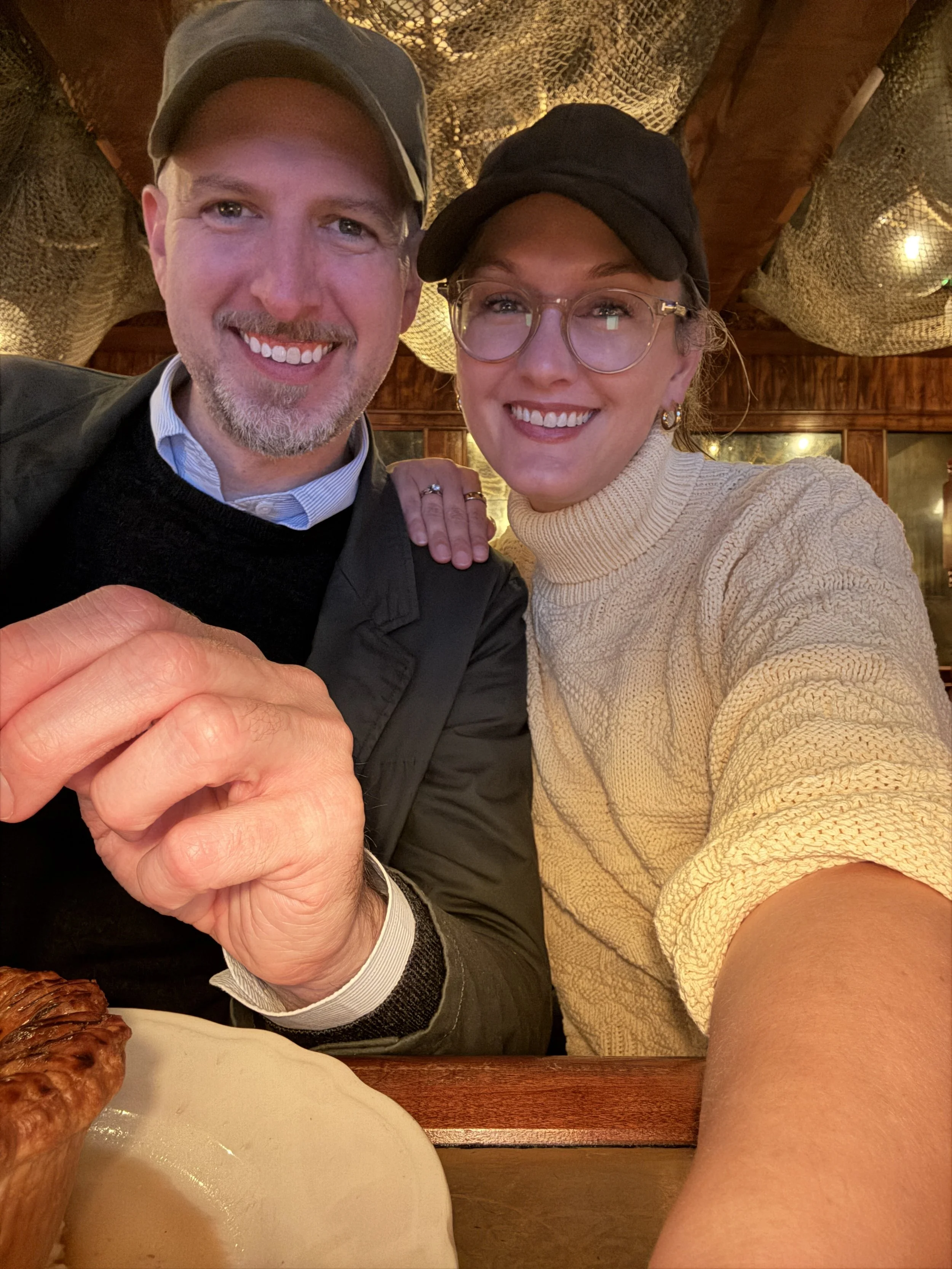
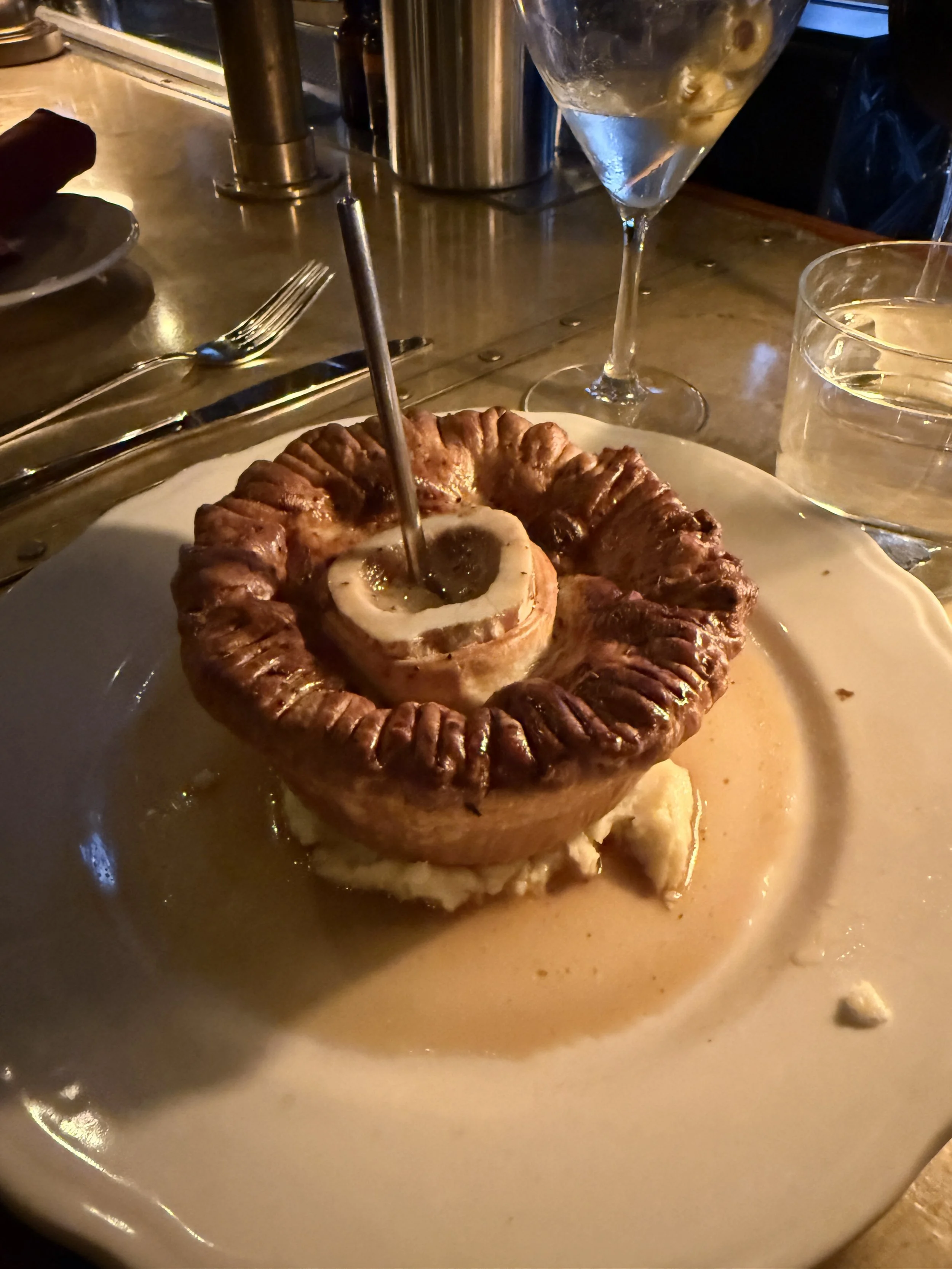
We eventually landed a walk-in table at Trivoli Tavern, one of my favorite cozy restaurants in the neighborhood. It was Eric's first visit, and the atmosphere was exactly what we wanted for a cool October evening.
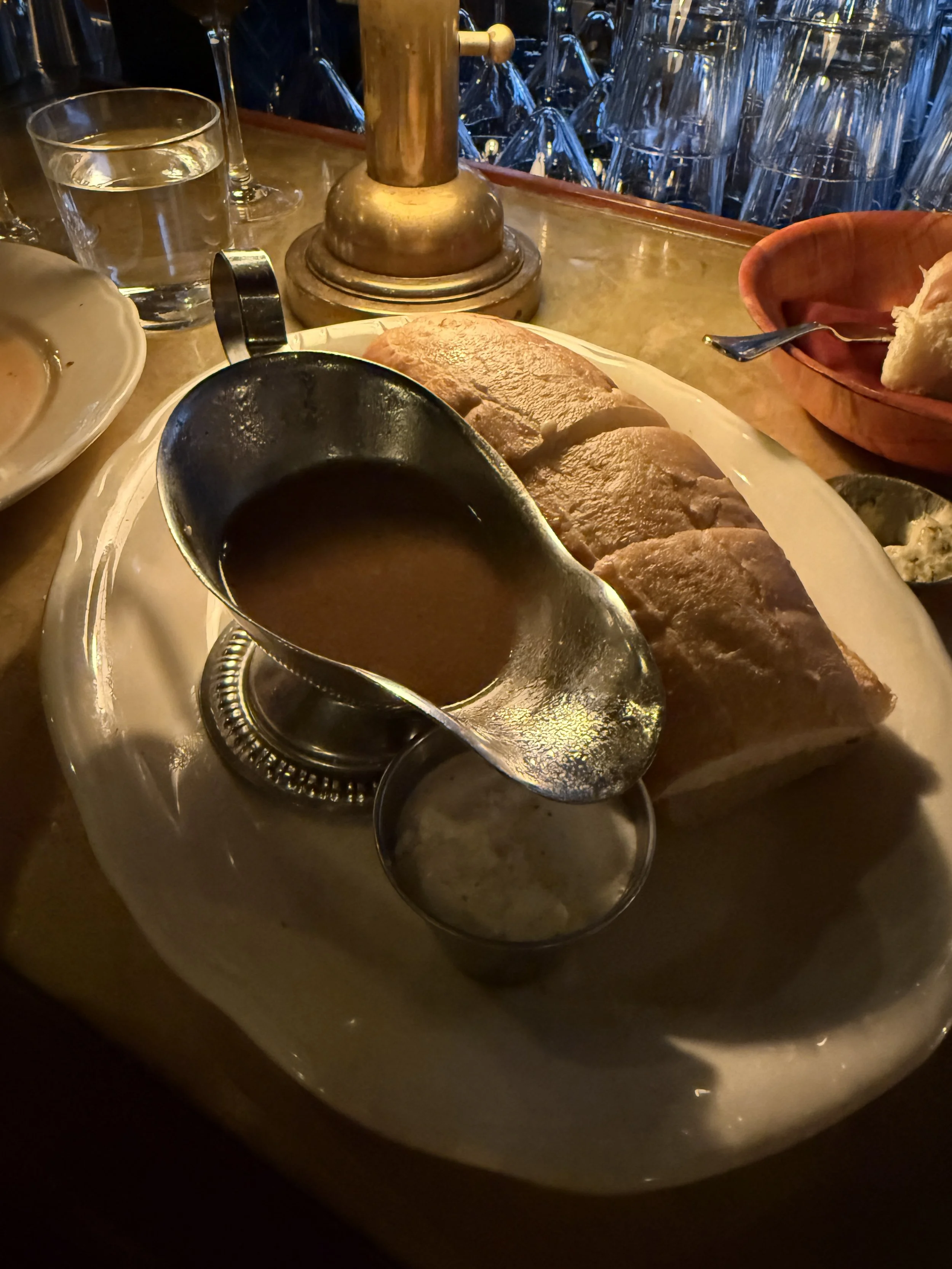
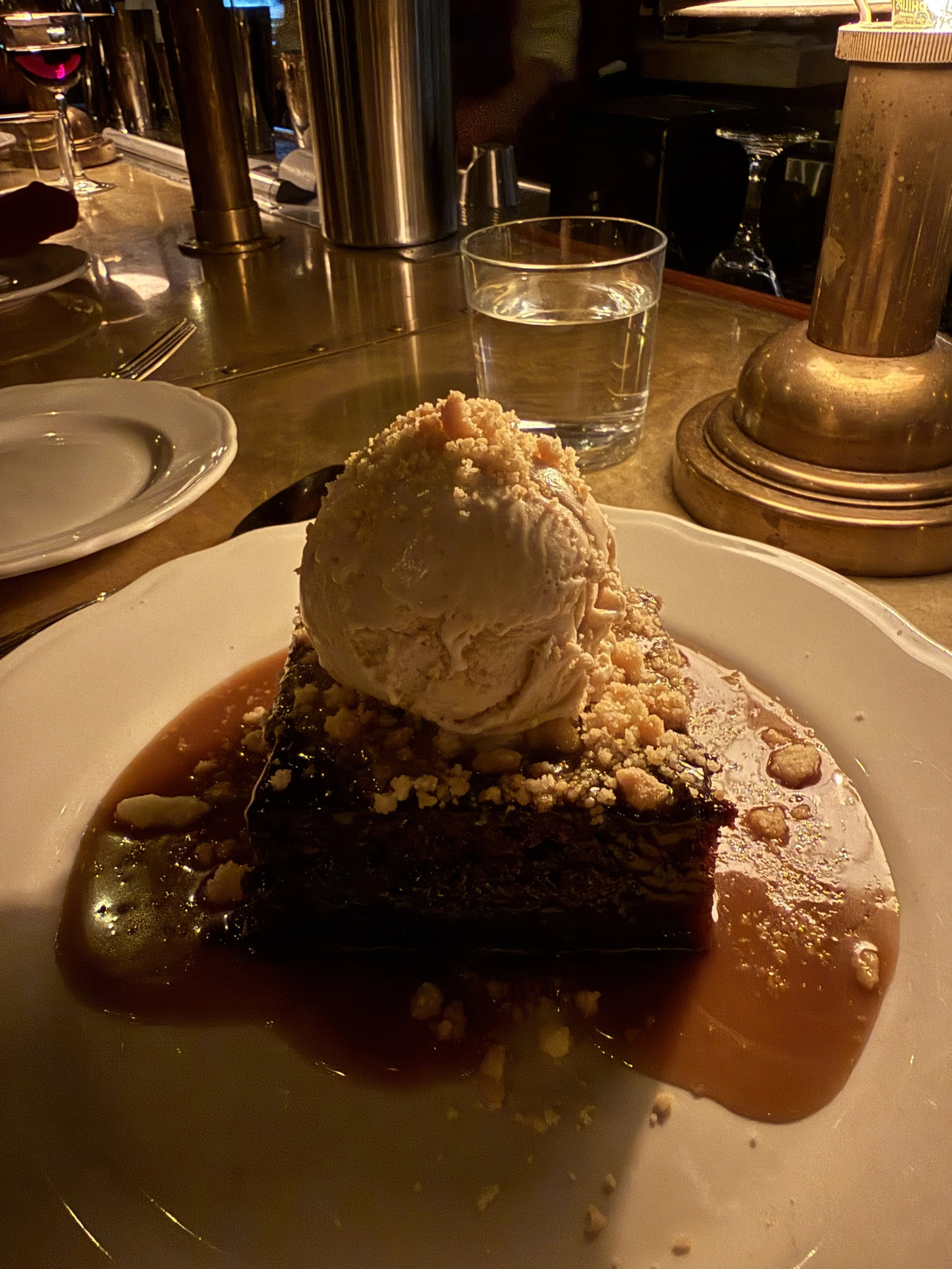
We ordered a prime rib sandwich and a pot pie, both of which felt particularly appropriate for the weather. Trivoli Tavern has that wonderful combination of warm lighting, intimate booths, and old-fashioned charm that makes you want to settle in for the evening.
It was the perfect beginning to our weekend: no strict schedule, no rushing, and a chance to enjoy being tourists in our own city.
Saturday: Exploring Historic Chicago on the Near West Side
Saturday was our ambitious day. We planned a route that would take us through some of Chicago's oldest surviving buildings, important cultural institutions, and a handful of contemporary architectural spaces.
We knew we'd be doing quite a bit of walking, so a substantial breakfast was essential.
Breakfast at Sweet Maple Cafe
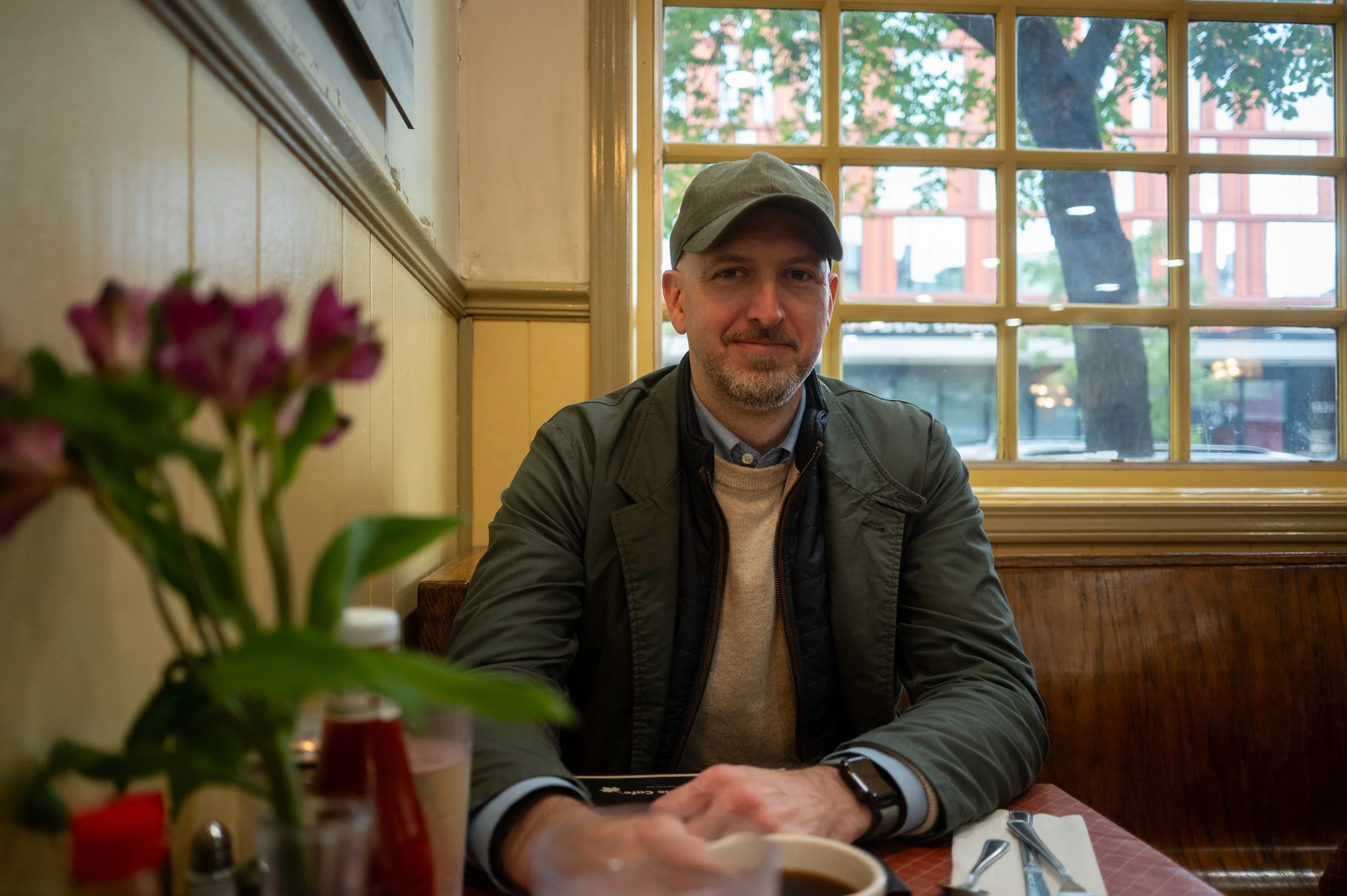
We started our morning at Sweet Maple Cafe on Taylor Street, a classic Chicago neighborhood breakfast spot with exactly the kind of local diner atmosphere we love.
The food was delicious, the setting was unpretentious, and it felt like the perfect place to begin a day devoted to exploring the city.
I love discovering restaurants that have a strong sense of neighborhood identity, and Sweet Maple Cafe delivered. It was also conveniently located near our first Open House Chicago stop.
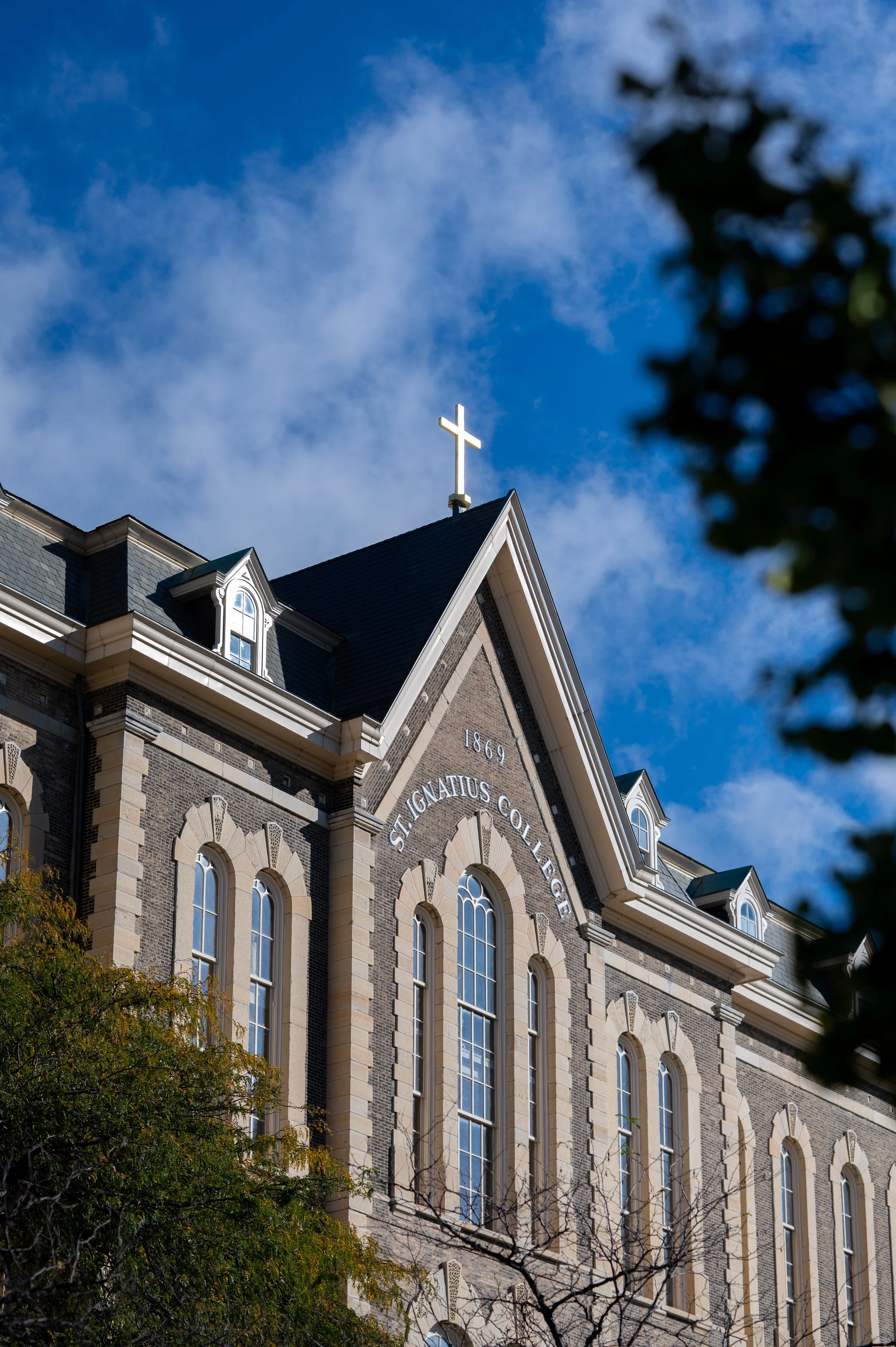
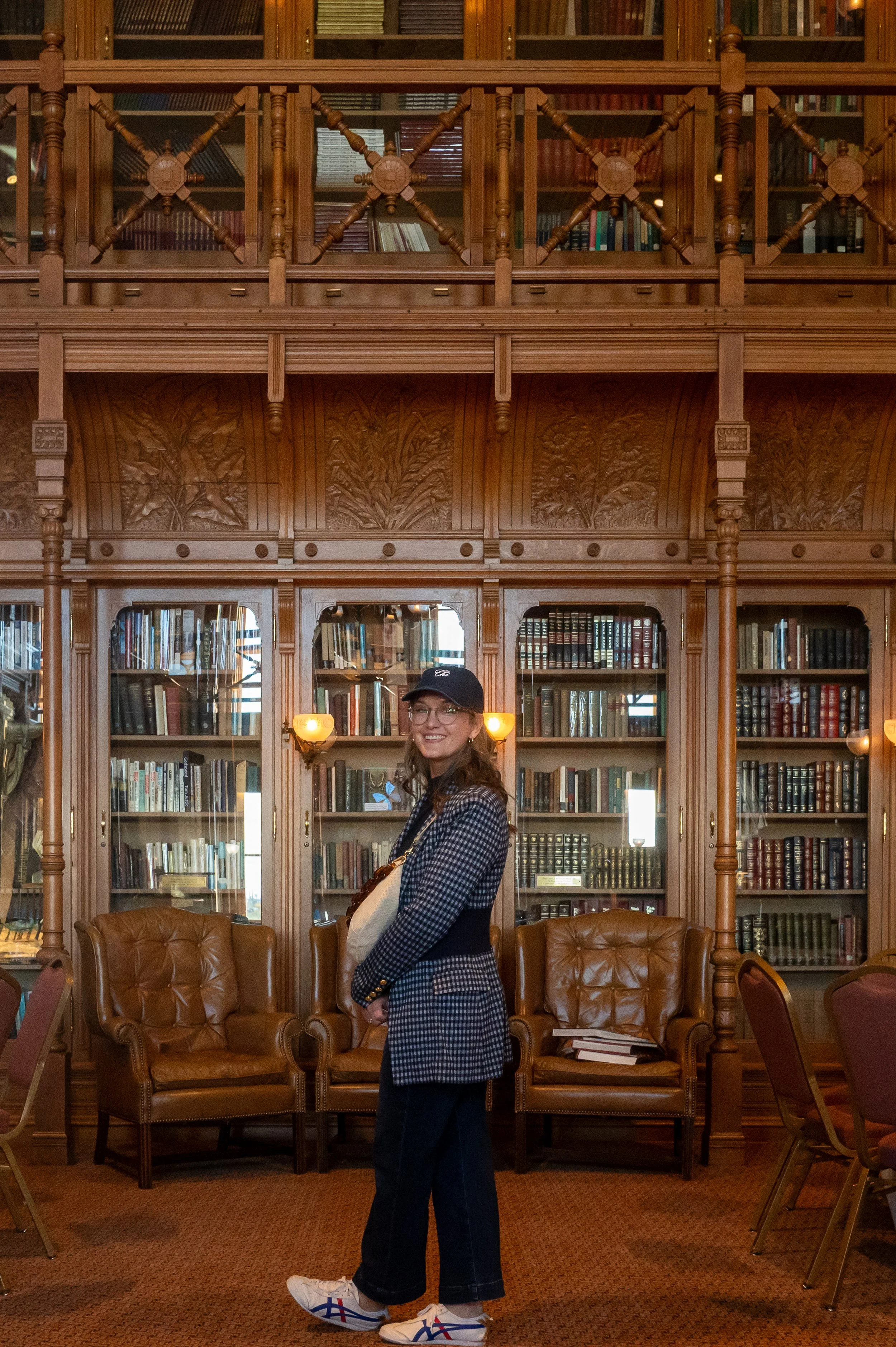
Saint Ignatius College Prep: A Building Older Than the Great Chicago Fire
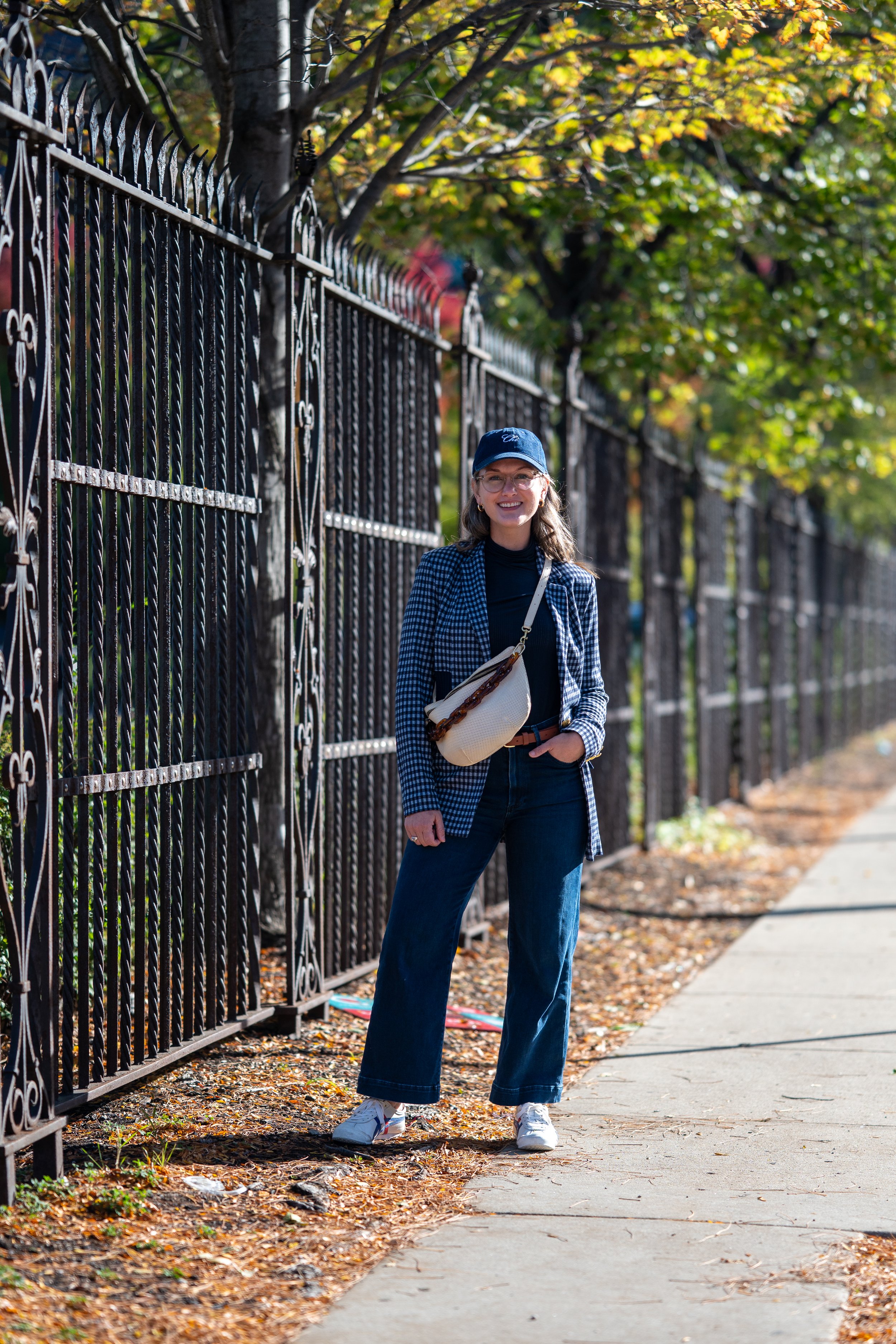
Our first official Open House Chicago stop was Saint Ignatius College Prep, located at 1076 W. Roosevelt Road.
Built in 1869, the school's historic building predates the Great Chicago Fire of 1871, making it a remarkable surviving piece of the city's architectural history.
We explored historic interiors, including spaces such as the Grand Gallery, Brunswick Room, and Foglia Library.
One of the things I find most fascinating about Chicago is how much of its architectural identity was shaped by the Great Fire. So many of the buildings we associate with historic Chicago were constructed afterward that walking into a building that existed before 1871 feels especially significant.
Saint Ignatius was also a good reminder that some of the city's most beautiful historic interiors are tucked inside institutions we might never think to visit.
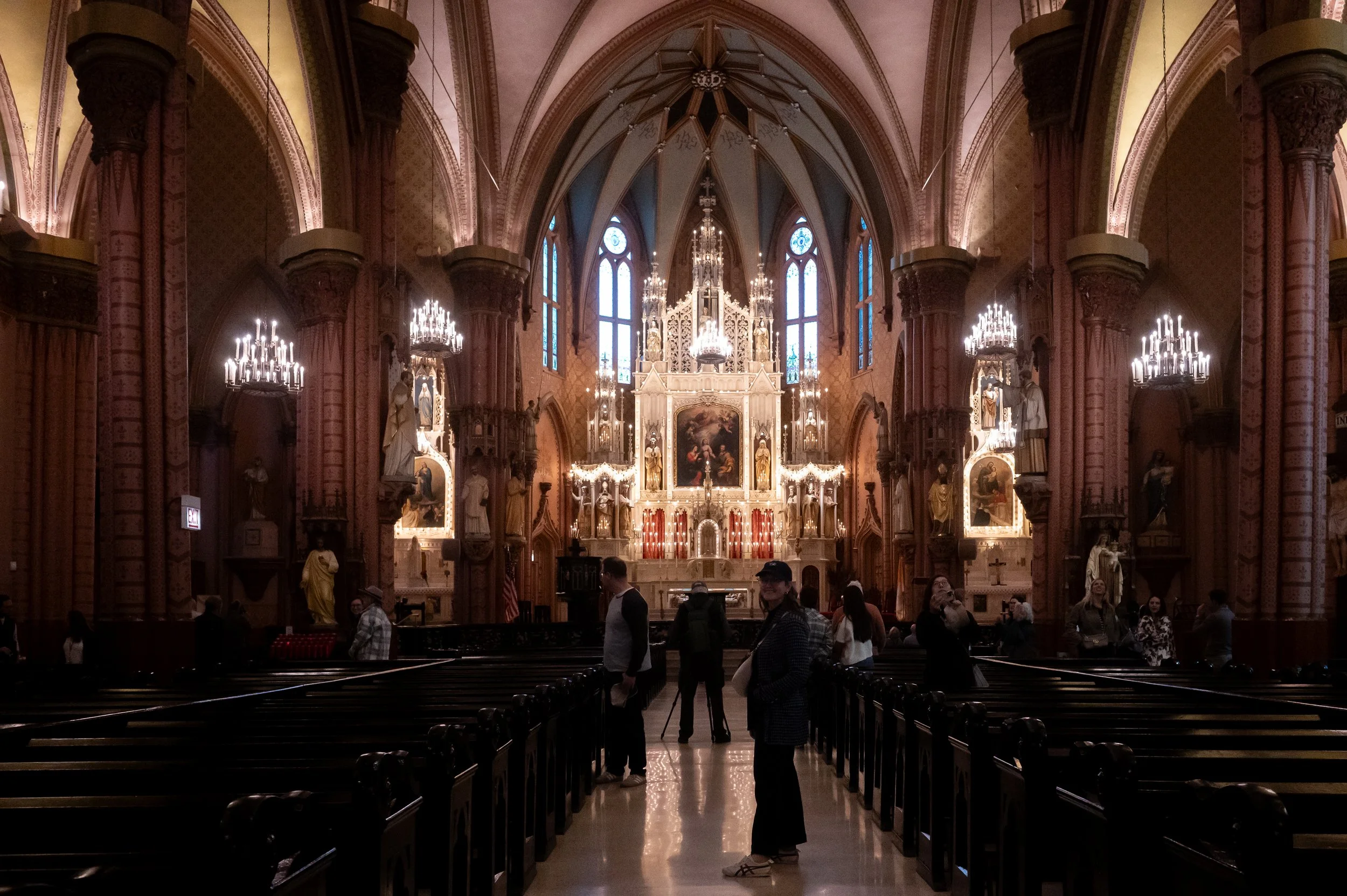
Church of the Holy Family: A Remarkable Historic Altar
Just a short walk from Saint Ignatius is the Church of the Holy Family, one of Chicago's oldest churches and another survivor of the Great Chicago Fire.
Of all the details we saw throughout the weekend, the church's illuminated altar made a particularly strong impression on Eric.
He noted how the lighting immediately draws your attention, illuminating the altar from nearly every angle. The late-19th-century installation, completed by Italian tradesmen during the early years of electrification, makes the altar an especially fascinating combination of religious art, craftsmanship, and technology.
It's one thing to admire a beautiful historic church. It's another to think about how extraordinary electric illumination must have seemed to the people who first experienced it.
The church was a wonderful example of how Open House Chicago encourages visitors to notice architectural details that might otherwise go unappreciated.
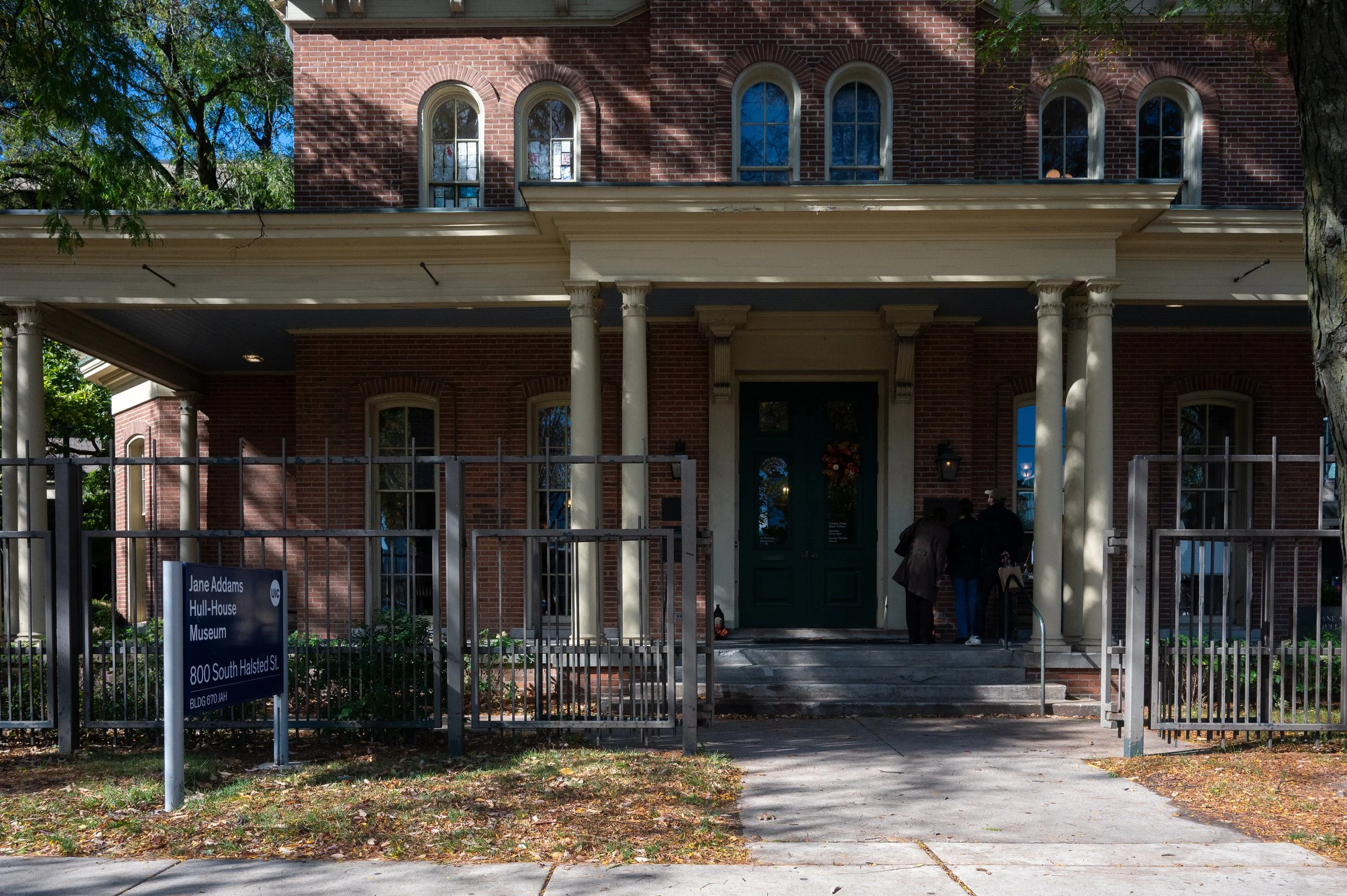
Jane Addams Hull-House Museum: Chicago's History of Social Reform
Our next stop was the Jane Addams Hull-House Museum at 800 S. Halsted Street.
Hull-House was founded in 1889 by Jane Addams and Ellen Gates Starr and became one of the most influential settlement houses in the United States.
The museum tells the story of the settlement-house movement, immigration, social reform, and the people who helped shape Chicago's neighborhoods.
I particularly appreciate visiting places where architecture and social history intersect. Buildings are never just buildings. They're also records of the people who lived, worked, organized, and created communities within them.
Hull-House is a powerful reminder of how much Chicago's history has been shaped by immigrant communities and women working to improve the lives of their neighbors.
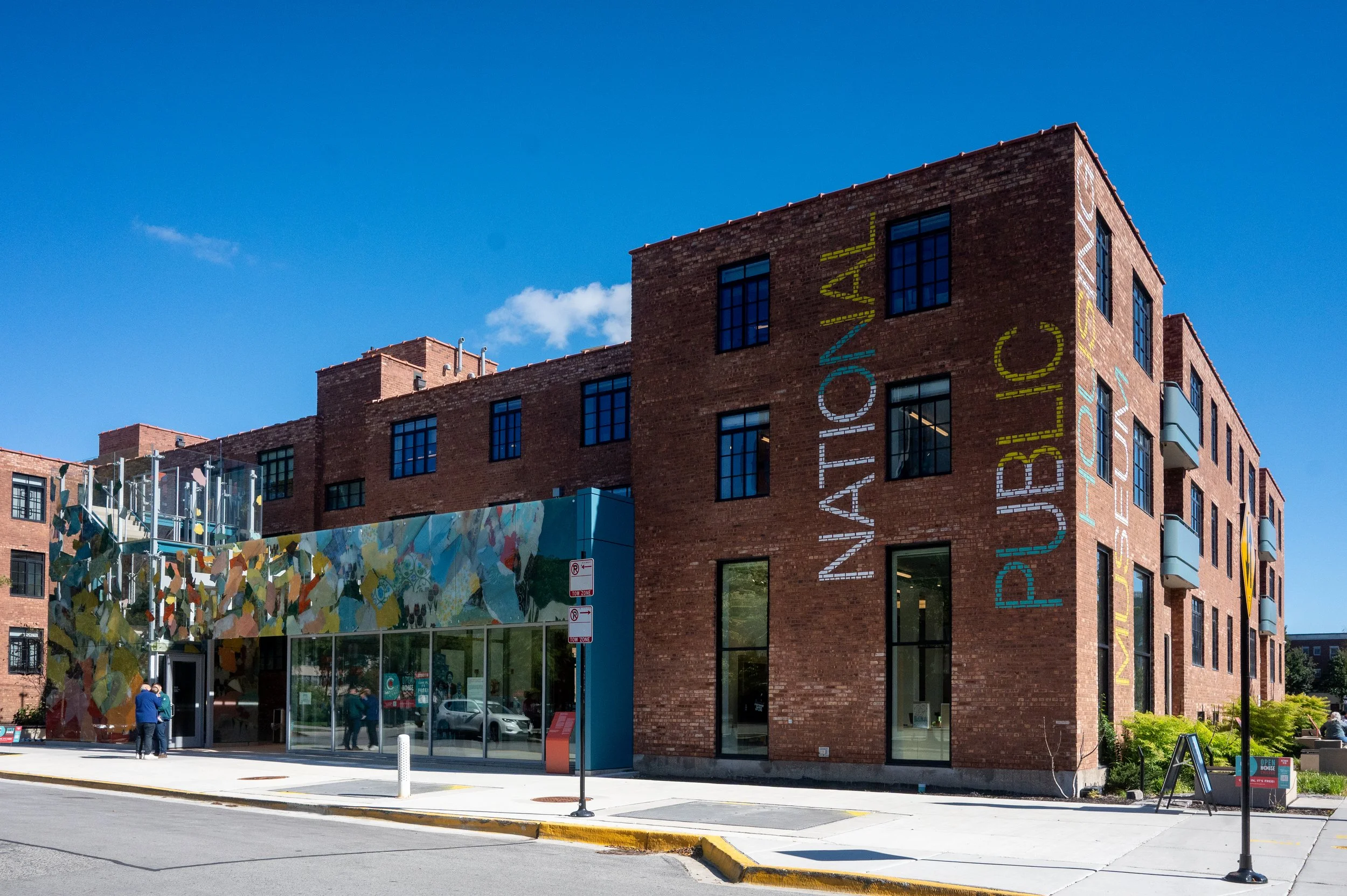
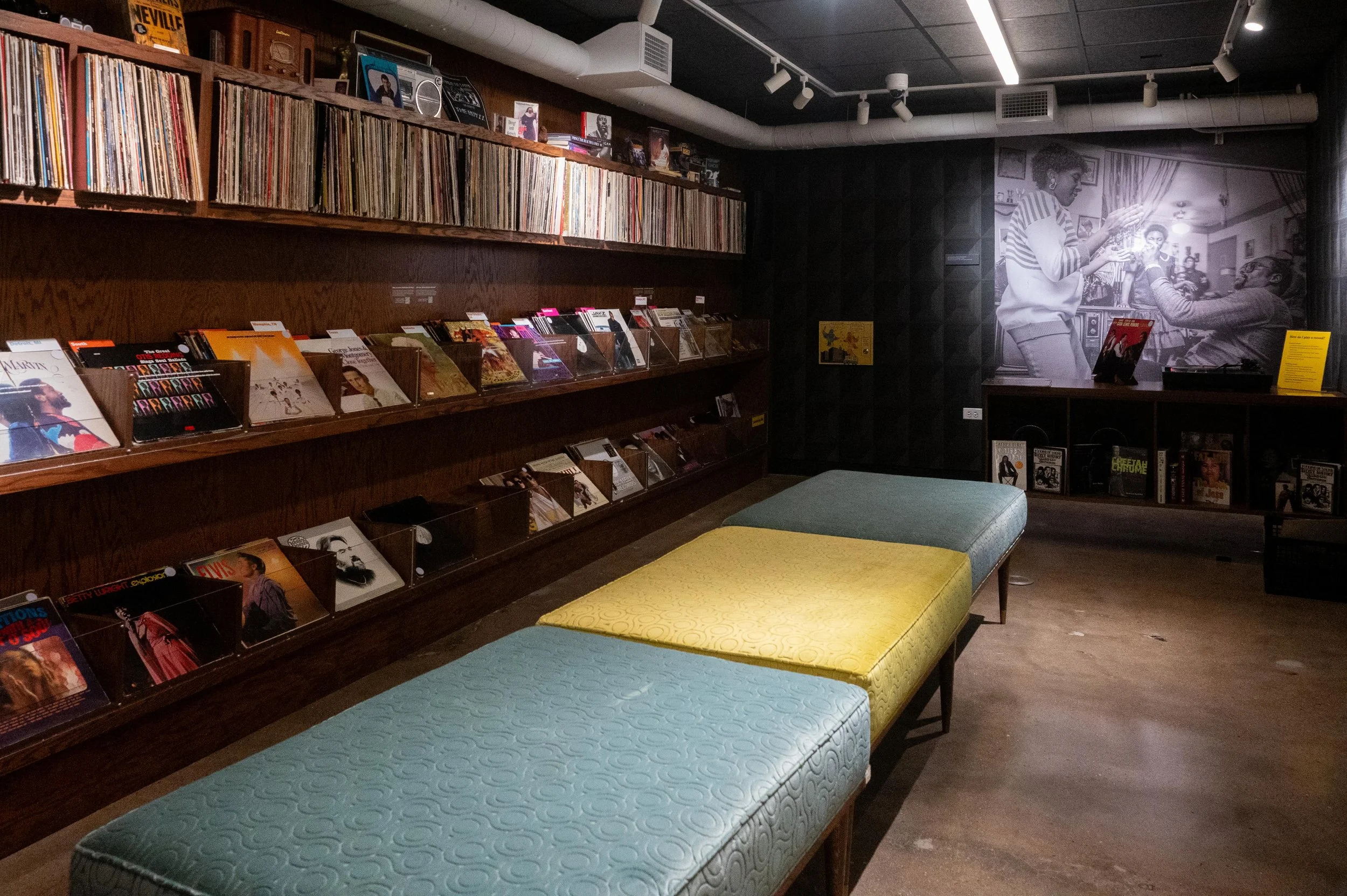
National Public Housing Museum: A Different Perspective on Chicago Architecture
From Hull-House, we continued to the National Public Housing Museum at 919 S. Ada Street.
Located in the last remaining building of the Jane Addams Homes, the museum explores the history of public housing in America through the experiences of residents and communities.
During Open House Chicago, visitors could explore recreated apartment interiors and spaces that typically require a guided visit.
This was one of the more thought-provoking stops on our itinerary.
When people think about Chicago architecture, they often picture skyscrapers, historic mansions, and grand public buildings. But housing is also an essential part of the city's architectural story.
The National Public Housing Museum offers a perspective that is sometimes missing from traditional architectural tours: how buildings shape everyday life, community, opportunity, and belonging.
Visiting Hull-House and the National Public Housing Museum on the same morning also provided an interesting opportunity to think about the evolution of housing and social reform in Chicago.
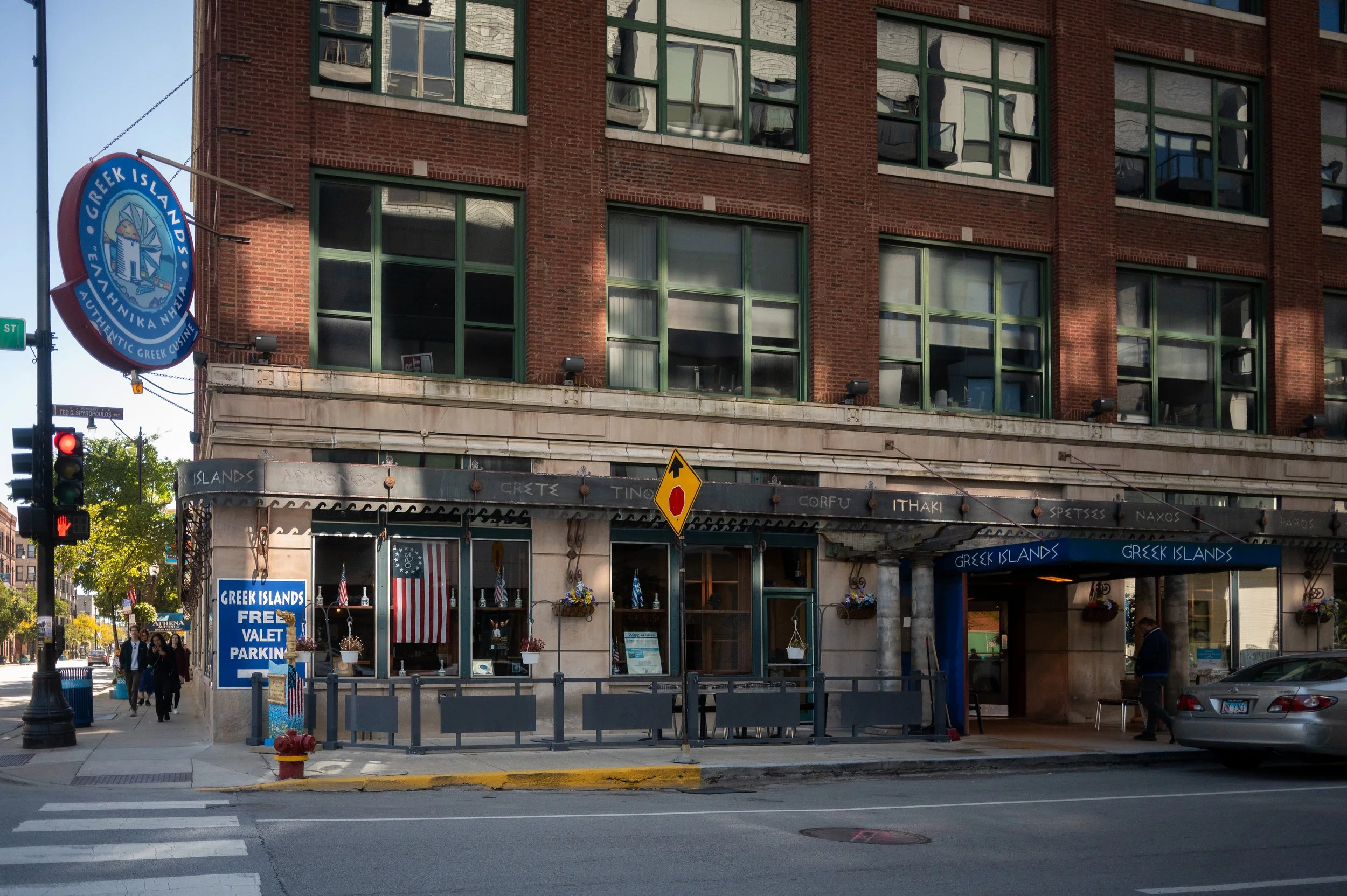
Lunch in Greektown: Greek Islands
By lunchtime, we were ready to sit down.
We headed to Greek Islands at 200 S. Halsted Street, a restaurant we'd driven past countless times but had somehow never visited.
Eric described it perfectly: "Just the right amount of kitsch."
Greek Islands has been a Chicago institution since 1971, and after our first visit, it's easy to understand its enduring appeal.
We sampled several dishes, but the stuffed tomato was our favorite.
There is something especially satisfying about finally visiting a restaurant you've passed for years. We spend so much time seeking out new openings that it's easy to overlook the established neighborhood institutions that have been serving Chicago for decades.
Greek Islands was exactly the kind of restaurant discovery I hoped we'd make during our staycation.
Saturday Afternoon: Greek History, Rooftop Gardens, and Unexpected Architecture
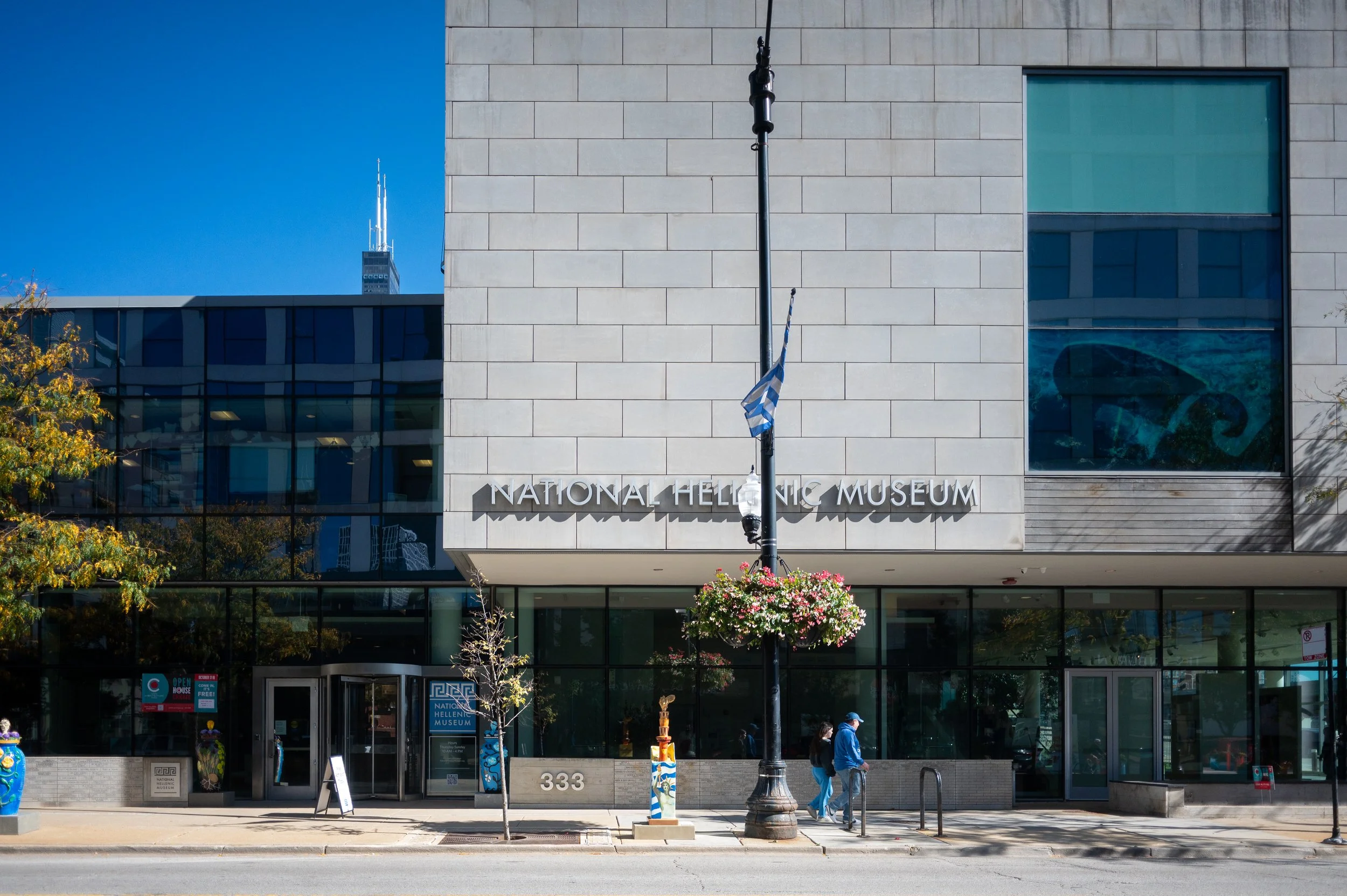
National Hellenic Museum: An Ancient Coin Collection
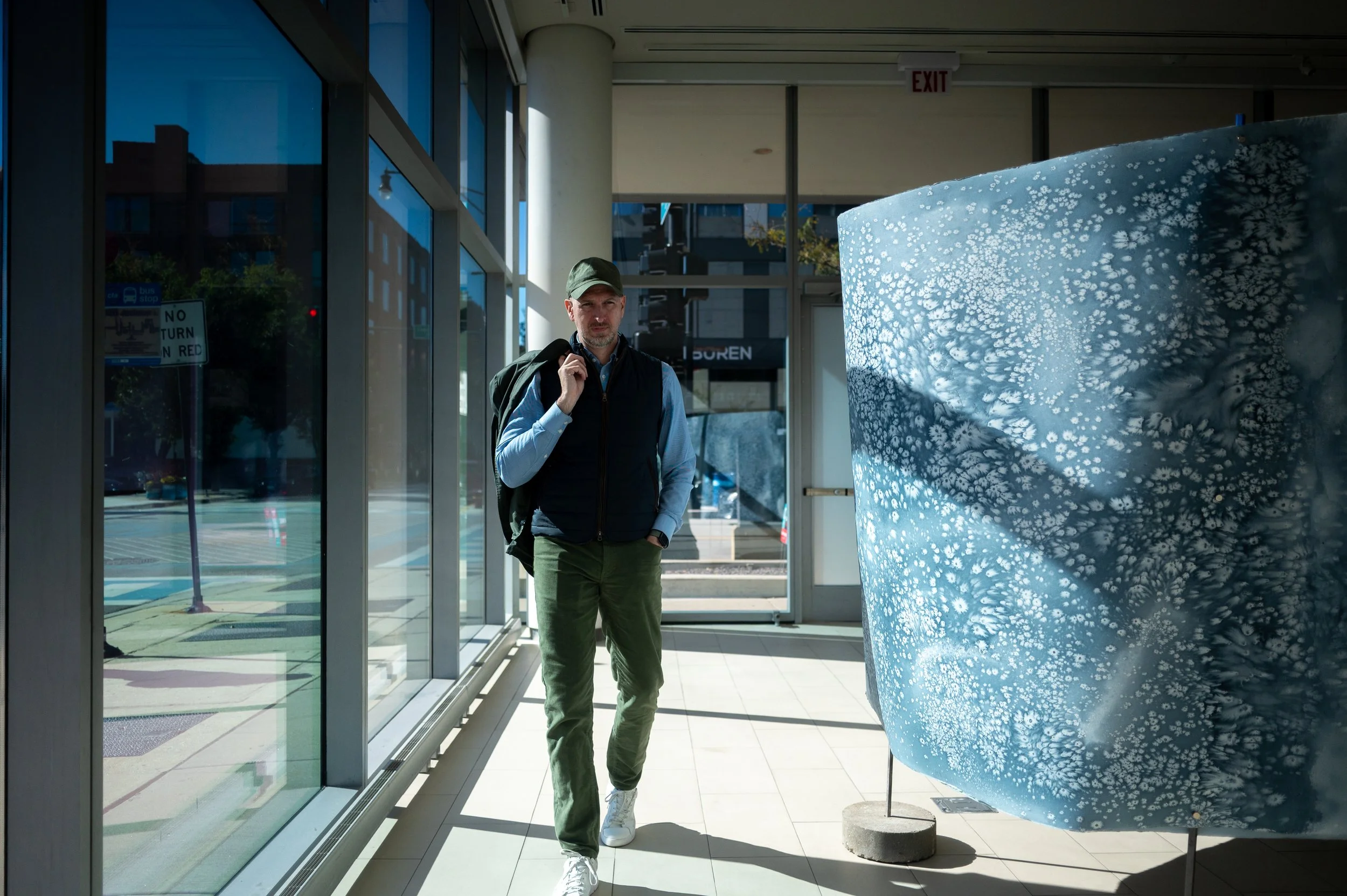
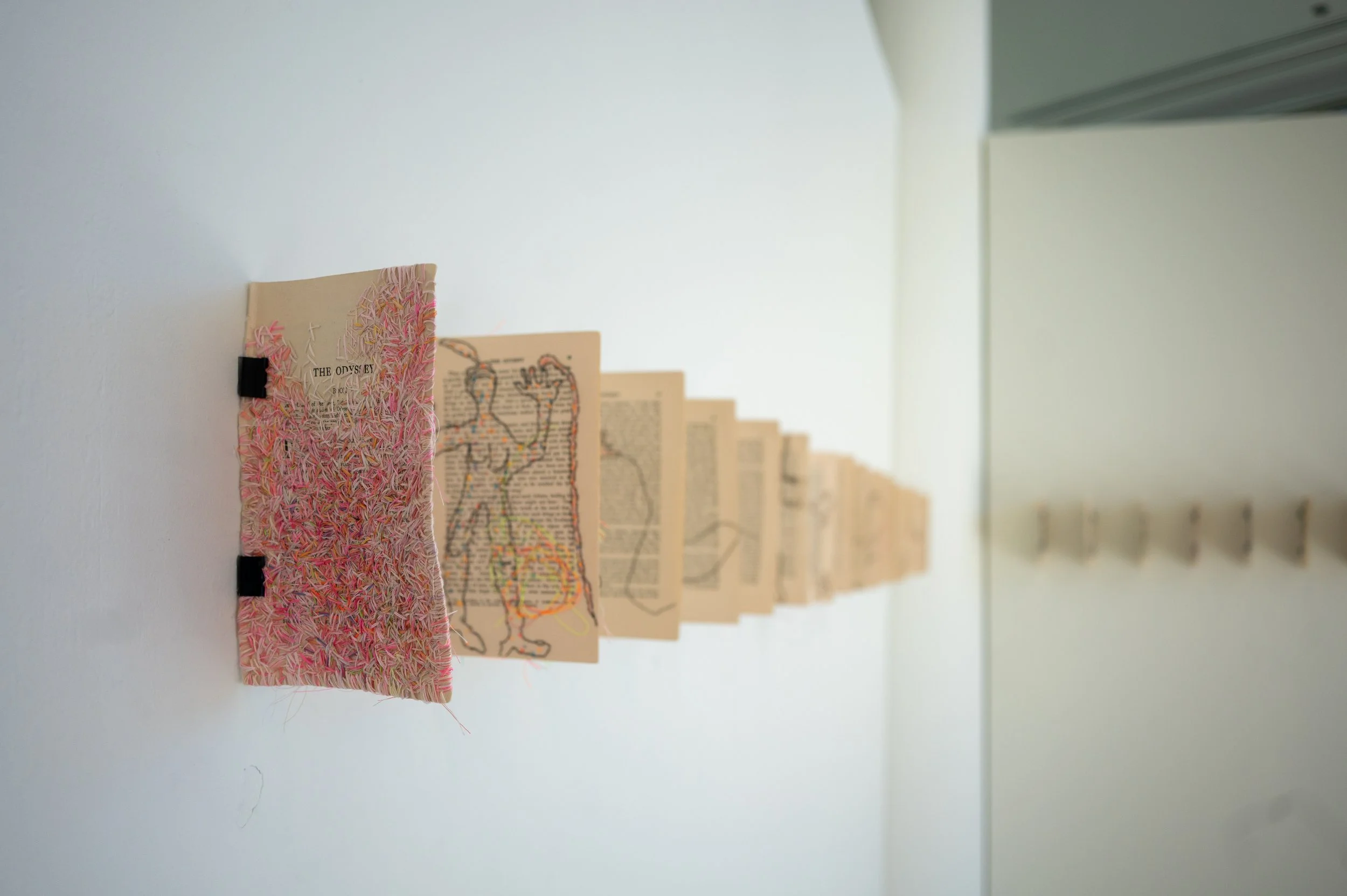
After lunch, we walked to the National Hellenic Museum at 333 S. Halsted Street.
The museum's contemporary limestone-and-glass building provides an interesting architectural contrast to the older structures we'd visited earlier in the day.
Inside, we explored exhibits celebrating Greek history and culture.
Eric was especially impressed by the coin exhibit, which became one of his favorite museum discoveries of the weekend.
One of the things I enjoy about exploring museums together is that we often gravitate toward completely different details. I might be studying the building's architecture or exhibition design, while Eric becomes fascinated by a particular artifact or historical technology.
It makes for interesting conversations afterward.
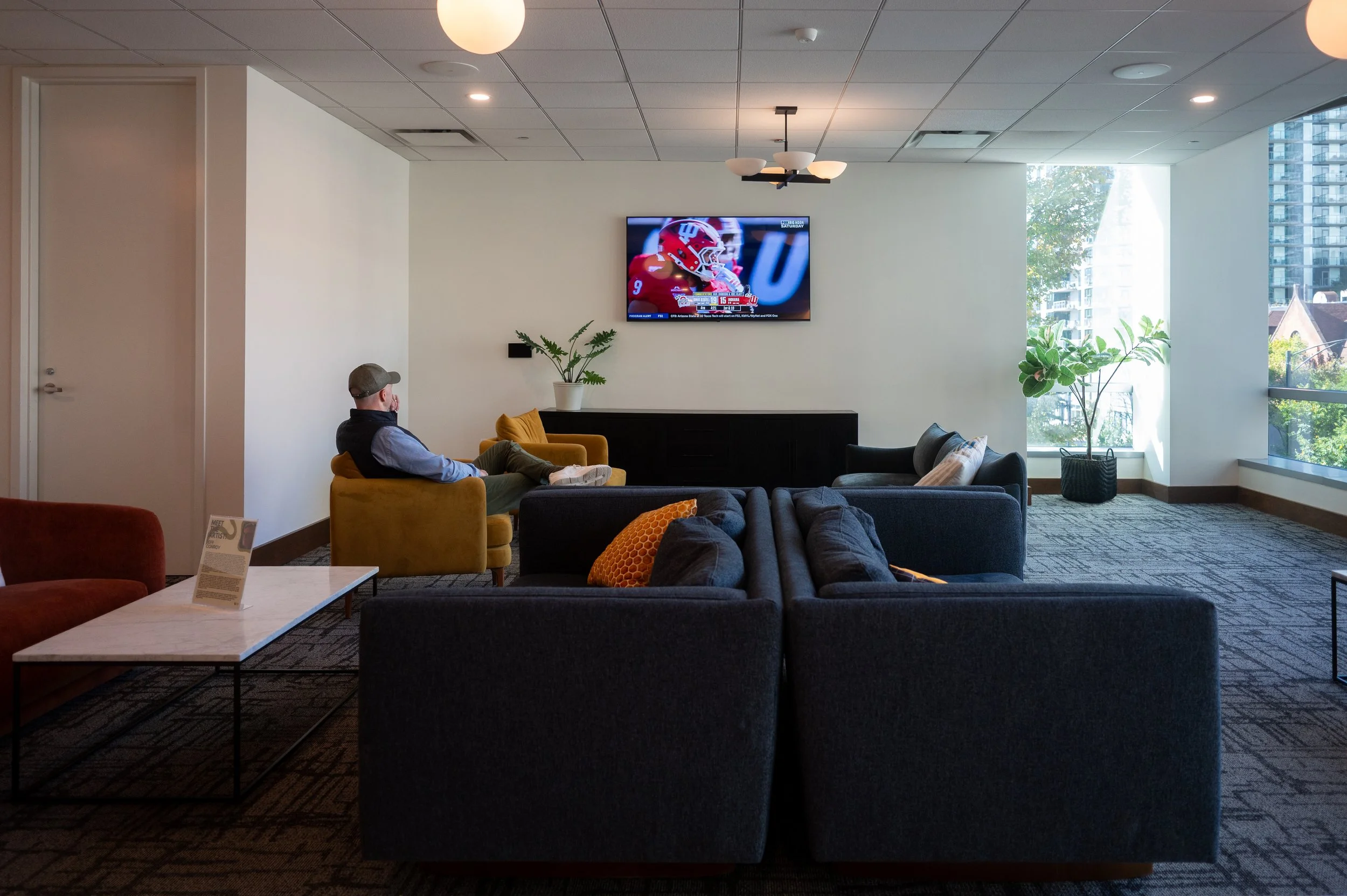
540 W. Madison: A Rooftop Garden and "Another Corporate Lounge"
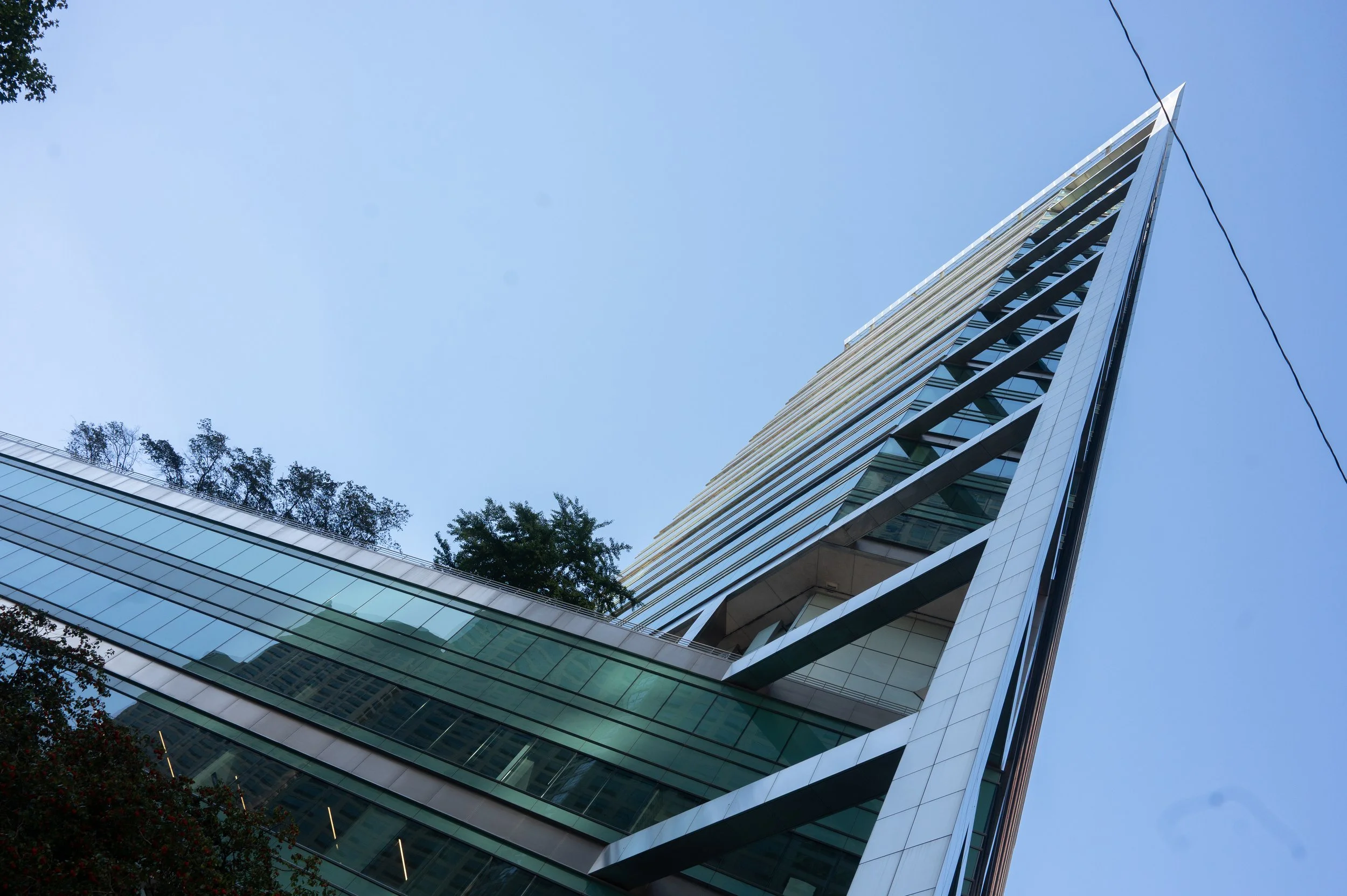
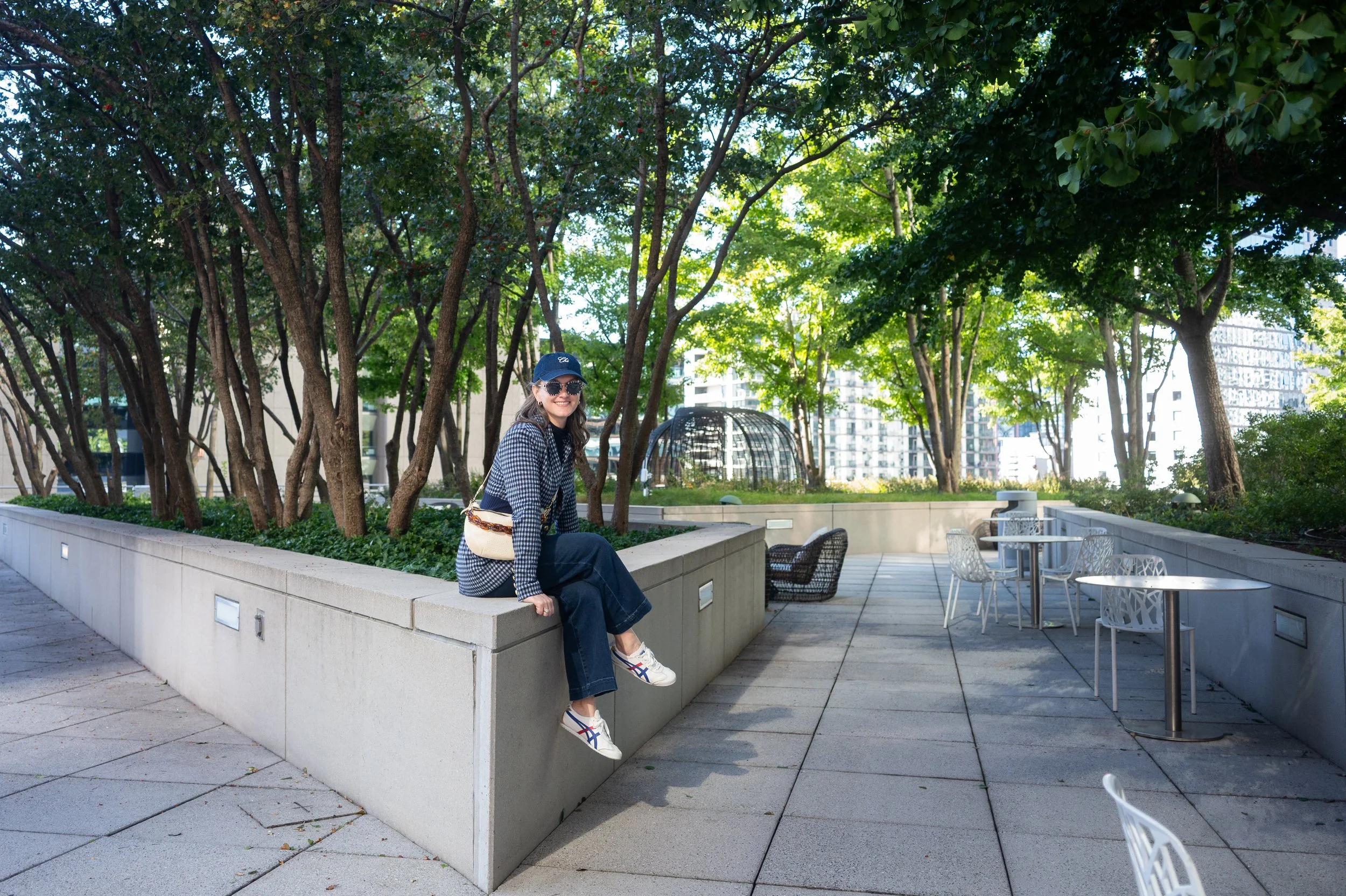
Our next stop was 540 W. Madison, a contemporary office building with a sixth-floor roof garden, rooftop apiary, and rainwater irrigation system.
This visit also gave us one of our favorite running jokes of the weekend.
A docent suggested that we visit the roof garden, then casually mentioned that we could also see "another corporate lounge" on a different floor.
The way she said it made us laugh, as though she couldn't imagine why anyone would be interested in seeing yet another corporate lounge.
For the rest of the weekend, "ANOTHER CORPORATE LOUNGE" became Eric's shorthand for some of the more conventional office interiors on the tour.
And, to be fair, after visiting historic churches, museums, and buildings filled with fascinating stories, it takes quite a bit for a corporate lounge to compete.
Still, I appreciate that Open House Chicago includes contemporary workplaces. They offer an opportunity to see how architecture, design, and urban development continue to shape Chicago.
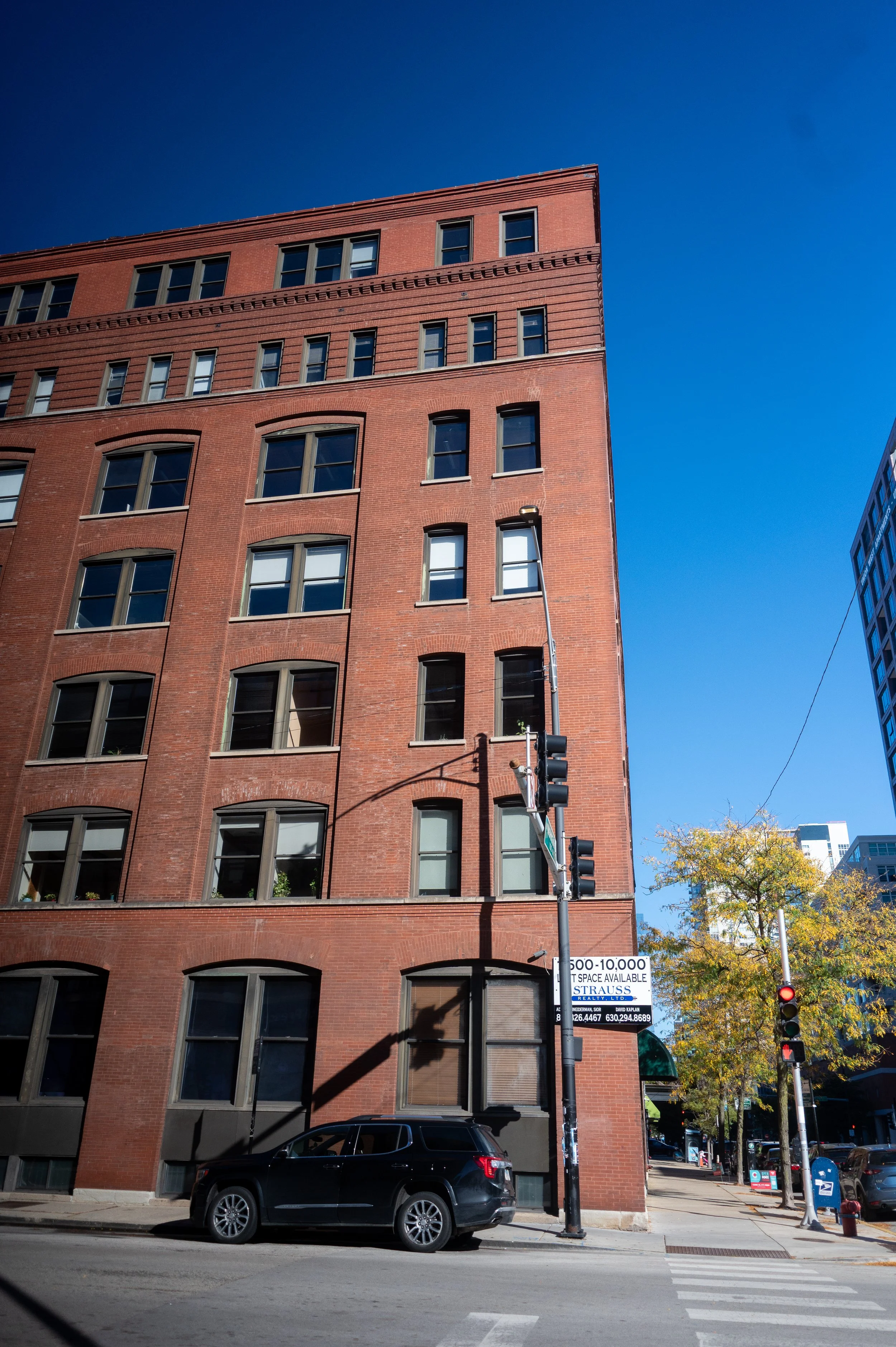
Olson Kundig: Contemporary Design Inside an 1889 Factory
One of the stops I was particularly interested in visiting was the Chicago office of Olson Kundig at 954 W. Washington Boulevard.
The architecture and design firm's office occupies a former casket factory dating to 1889.
I love adaptive reuse projects, especially when the designers preserve a building's original character rather than attempting to erase its history.
Here, the contrast between the historic brick-and-timber structure and contemporary architectural interventions was especially interesting.
Original wood floors, exposed structural elements, models, and custom millwork created a workspace that felt connected to both the building's industrial past and the firm's design philosophy.
As someone who loves interiors and is constantly collecting inspiration for future home projects, I could have spent quite a bit of time studying the materials and details.
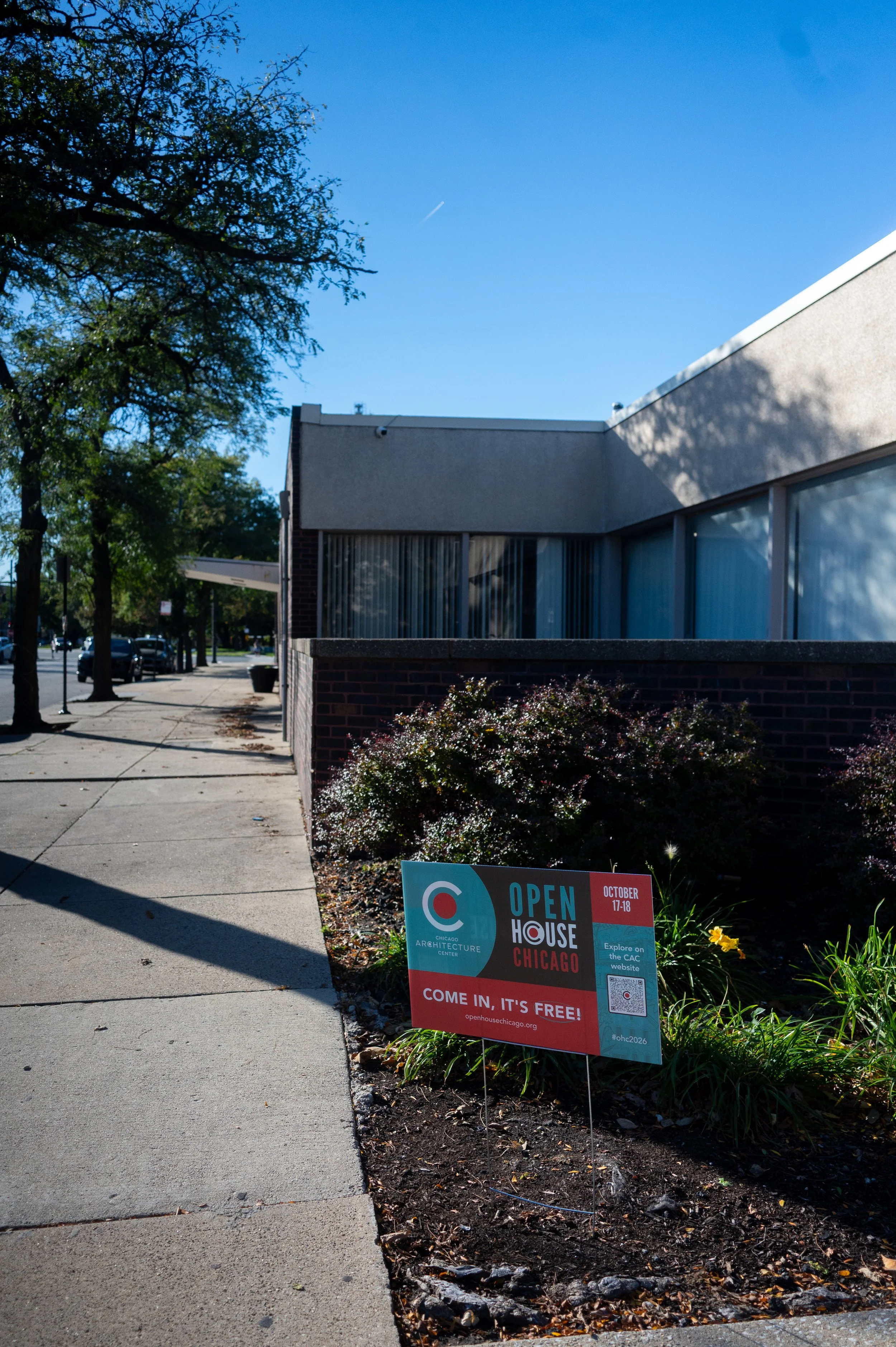
Windy City Bird Lab: Tracking Chicago's Birds
Our final Saturday Open House Chicago stop was Windy City Bird Lab at 1426 W. Washington Boulevard.
This was one of those wonderfully unexpected experiences that makes the event so interesting.
The research facility occupies a converted medical building and focuses on studying birds and their movements.
Eric was fascinated by the precision of modern bird-tracking technology.
"Who knew that you could track birds with such granularity?" he remarked afterward.
I certainly wouldn't have thought to seek out a bird research laboratory on an ordinary weekend in Chicago, which is exactly why I love Open House Chicago.
The festival introduces you to organizations and businesses doing fascinating work in buildings you'd otherwise walk right past.
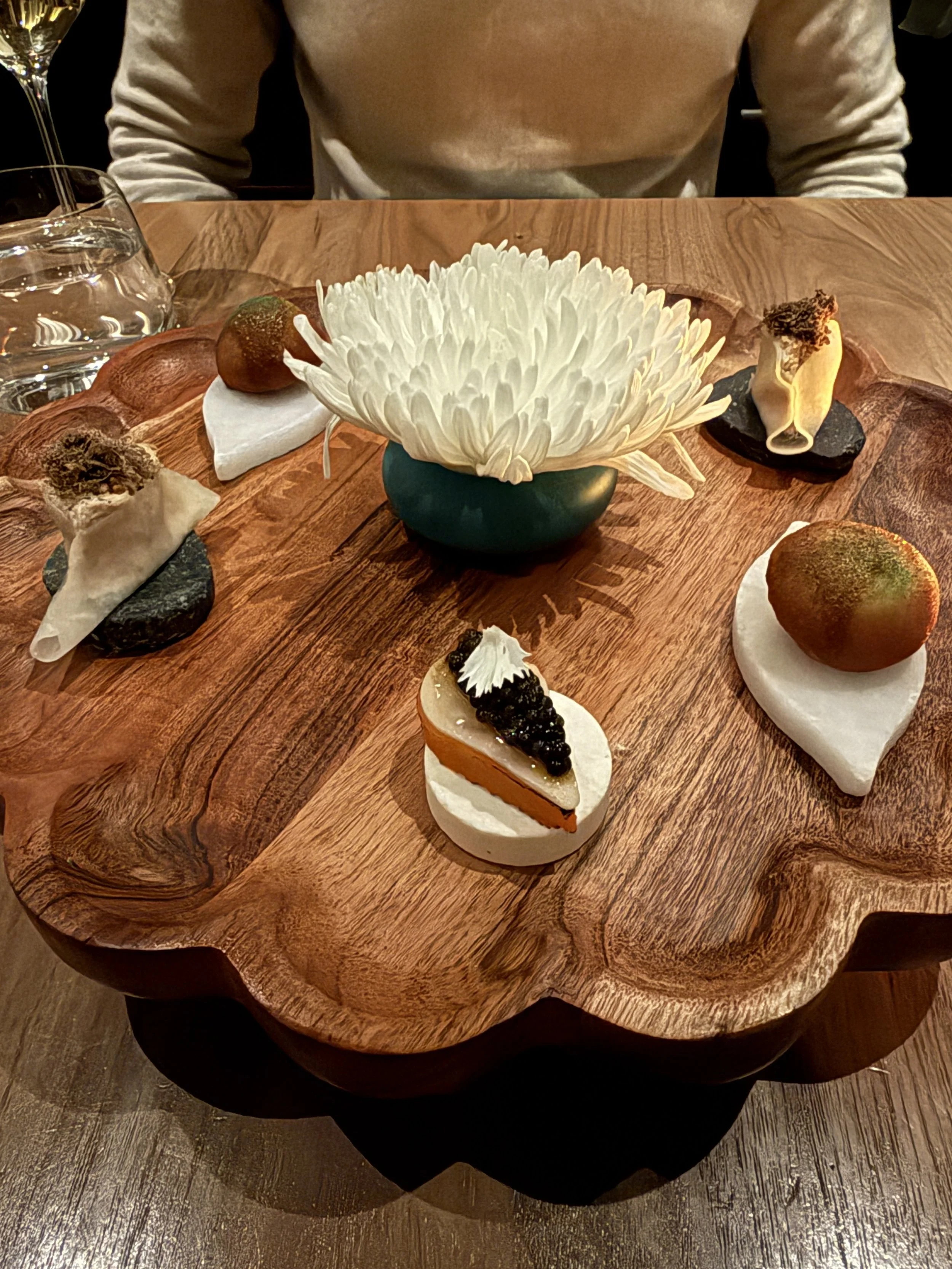
Saturday Night: A Five-Course Tasting Menu at All Well
After a full day of walking, we returned to The Emily for a much-needed break before dinner.
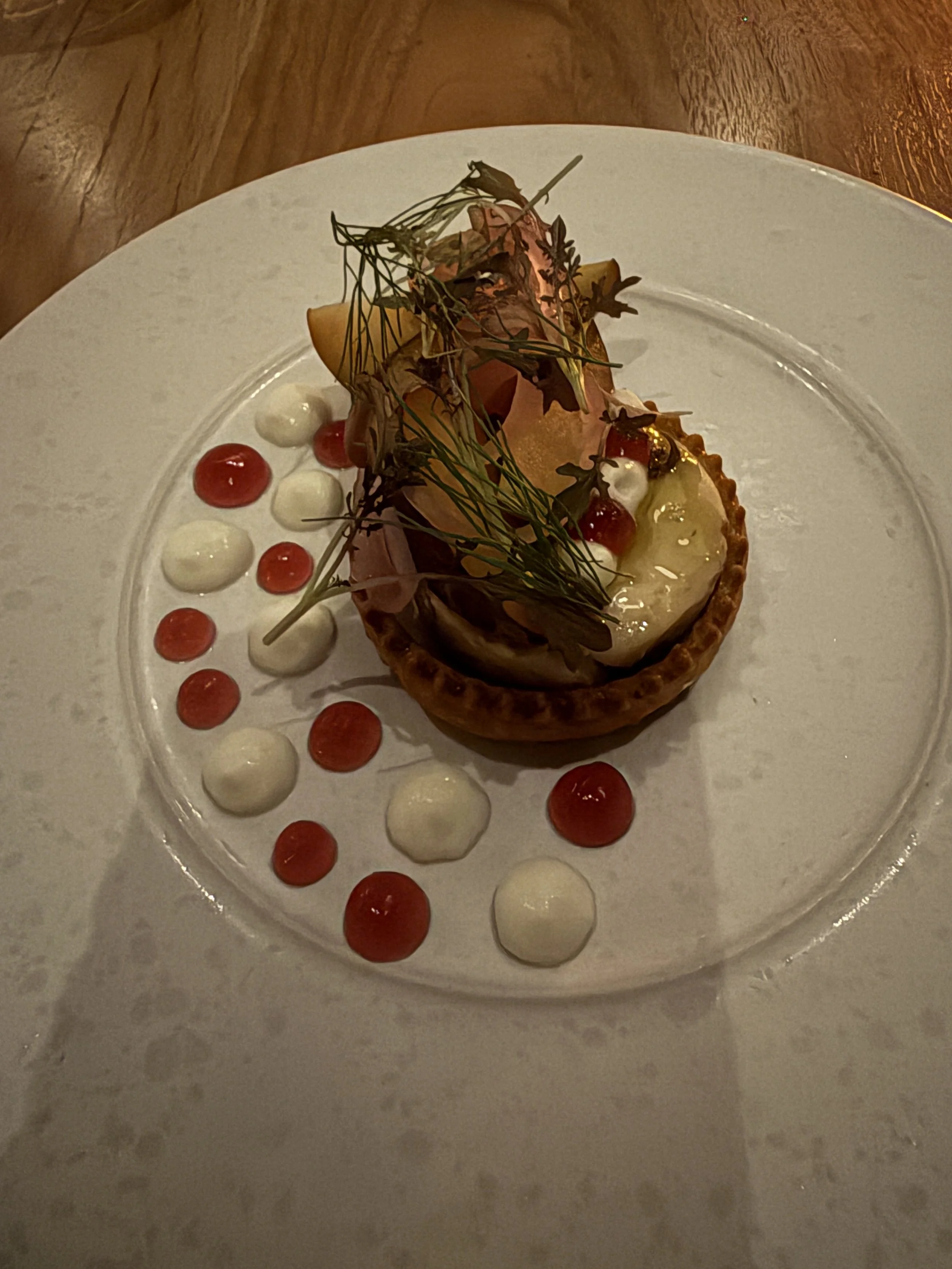
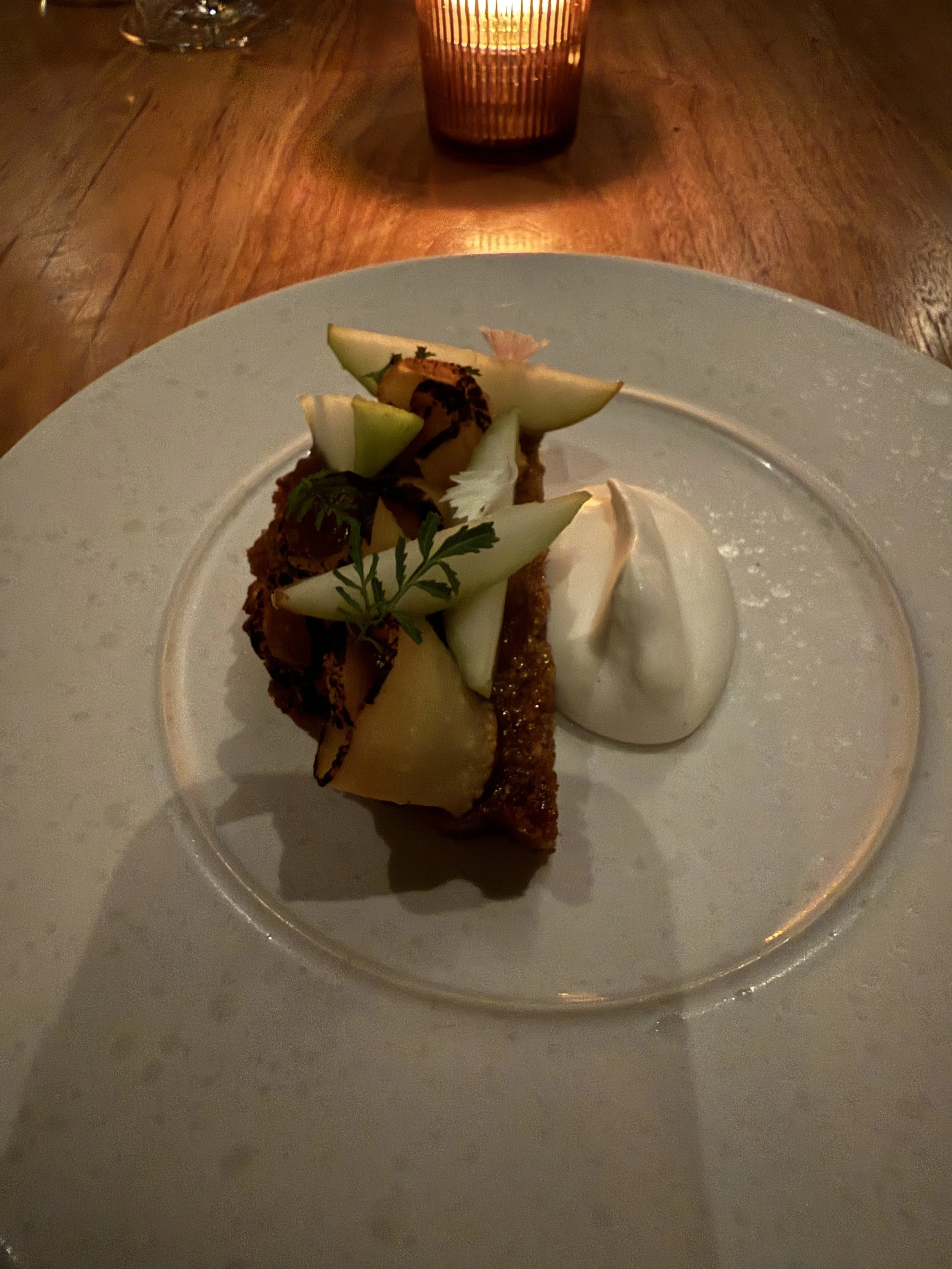
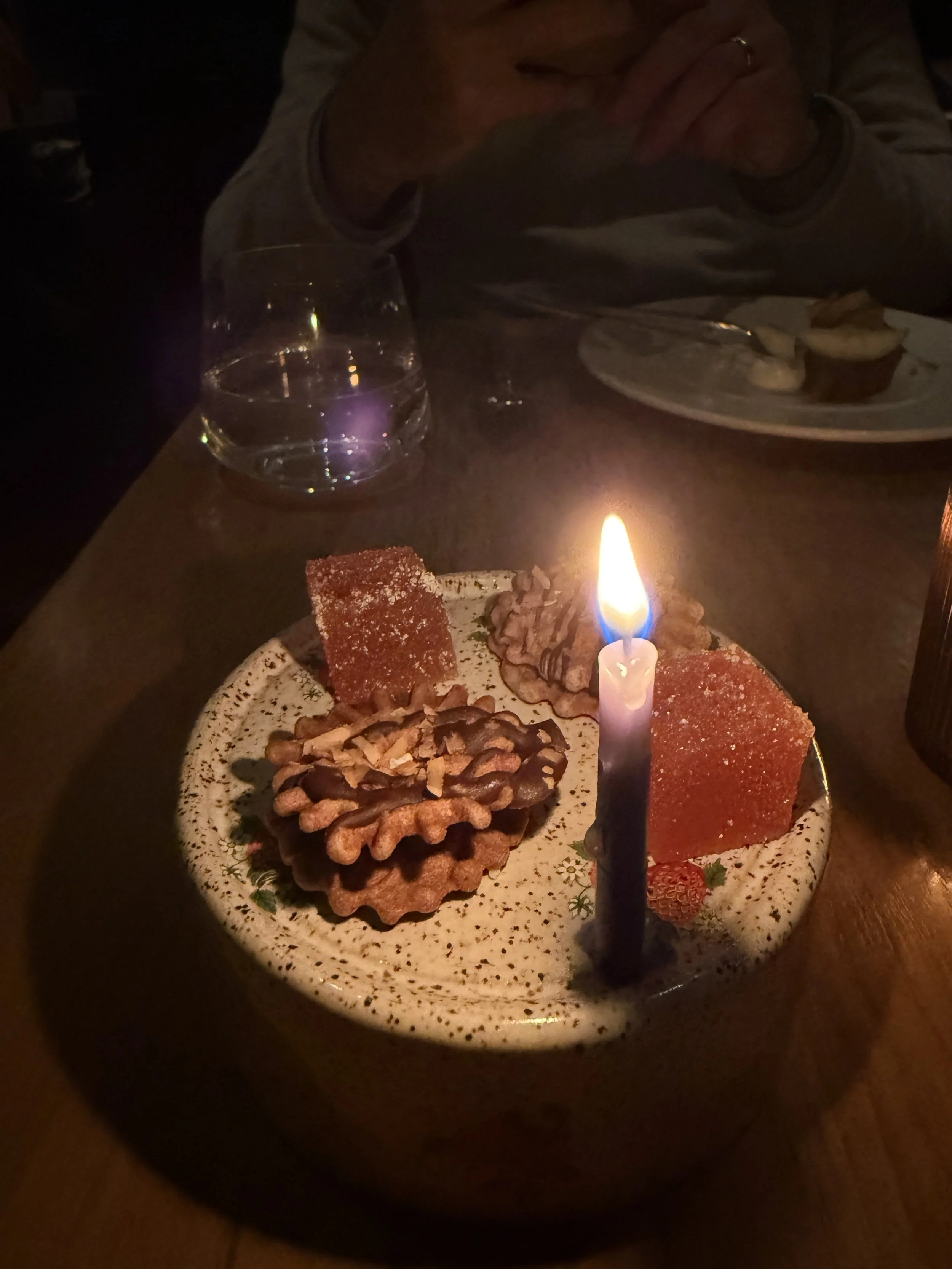
We made a relatively last-minute reservation at All Well for its five-course tasting menu with wine pairings.
One thing we both appreciated was the thoughtful portion sizing.
We've enjoyed tasting menus in the past where the food is wonderful, but by the final courses, we're uncomfortably full. The same can happen with wine pairings, where the pours are so generous that finishing every glass becomes a challenge.
At All Well, we thought the balance was just right.
The portions were satisfying without being excessive, and the wine pairings complemented the experience without overwhelming it.
It was a lovely way to end a long day of exploring, and we appreciated having a leisurely dinner where the only thing we needed to think about was what would arrive at the table next.
Sunday: A Last-Minute Detour to Chicago's Uptown Theatre
Our original Sunday itinerary was designed to be shorter and more relaxed, with a focus on urban agriculture, design studios, and businesses in Fulton Market.
But over breakfast at Bar Tutto, we made a spontaneous decision that changed our morning.
We were going to visit the Uptown Theatre.
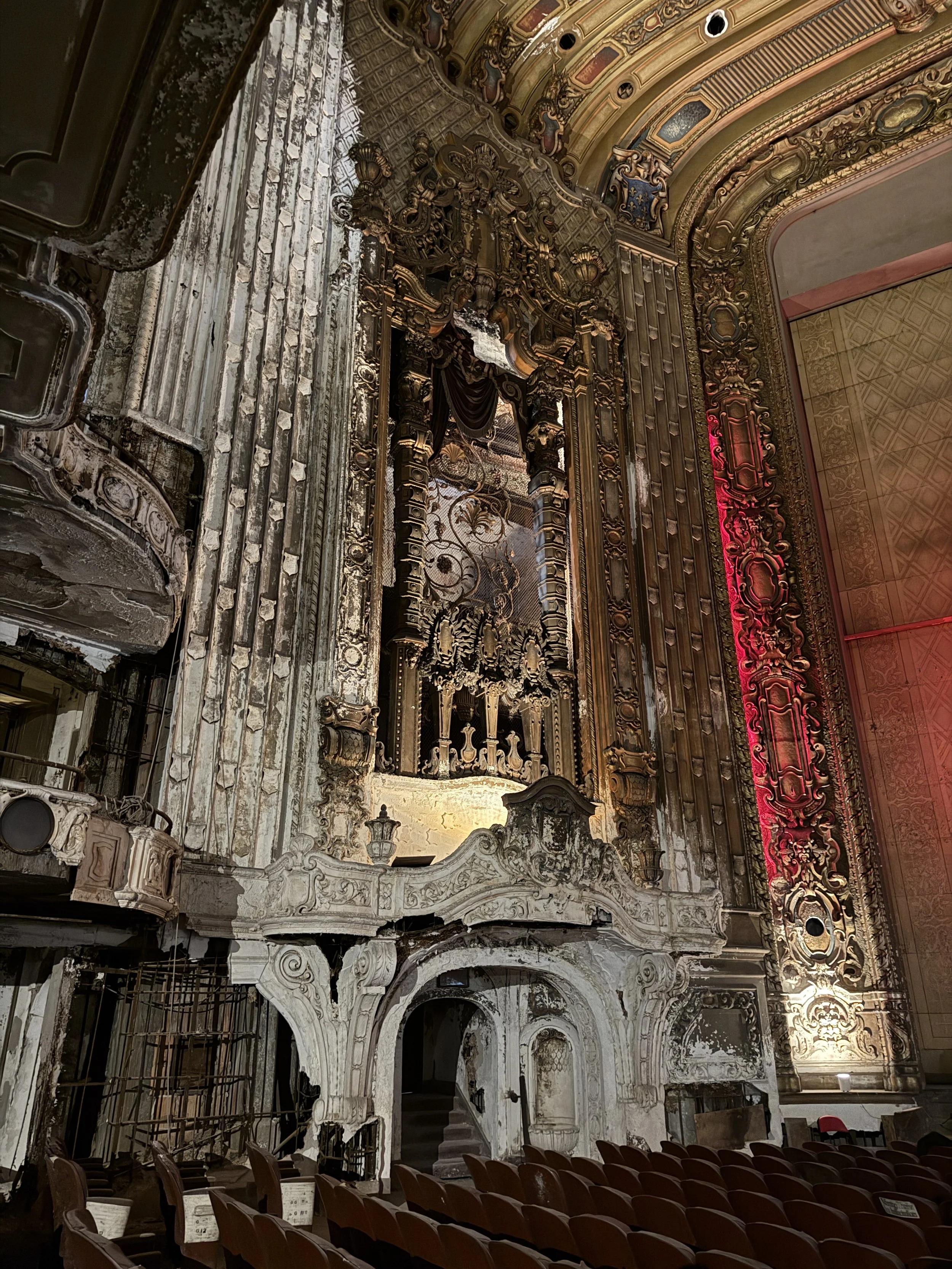
Uptown Theatre: Worth the Hour-and-a-Half Wait?
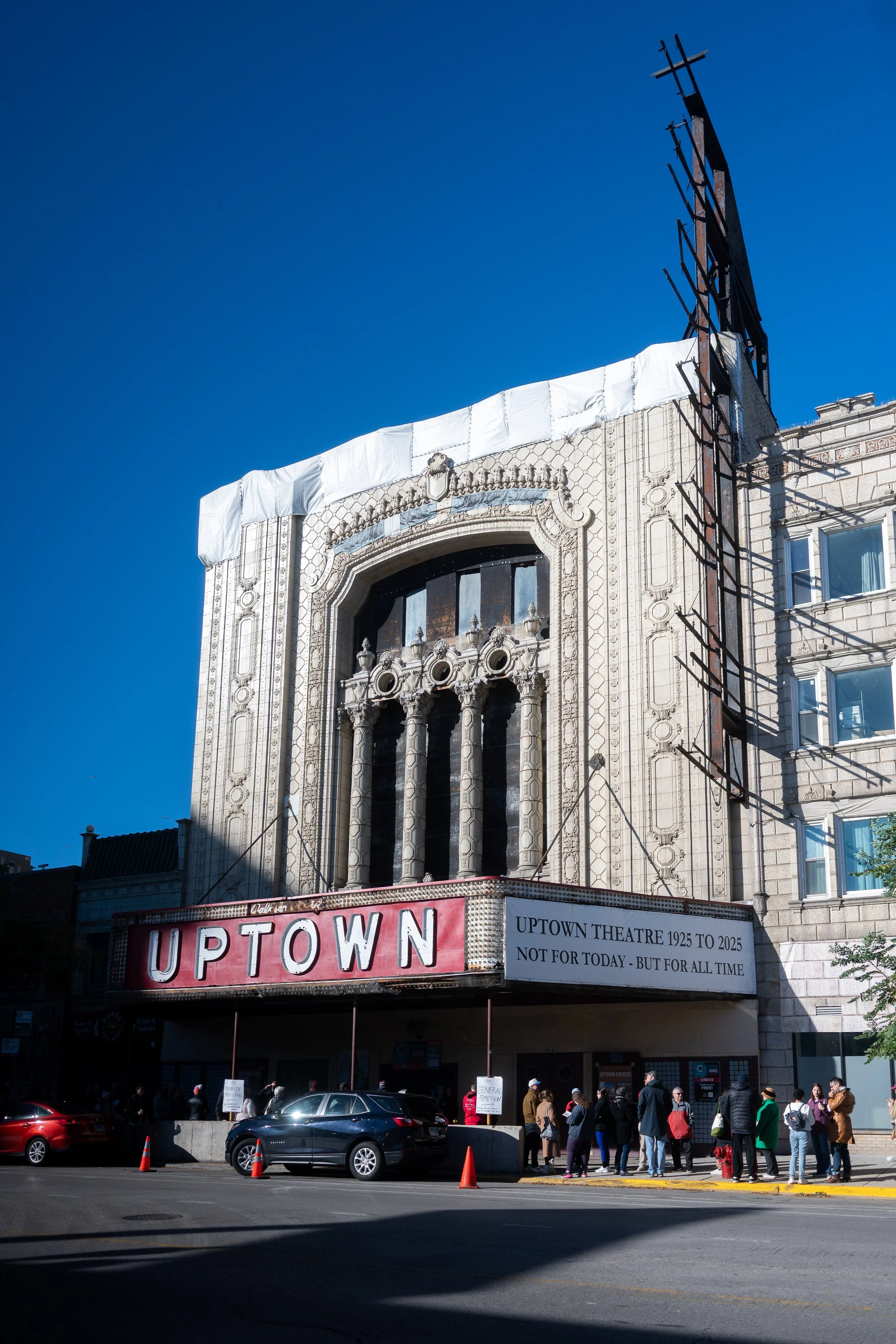
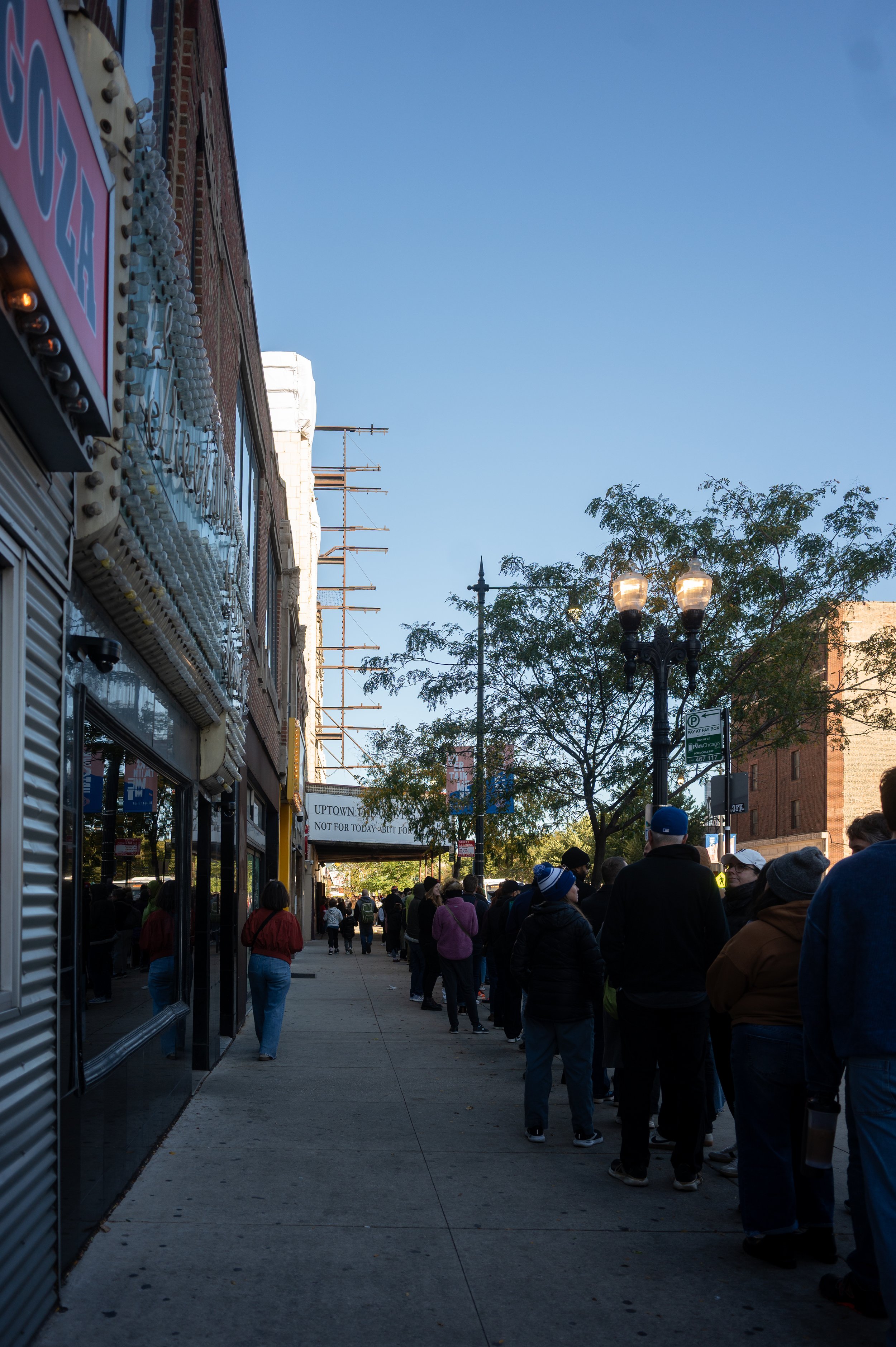
Eric and I have lived in Uptown for seven years, and for nearly that entire time, we've been curious about the interior of the magnificent Uptown Theatre.
The historic movie palace has long been one of those Chicago buildings that inspires both fascination and frustration. Its extraordinary exterior hints at the grandeur inside, but the building has remained inaccessible to most visitors for years.
When we learned that the Uptown Theatre was participating in Open House Chicago for the first time, we knew we wanted to see it.
So, after breakfast, we checked out of The Emily, left our luggage at the hotel, and took an Uber north.
We waited in line for approximately an hour and a half.
And the experience was unlike anything else we saw that weekend.
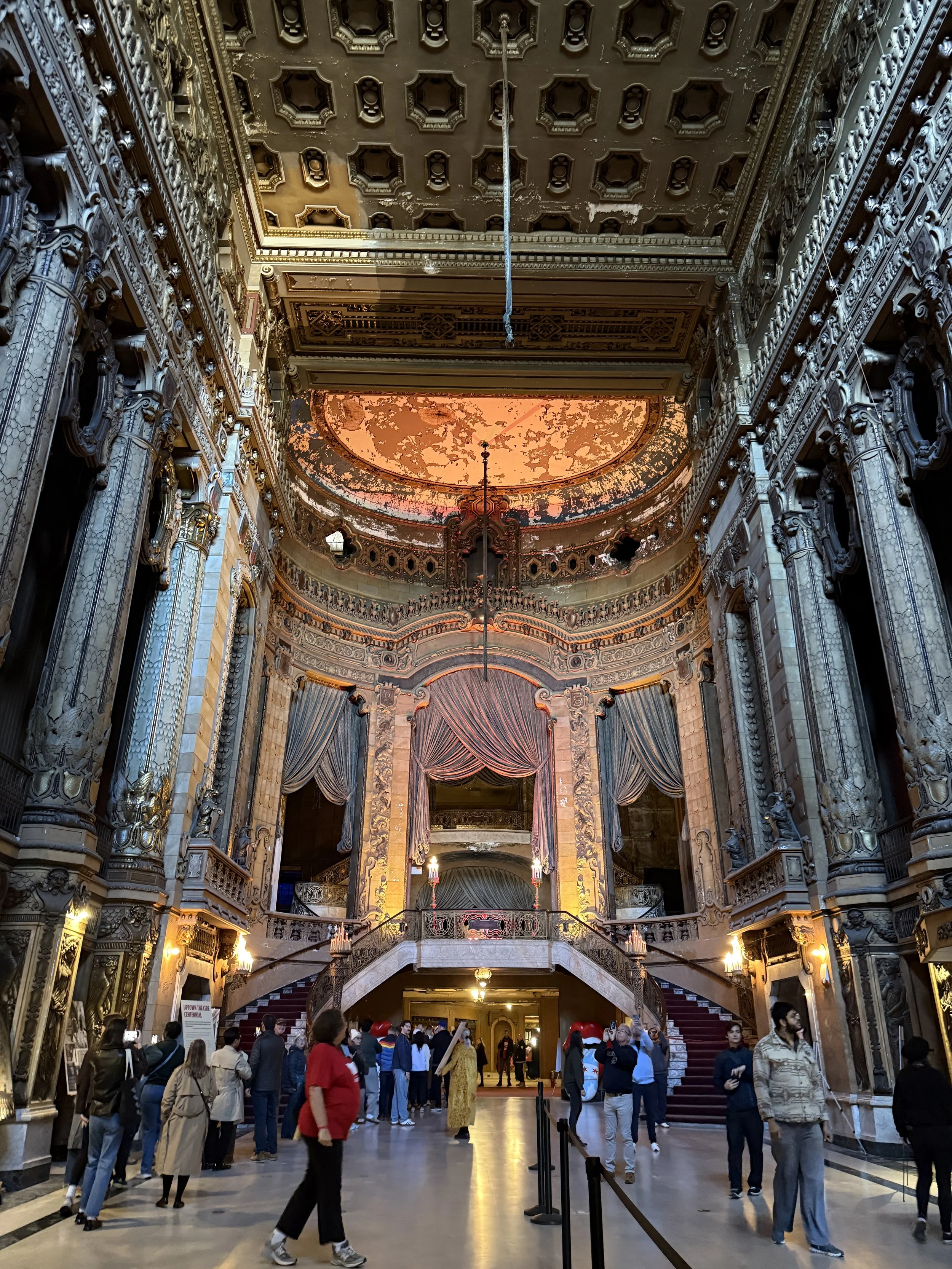
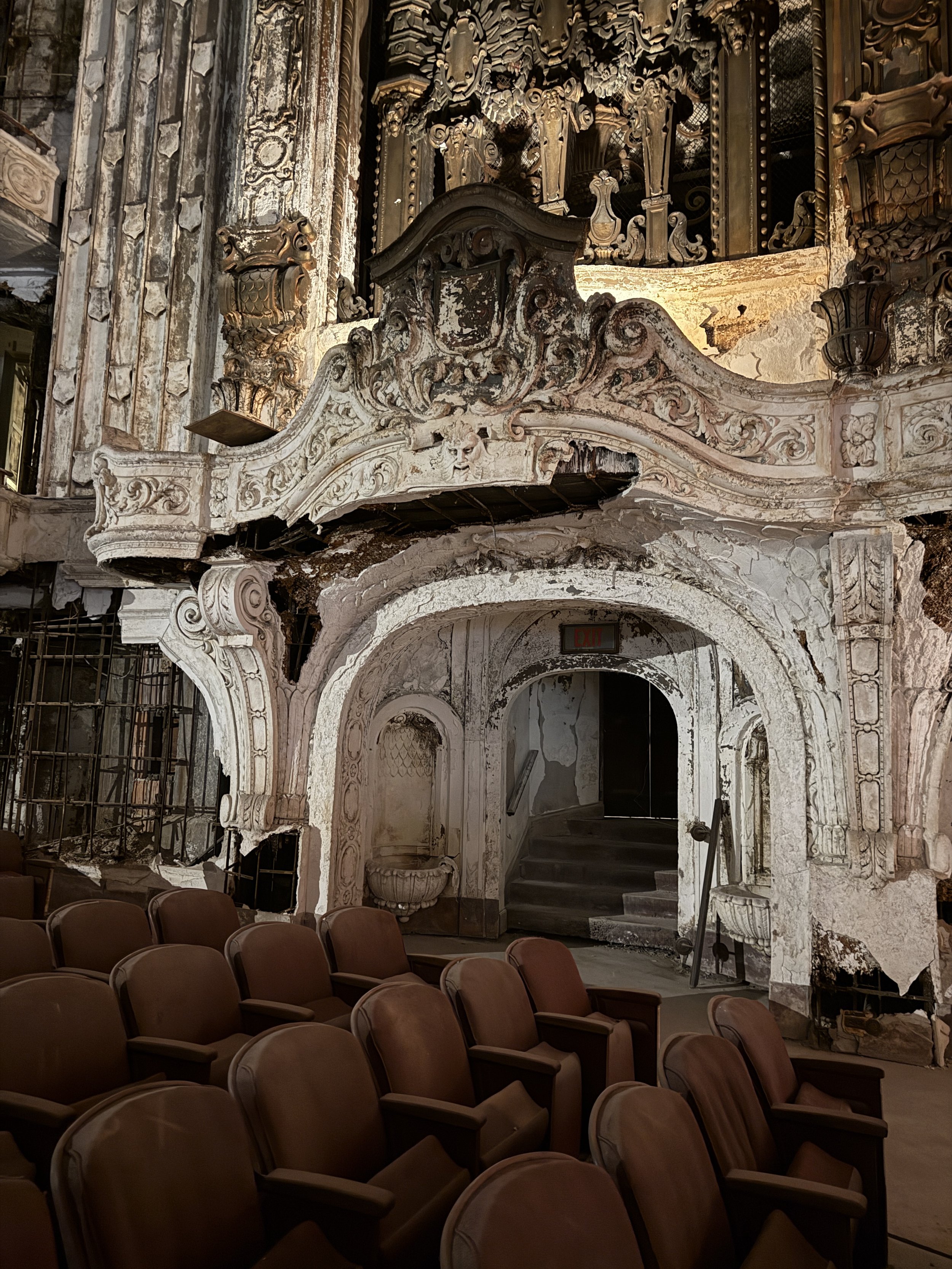
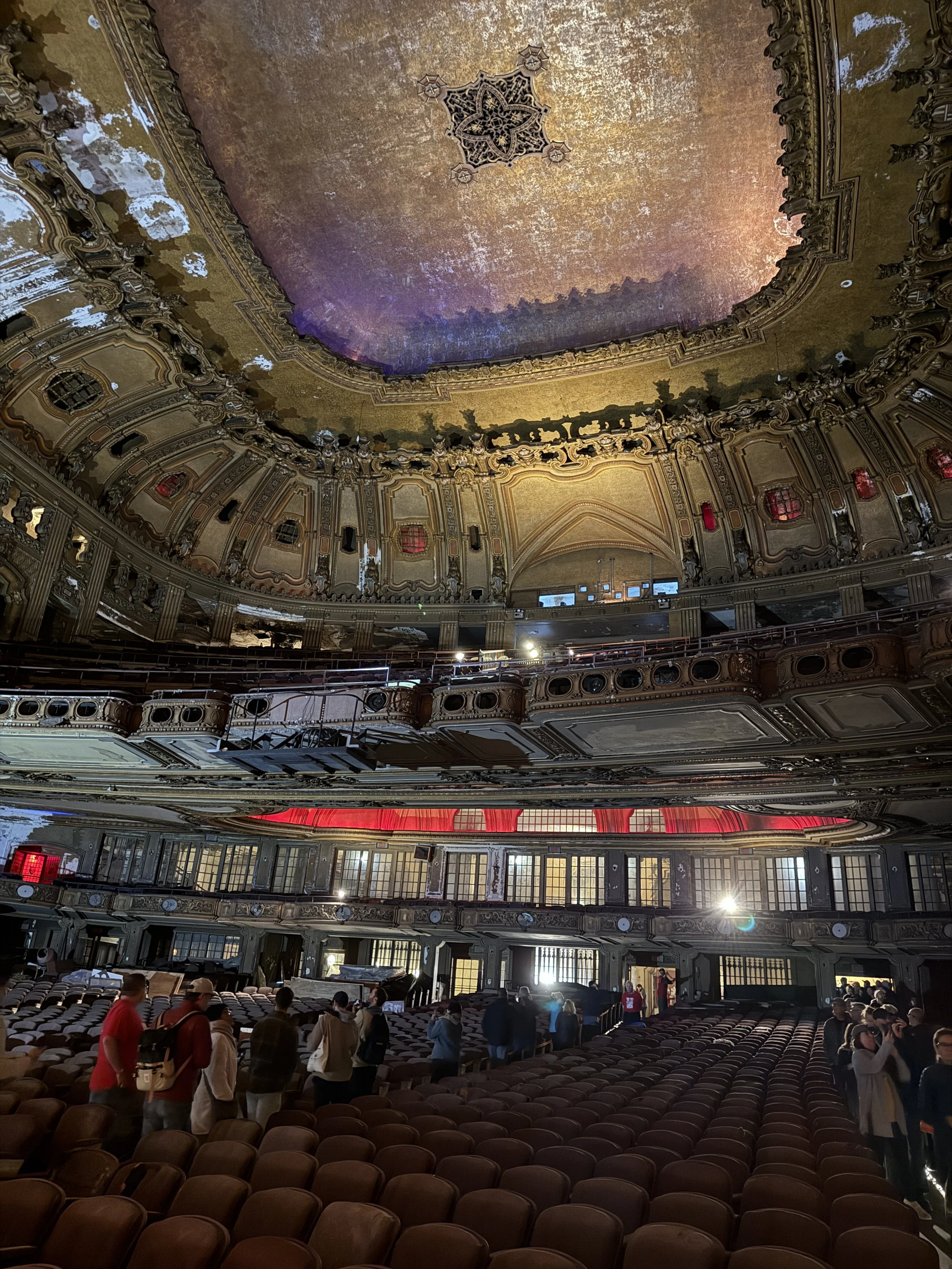
The Uptown Theatre is a majestic reminder of an era when entertainment venues were designed to inspire awe. Its enormous scale, ornate architectural details, and surviving decorative elements offer glimpses of the building's former glory.
But it's also impossible to ignore its deterioration.
Eric's reaction was particularly poignant:
"A majestic 20th-century building on the cusp of ruin. Threadbare contemporary salvage efforts are palpable. We are grasping the remnants of a once-great industrial and artistic society, built by our forefathers. Why can't we muster the resources to restore it?"
His observations captured the complicated emotions of visiting such a remarkable building.
There's wonder in seeing the surviving craftsmanship, but also sadness in recognizing how vulnerable historic architecture can become without the investment necessary to preserve it.
The Uptown Theatre was easily one of the most memorable experiences of our Open House Chicago weekend.
And after seven years of wondering what was inside, I'm so glad we finally had the opportunity to see it.
Sunday Afternoon: Urban Agriculture, Salvaged Treasures, and Chicago Design
Following our Uptown Theatre adventure, we returned to the Near West Side to finish our Open House Chicago itinerary.
The Roof Crop: Urban Agriculture in Chicago
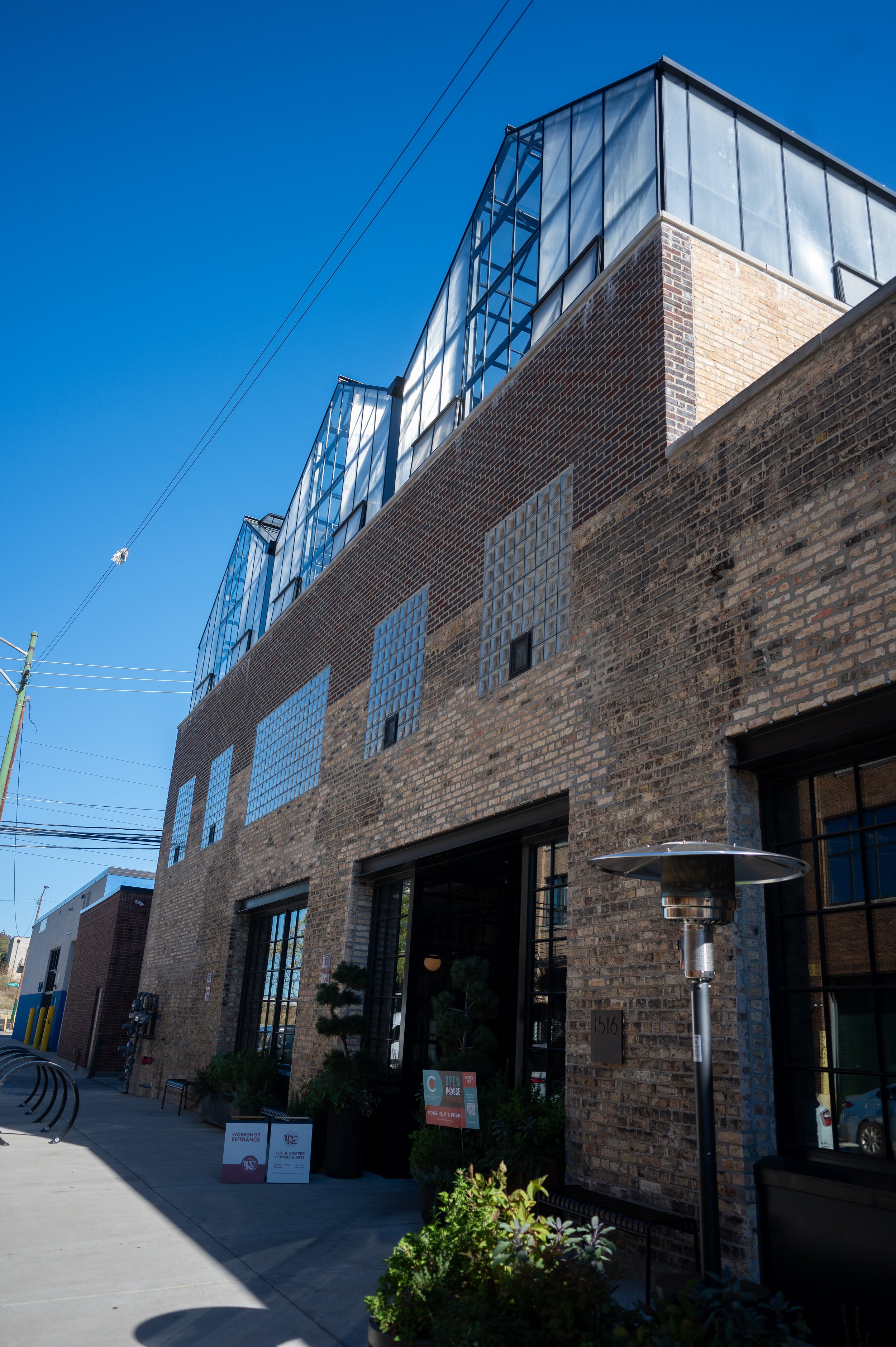
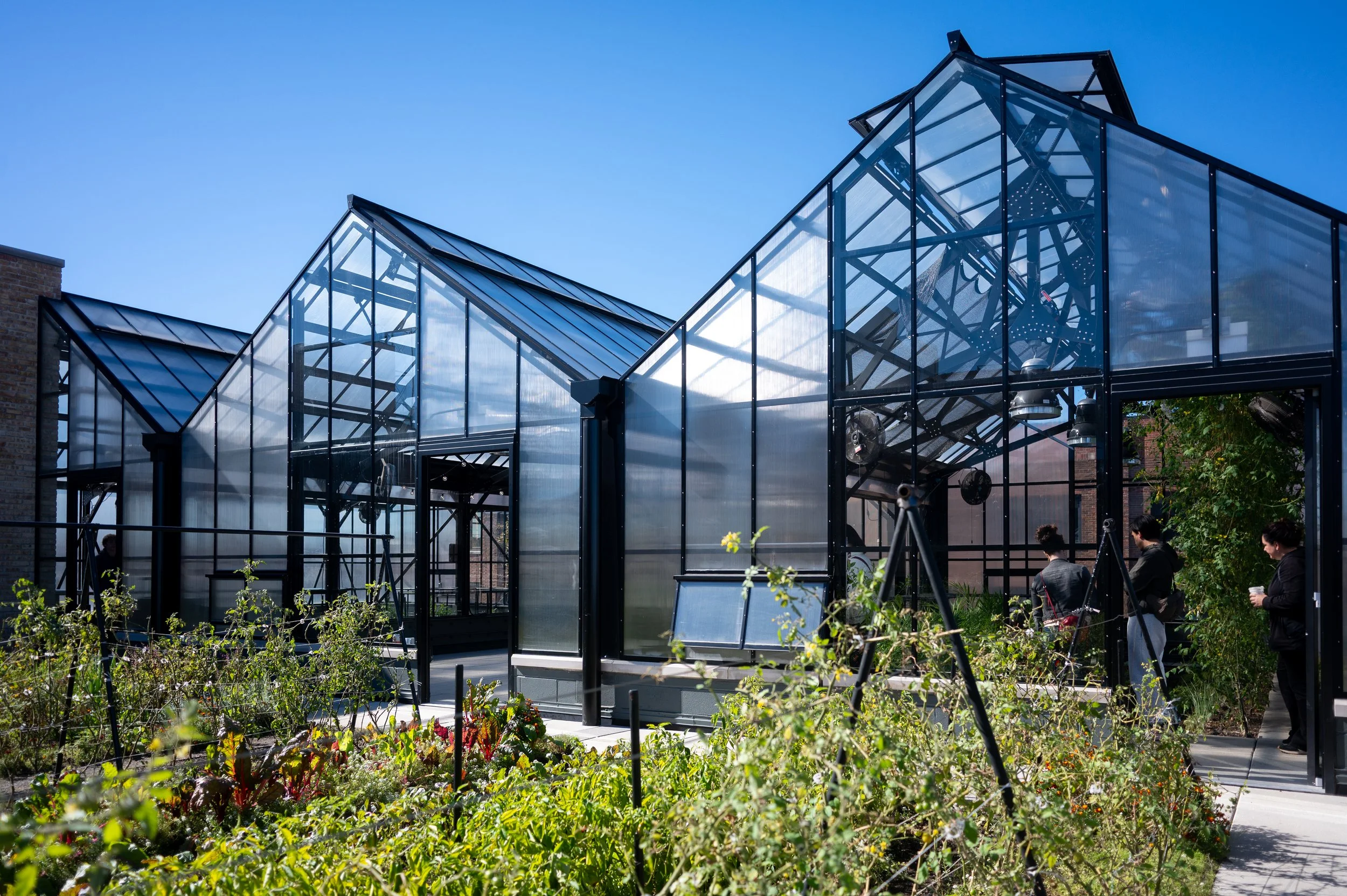
Our next stop was The Roof Crop at 1516 W. Carroll Avenue.
The Roof Crop operates urban agricultural spaces and greenhouses, bringing growing and sustainability practices into Chicago's built environment.
It's an especially interesting stop during an architecture festival because it demonstrates how industrial and commercial spaces can be adapted to support food production and other environmental initiatives.
I also loved the connection to The Emily, which has collaborated with The Roof Crop on rooftop gardening and apiary initiatives.
After spending so much of Saturday exploring Chicago's architectural past, Sunday offered a look at how the city is reimagining its existing spaces for the future.
Four Star Mushrooms: Inside a Working Urban Mushroom Farm
From The Roof Crop, we continued to Four Star Mushrooms at 320 N. Oakley Boulevard.
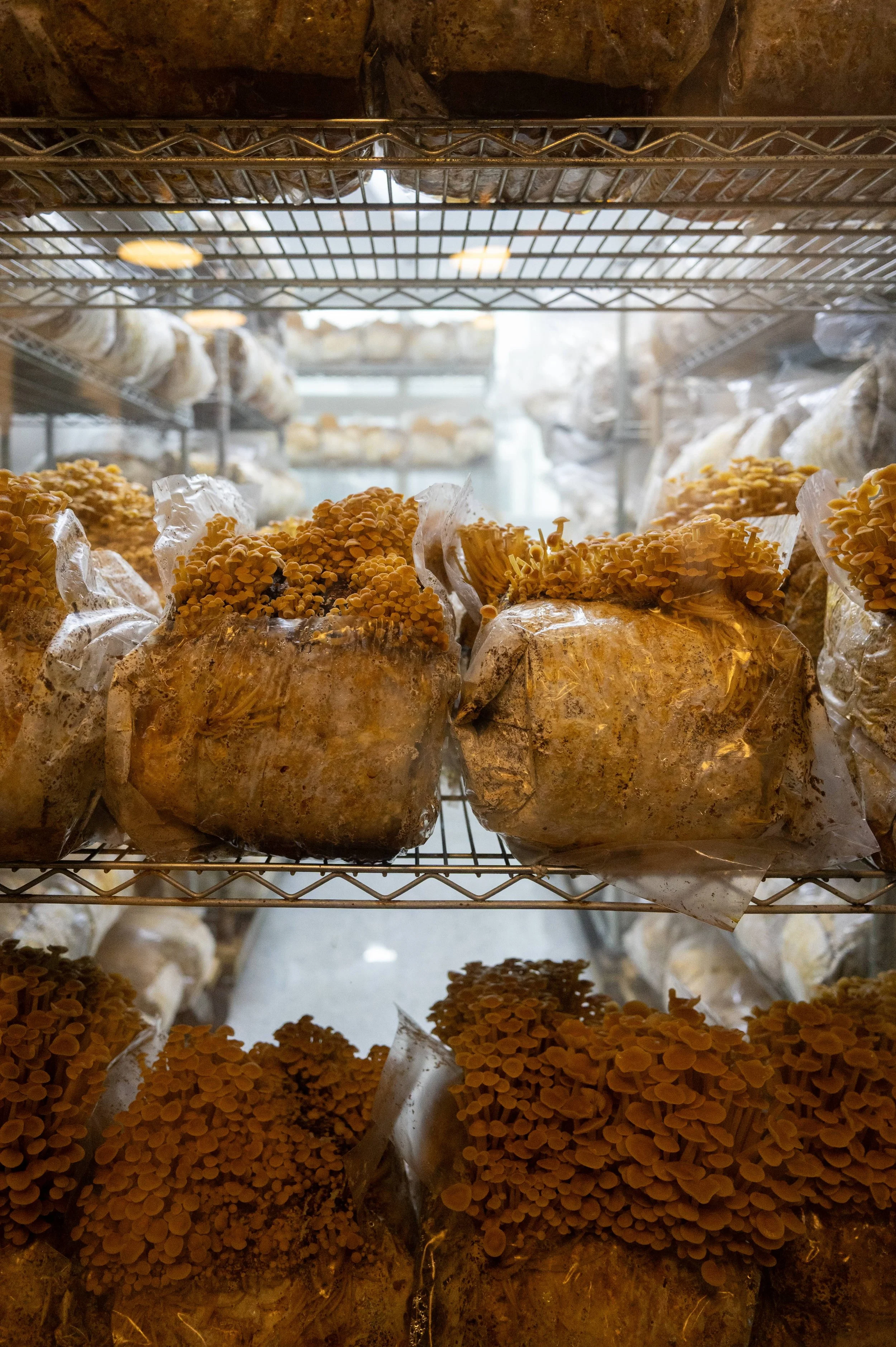
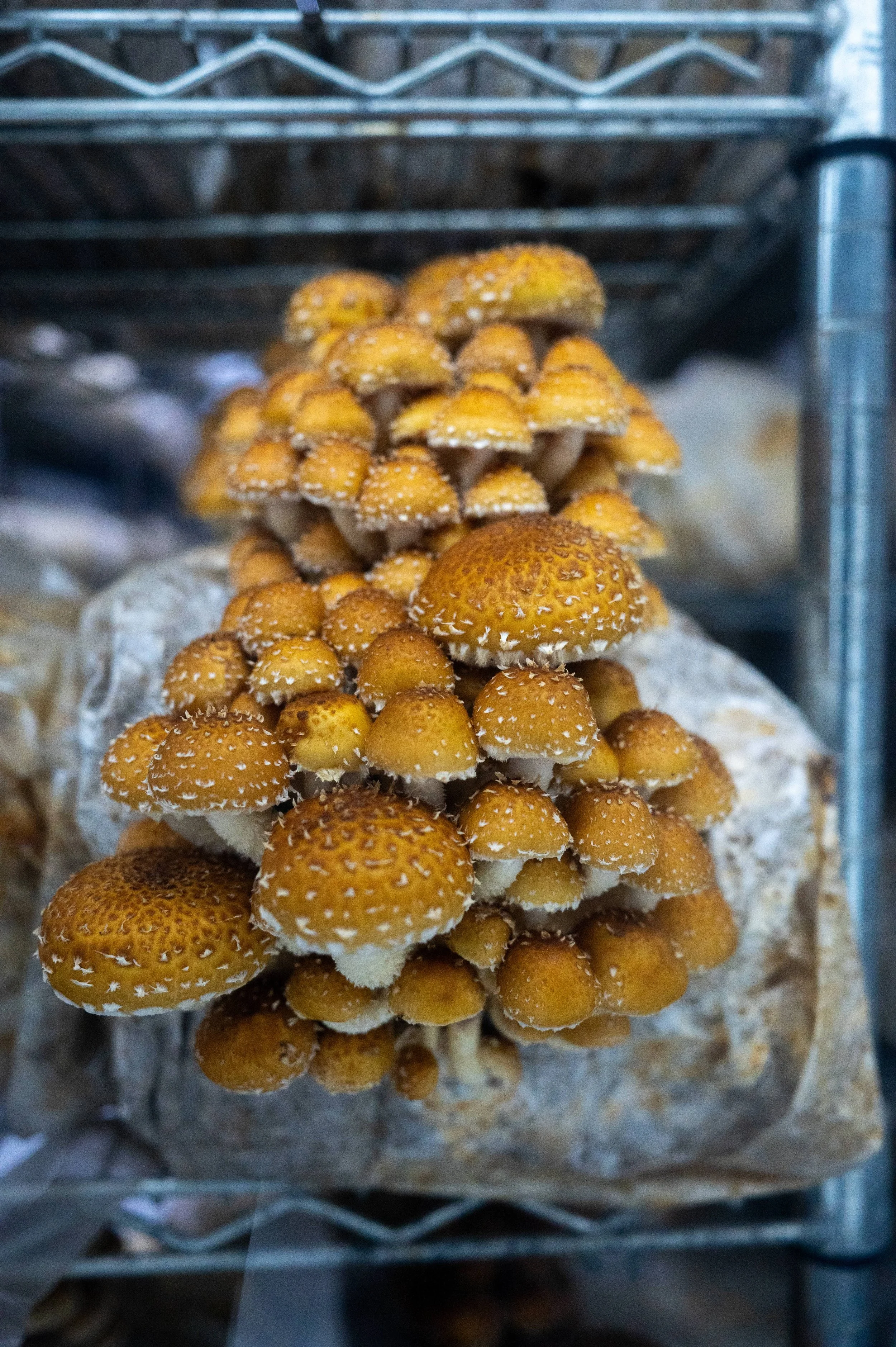
Located inside a converted industrial building, Four Star Mushrooms provided an opportunity to learn about the surprisingly technical process of cultivating mushrooms.
We explored the facility and learned about sterile laboratories, climate-controlled growing environments, and the steps involved in producing mushrooms commercially.
Eric summarized the visit as an education in mushroom cultivation.
It was another example of the unexpected experiences Open House Chicago makes possible.
I never imagined that an architecture tour would include a working mushroom farm, but it was a fascinating addition to our weekend.
An Unexpected Stop at Salvage One
On our walk toward Field Notes, we stumbled upon Salvage One.
This wasn't part of our original Open House Chicago itinerary, but I couldn't resist going inside.
Salvage One is a treasure trove of architectural salvage, vintage furnishings, decorative objects, and pieces of Chicago's design history.
We wandered through three floors of incredible finds, from salvaged architectural elements to antique furniture and unusual objects.
I was in heaven.
I've always loved the idea of incorporating architectural salvage into a home, particularly pieces with a history or connection to Chicago.
As Eric and I think about our next home, visiting places like Salvage One only makes me more excited about the possibility of finding beautiful old doors, hardware, lighting, or architectural details that can be given a new life.
I can't wait to have a place where I can incorporate some of these treasures.
Sometimes the best discoveries are the ones you never planned to make.
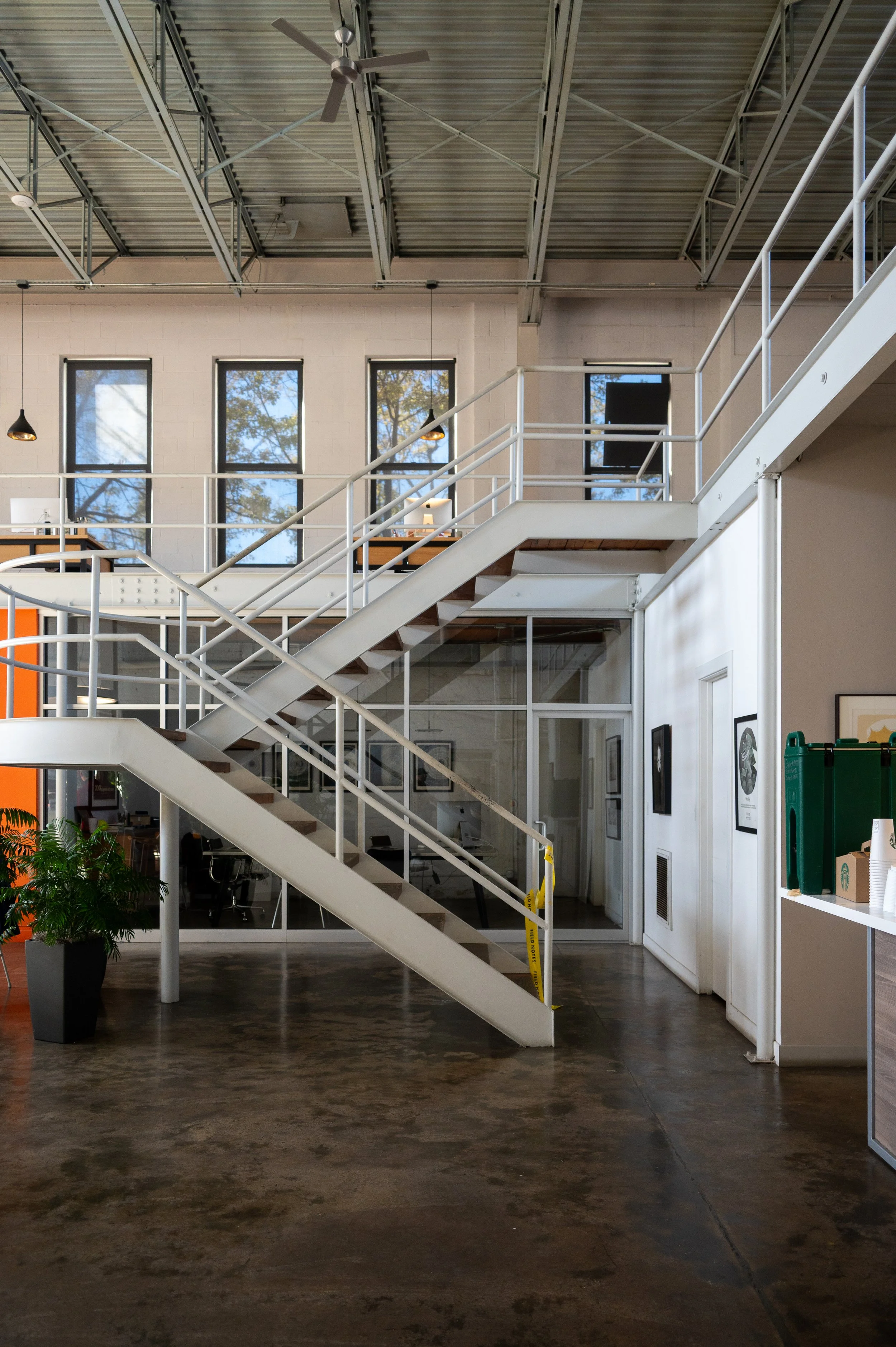
Field Notes: A Chicago Brand with a Personal Connection
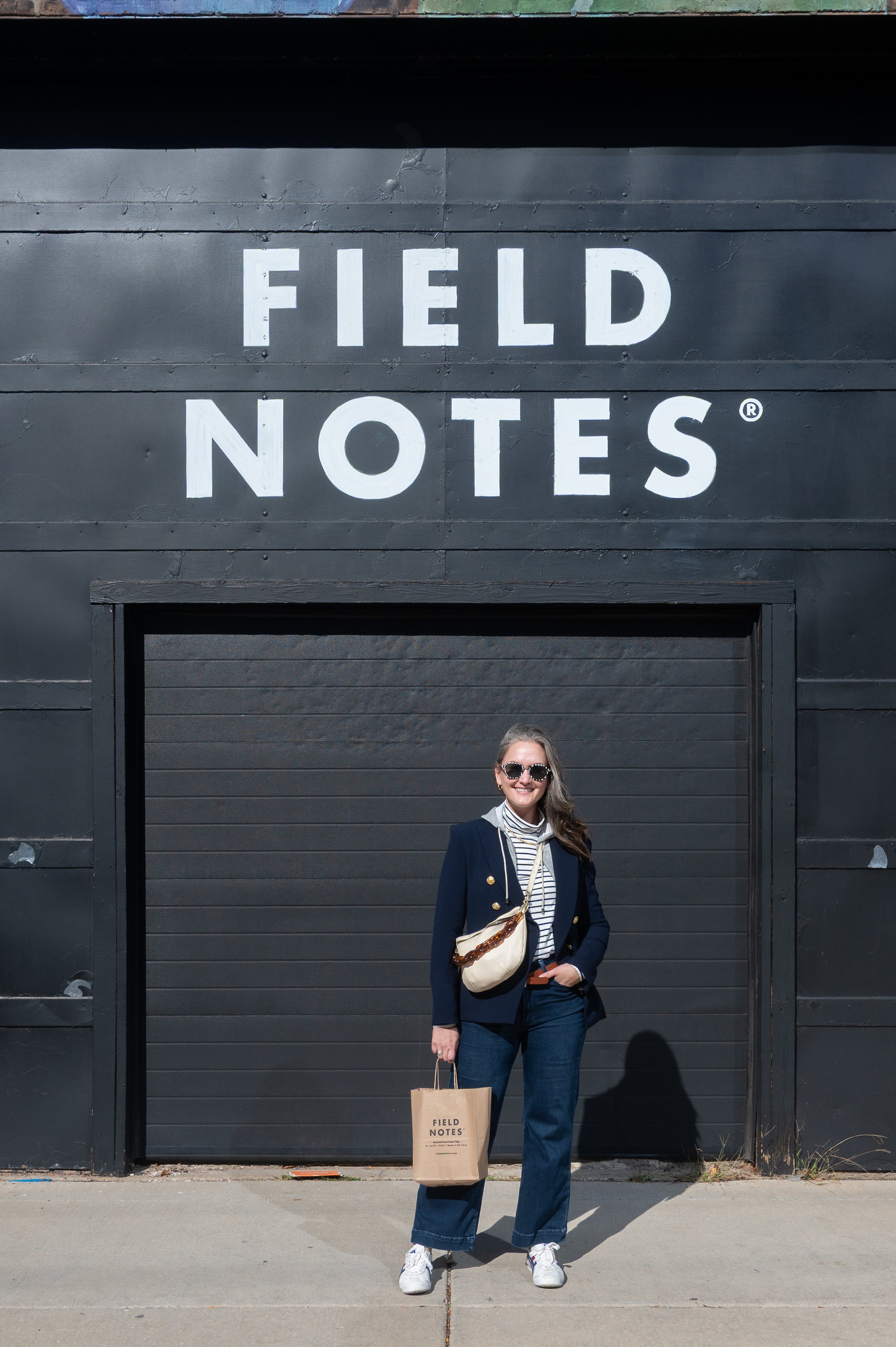
Our next stop was Field Notes Brand at 401 N. Racine Avenue.
Field Notes is a Chicago-based stationery company known for its beautifully designed, pocket-sized notebooks inspired by vintage American agricultural memo books.
Its headquarters occupies an industrial building that once produced components for train engines.
Between my interest in design and Eric's appreciation for well-made, practical objects, this was a stop we both thoroughly enjoyed.
Eric's assessment was simple: "Awesome local business. Took lots of notes."
But Field Notes also holds a special personal connection for me.
My grandpa and great-uncle Amos used to carry the small, utilitarian promotional memo books distributed to American farmers by seed, tractor, and agricultural companies.
I can still picture those notebooks tucked into their shirt pockets.
Field Notes was inspired by that same tradition, and seeing the notebooks brought back memories of them.
We purchased several to bring home to my parents as small thank-you gifts for watching Miles while we enjoyed our weekend away.
Of all the souvenirs we could have purchased during Open House Chicago, these felt especially meaningful.
I love that a contemporary Chicago design company has found a way to preserve and celebrate such a humble piece of American material culture.
345 N. Morgan: A Unique View of an L
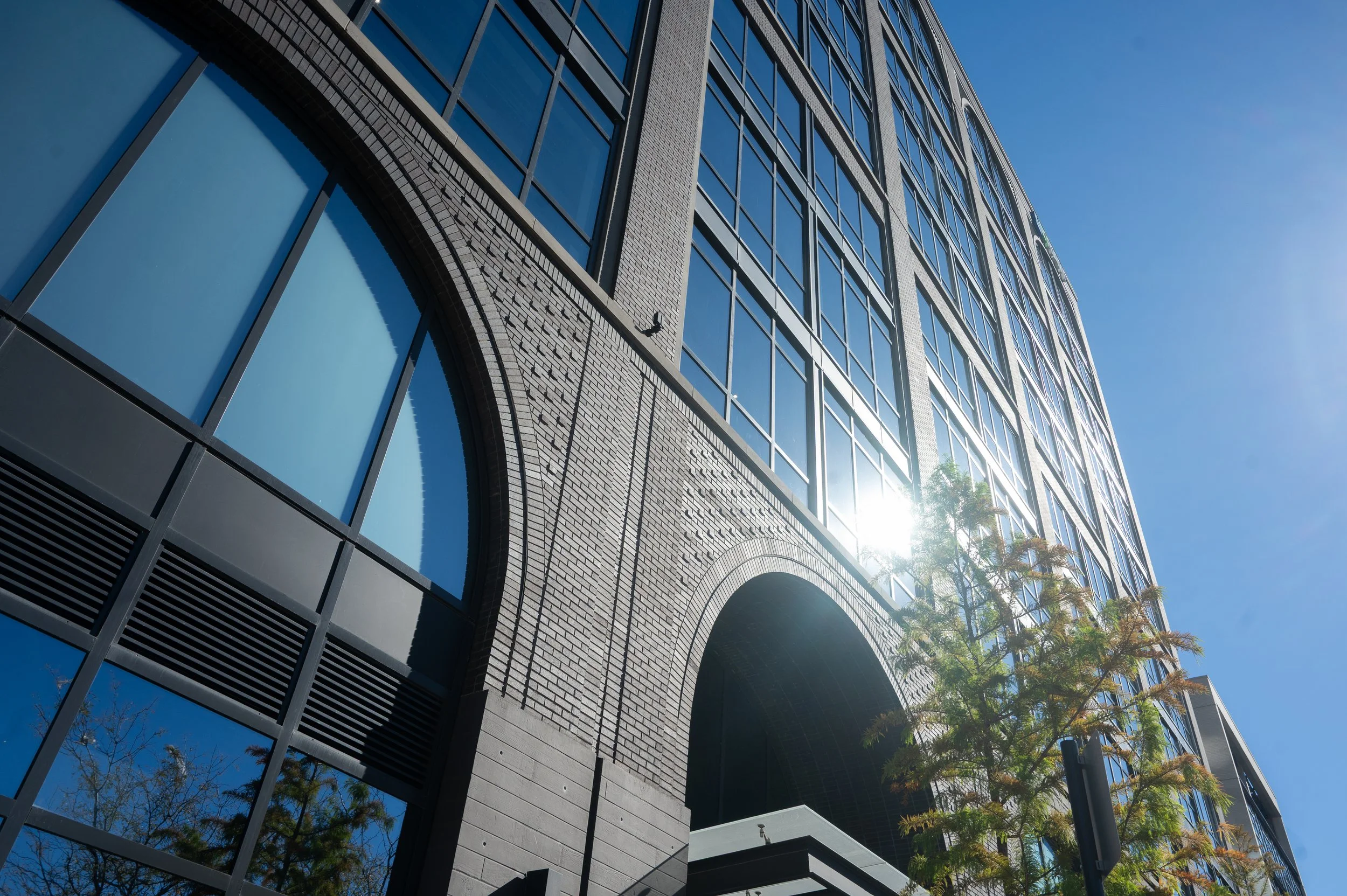
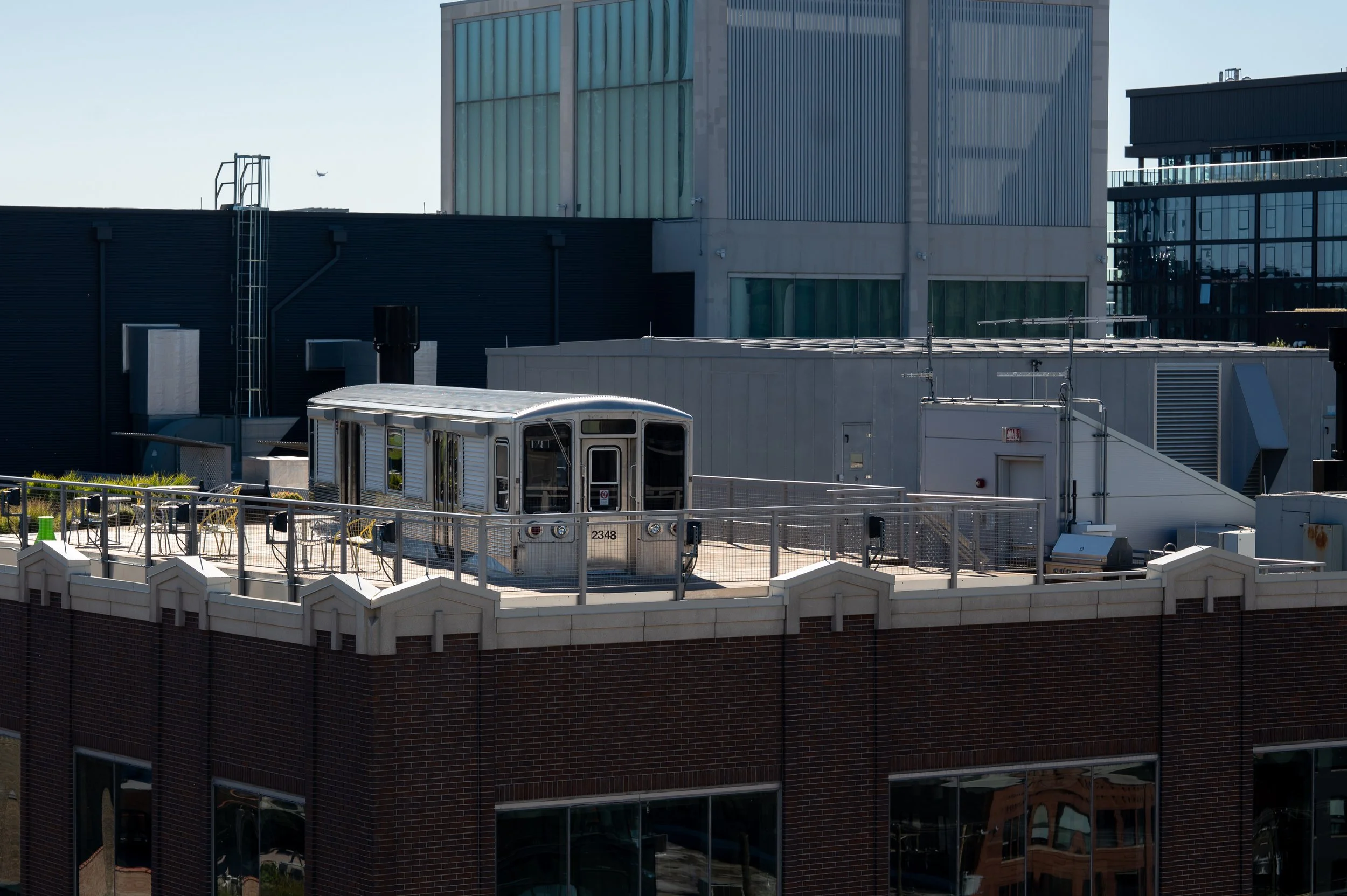
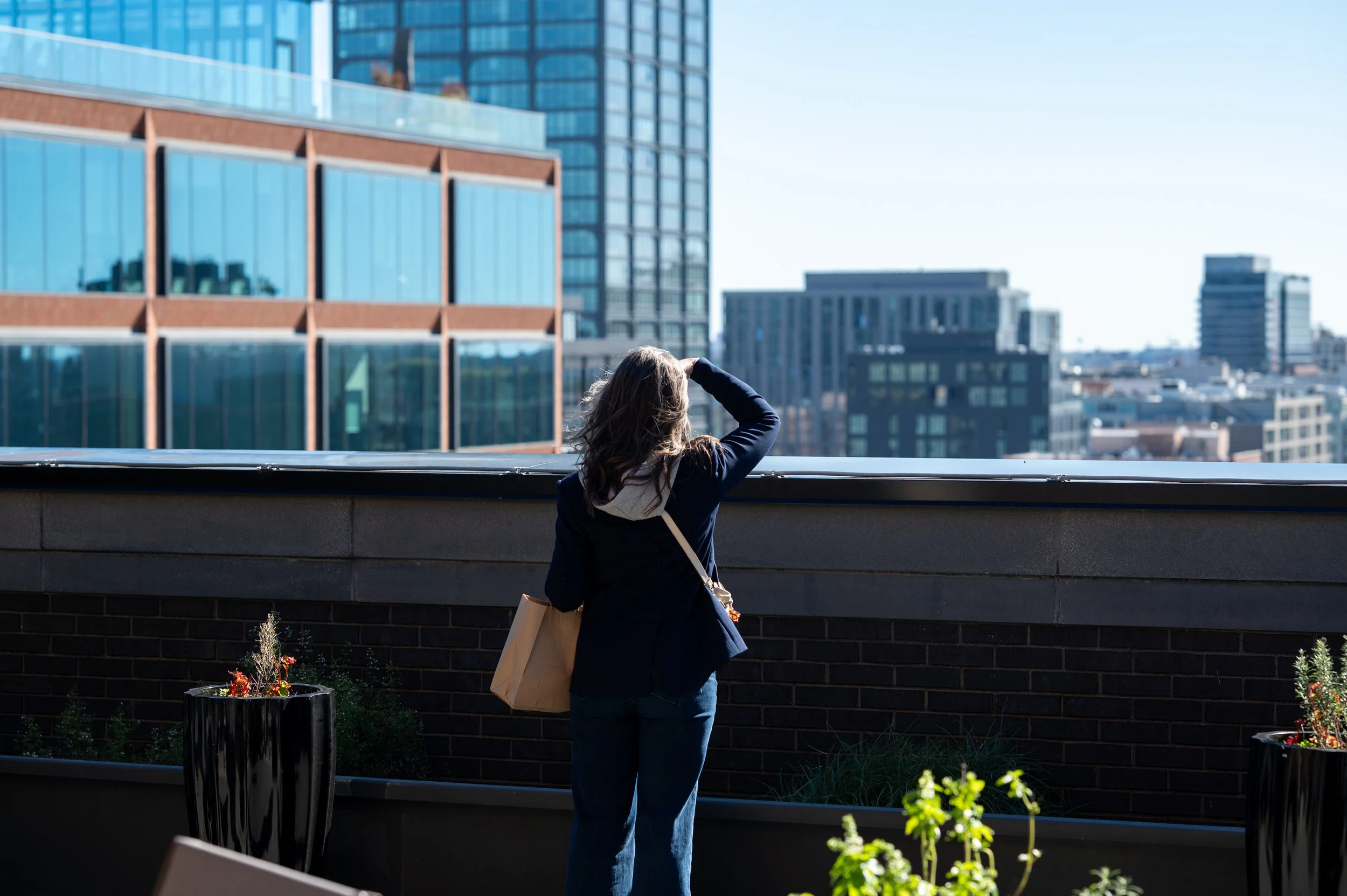
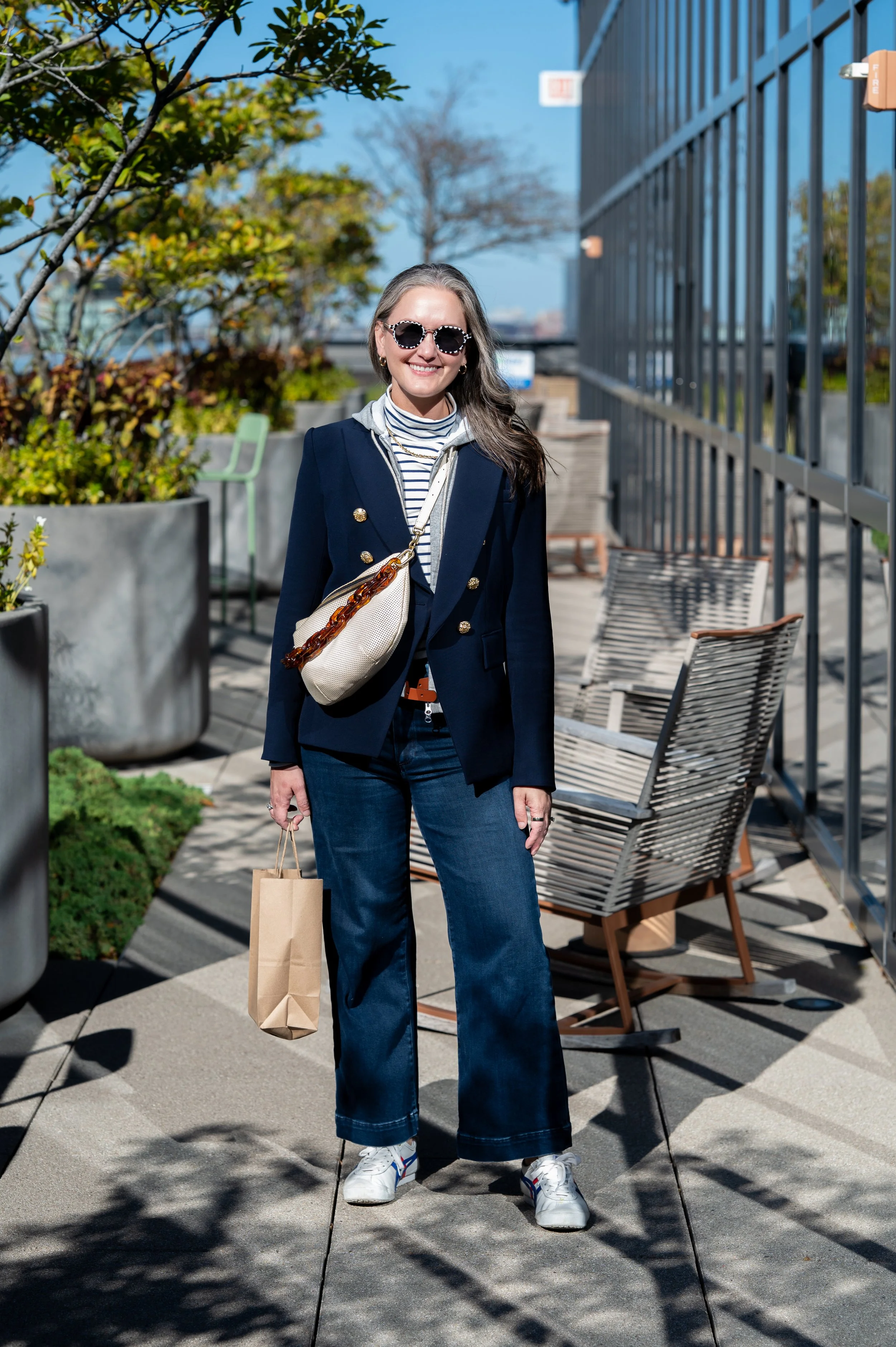
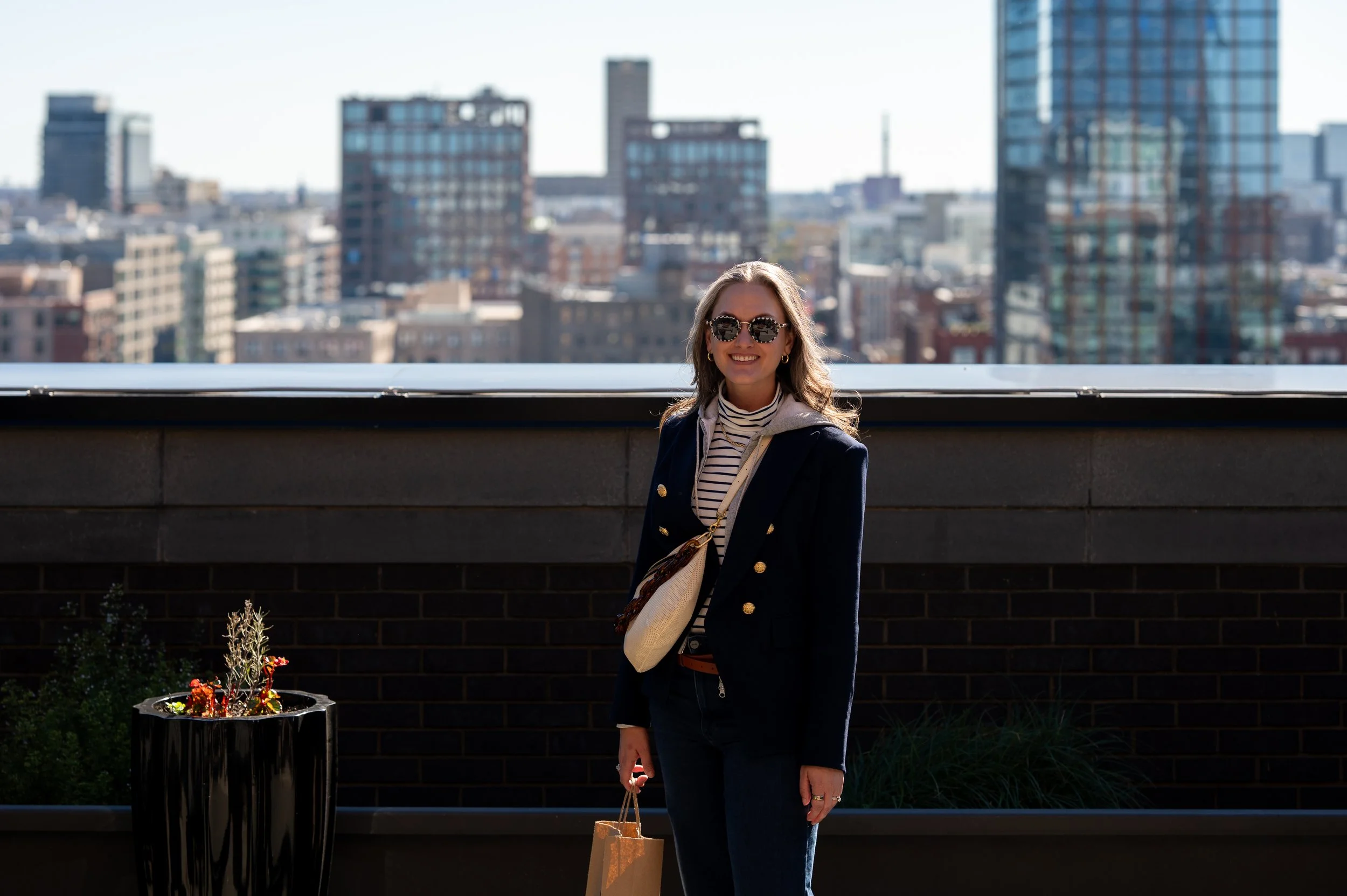
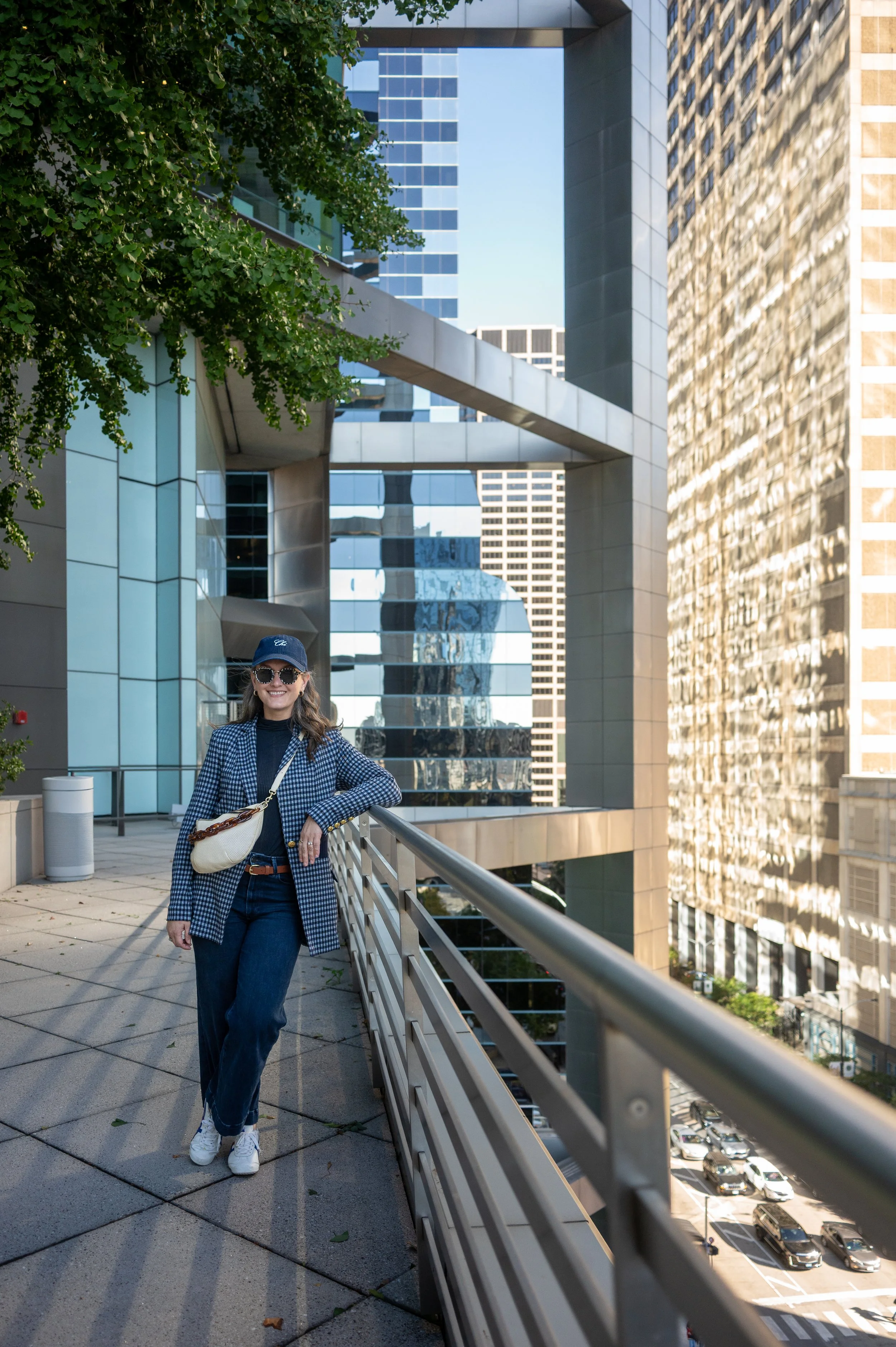
Our final Open House Chicago stop was 345 N. Morgan Street, conveniently located just around the corner from The Emily. The contemporary office building offered an opportunity to explore another example of Fulton Market's ongoing transformation.
Eric and I were intrigued by the building's unique view of an L train perched on a nearby rooftop. As a family with a four-year-old who is absolutely obsessed with trains, we have developed a particular appreciation for any view of a train, but this one left me with a lot of questions.
It was a fitting final stop, bringing us back to the neighborhood where our weekend began.
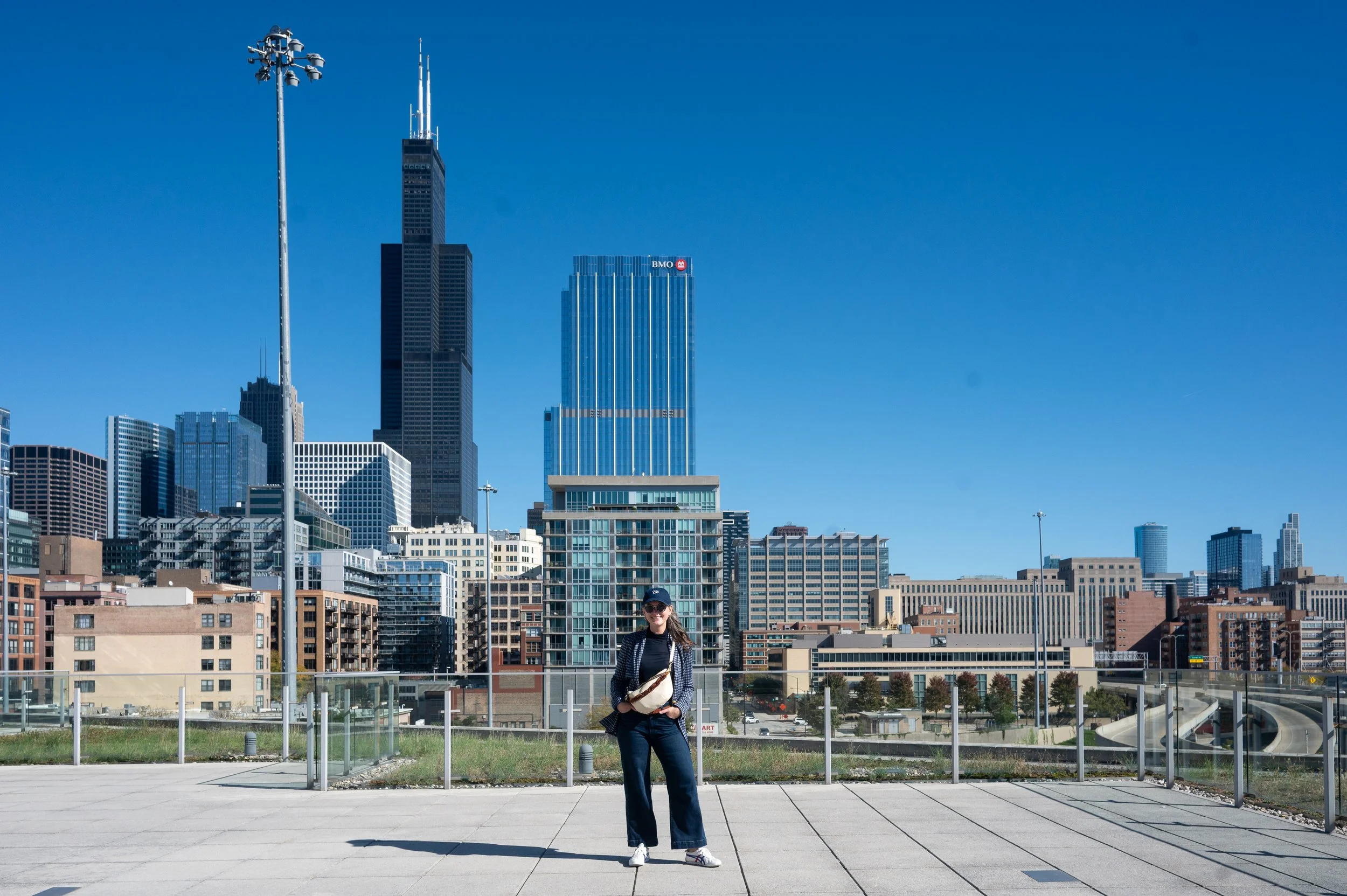
Open House Chicago 2026: Our Near West Side Staycation | On 345 N. Morgan’s Rooftop
One Last Lunch at Flora
With our Open House Chicago itinerary complete, we headed to Flora at The Emily for a celebratory lunch.
After two days of exploring, we were ready to sit down, order something simple, and reflect on the weekend.
We shared a smash burger, enjoyed a glass of wine, and talked about our favorite buildings and experiences.
We also started thinking about Open House Chicago 2027.
What neighborhood should we explore next? Which buildings would we prioritize? And perhaps most importantly, where should we stay?
I love that the weekend gave us an opportunity not only to explore Chicago but also to spend uninterrupted time together, discovering new places and planning future adventures.
After lunch, we collected our luggage from The Emily and headed home.
Open House Chicago 2026: Our Near West Side Staycation | On 345 N. Morgan’s Rooftop
Our Favorite Open House Chicago 2026 Experiences
After visiting so many different buildings and businesses, it was difficult to choose favorites. But a few experiences stood out.
Most memorable historic building: Uptown Theatre. There was nothing quite like finally stepping inside a building we'd admired from the outside for seven years. The experience was equal parts magnificent and heartbreaking.
Best historic architectural detail: Church of the Holy Family. The illuminated altar and its connection to the early history of electrification made a lasting impression on Eric.
Best design inspiration: Olson Kundig. I loved seeing the historic industrial architecture paired with contemporary materials and thoughtful design.
Most unexpected educational experience: Windy City Bird Lab. Learning about modern bird-tracking technology was something neither of us anticipated.
Favorite local business discovery: Field Notes. Between its Chicago roots, thoughtful design, and connection to my family's history, this was an especially meaningful stop.
Best spontaneous discovery: Salvage One. Three floors of architectural salvage and vintage treasures? I could have stayed all afternoon.
Favorite neighborhood restaurant discovery: Greek Islands. After years of driving past it, we finally went inside. We'll be back for the stuffed tomato.
And, of course, we won't soon forget the promise of "another corporate lounge."
Open House Chicago 2026: Our Near West Side Staycation | On 345 N. Morgan’s Rooftop
Tips for Planning Your Own Open House Chicago Weekend
If you're thinking about attending Open House Chicago in the future, here are a few things we learned from our experience.
Choose a neighborhood rather than trying to see everything. Chicago is enormous, and concentrating on one area allowed us to spend more time exploring and less time traveling between destinations.
Check each building's hours carefully. Some Open House Chicago sites are only available on Saturday or Sunday, while others have limited visiting windows. We planned our Saturday morning around Saint Ignatius because of its shorter hours.
Prioritize buildings you can't ordinarily visit. While contemporary office buildings can be interesting, the opportunity to explore historic interiors, private workspaces, and unusual institutions is what makes Open House Chicago particularly special.
Be prepared to wait for popular sites. Our 90-minute wait at Uptown Theatre was a reminder that especially rare access can attract enormous crowds.
Wear comfortable shoes and plan real meal breaks. We covered a lot of ground over the weekend. Sitting down for a proper lunch each day made the experience much more enjoyable.
Leave room for spontaneous discoveries. Salvage One wasn't on our itinerary, but it became one of my favorite stops.
Consider turning Open House Chicago into a staycation. Staying in the city made the weekend feel like a proper getaway, even though we were never very far from home.
Choose a hotel you genuinely want to spend time in. This was probably our biggest lesson. Next year, we'd rather stay at an exceptional Chicago hotel and travel a little farther to our chosen neighborhood than prioritize convenience alone.
Open House Chicago 2026: Our Near West Side Staycation | Outisde Saint Ignatius College Prep
Would We Do Another Open House Chicago Staycation?
Absolutely. This was our 3rd staycation and our 10th year participating in Open House Chicago! We were already discussing Open House Chicago 2027 over our final lunch at Flora.
What I loved most about the weekend was the opportunity to experience Chicago in a way that felt both familiar and completely new.
We've lived here for years, yet we still discovered restaurants we'd never visited, businesses we'd never heard of, and historic spaces we'd always wondered about.
There was something particularly satisfying about moving between Chicago's past and present over the course of a single weekend: from buildings that survived the Great Chicago Fire to contemporary design studios, from the grandeur of the Uptown Theatre to the practical ingenuity of an urban mushroom farm.
And I loved sharing the experience with Eric. We don't always notice the same things, which makes exploring together all the more interesting. I gravitate toward interiors, craftsmanship, and design history. He's often fascinated by technology, engineering, and the systems that make a building or organization work.
Between the two of us, we came away with plenty of stories.
Open House Chicago is a wonderful reminder that you don't have to leave home to experience the excitement of travel. Sometimes all it takes is a hotel reservation, a good pair of walking shoes, and a willingness to open a few unfamiliar doors.
We're already looking forward to next year.
Have you attended Open House Chicago? I'd love to know which buildings or neighborhoods you'd recommend we explore in 2027.