

Top 5 Interesting Facts About Murano Glass
Introduction
Anyone who has ever been to Venice, Italy, has surely seen many storefronts displaying stunning glass objects. These objects are known as Murano glass - handmade glassware produced on Murano Island in the Venetian lagoon according to ancient traditions. Once valued by the nobility and royalty throughout Europe and beyond, it is still luxurious and opulent. A vast range of items is created by the local glass artisans, including tableware, glittering chandeliers, mirrors, and sculptures, and it is popular with both collectors and the general public. Here are five interesting things that make Murano glass a must-have in your house.
Murano Glass Has a Long History
Glassmaking reached the Venice Lagoon as early as the 5th century when refugees fled there, escaping from barbarian invasions. Early Venetian glassware was simple, mainly made up of ampules, bottles, and mosaic tiles. However, the artisans were later influenced by the Byzantine Empire and soon, more advanced mosaics were created. In addition, they started to develop decorative techniques.
Everything changed in 1291 when all glass furnaces were moved from Venice to Murano on order of the Republic of Venice. There were two reasons for this. Firstly, most of the buildings in Venice were made of wood and were in danger of being burnt down due to the high heat from the glass furnaces. However, the main reason was that the Republic wanted to keep the glassmaking techniques secret. As an extra precaution, the glassmakers weren't allowed to leave Murano Island in case they would share the glassmaking secrets.
The 15th and 16th centuries heralded the Golden Age of Glassmaking in Murano. New techniques, such as Lattimo, an opaque milky-white glass, and Reticello, which produces a lace-like pattern, were created. Royal European courts and even the Vatican purchased luxury goblets, mirrors, chandeliers, and beads. Owning a piece of Murano glass became a status symbol.
However, there was a decline in the popularity and production of Murano glass between the 17th and 19th centuries due to a plague in 1630 and competition from other European countries. In 1797, the Venetian Republic collapsed under Napoleonic rule. Many furnaces closed down, and very little glass was produced.
The mid-19th century, however, brought a revival through the dedication of a few maestros such as Antonio Salviati, who tried to keep the art alive. Going into the 20th century, Murano welcomed design trends such as Art Nouveau and Art Deco. New techniques, such as Sommerso, which is layered colored glass, were developed.
Today, Murano glass artisans still produce top-quality handmade glass, blending tradition with contemporary ideas. In addition to being purchased retail by individuals, it is specially commissioned by luxury hotels, museums, cruise ships, upmarket restaurants, and interior designers for private residences. Contemporary glass artists from other countries come to the Island to study with the maestros, making sure Murano craftsmanship stays relevant in the global art glass movement.
All Murano Glass is Still Handmade
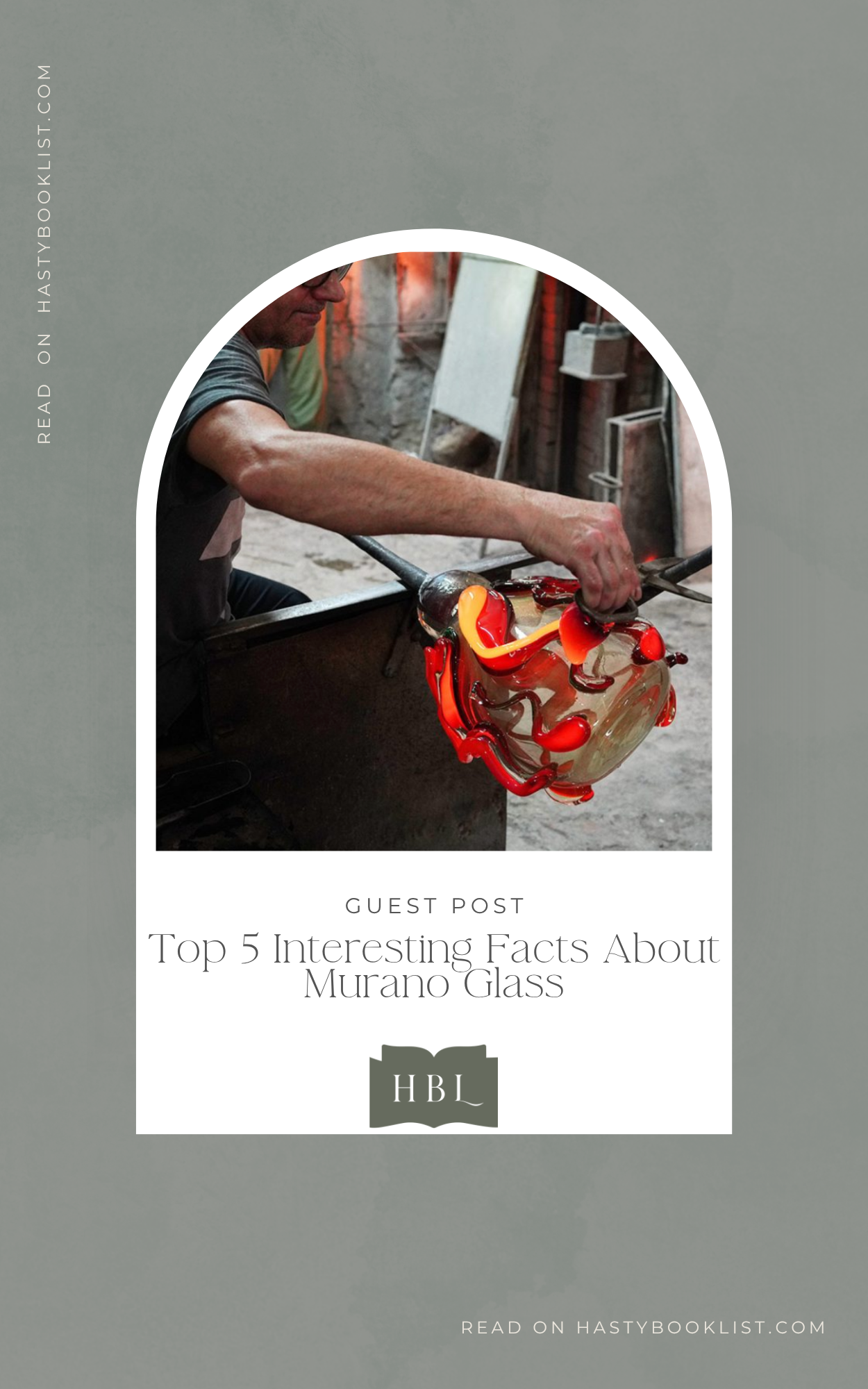
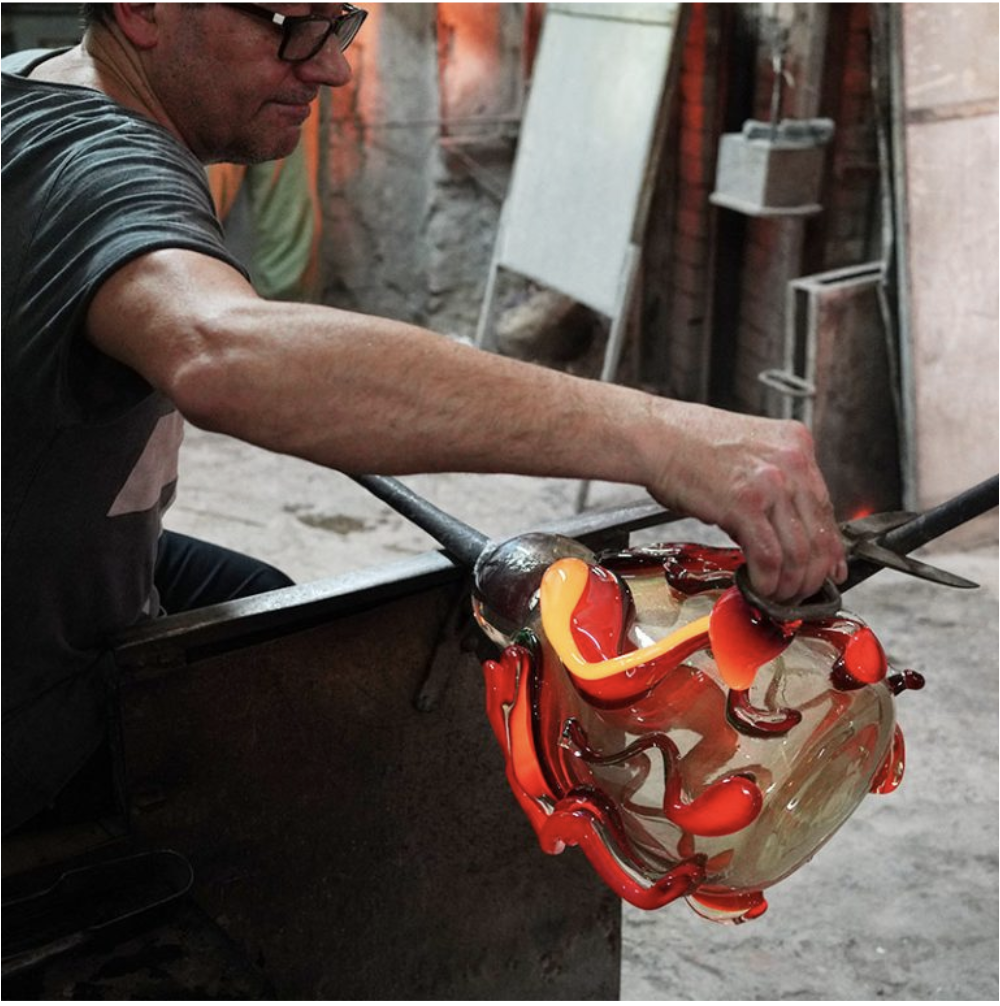
Murano glass is 100% handmade using traditional techniques, many of which are hundreds of years old and passed down from generation to generation. Even in this age of technological advancement, the only thing that changed is the use of natural gas instead of wood to heat the furnaces. Today’s maestros still only use basic tools and have to train for 15 - 20 years before heading up a team of glassmakers. The artisans shape molten glass using blowpipes and metal rods without the use of industrial molds or other machinery.
Because every piece is handmade, each one is different, even when you have two pieces of the same design. There will be very slight differences, maybe in color or in shape.
Murano techniques produce stunning results. Translucent glass is often lined with an extremely thin layer of gold or silver to create a shimmering effect within the glass.
Another well-known Murano technique is called Millefiori, which means “a thousand flowers” in Italian. It produces patterns, often featuring flower-like elements. To create this type of glass, multicolored glass rods, called murrine, are fused, stretched, and sliced crosswise into mosaics that are melted together to make floral or geometric patterns.
Sommerso, which means submerged, is a technique used to create layers of color that are immersed into each other without mixing. The colors are usually encased in a translucent layer, and the objects have a luminous and sculptural quality.
Filigrana and Reticello produce delicate lace-like patterns by embedding opaque white or colored glass rods inside transparent glass, while Incalmo joins together two separate pieces of hot glass to create a single multi-colored piece.
Avventurina is an exciting technique which involves adding metal oxides, such as copper or iron, to the hot glass mixture. This creates suspended metal particles inside the glass.
Murano glass can also be cold worked after the glass has been molded and annealed in a temperature-controlled oven. It can be engraved with stone wheels, which cut lines and patterns into the glass. With the technique, Battuto, a spinning diamond dust wheel carves numerous indentations into the glass. This makes the glass look like hand-hammered metal.
Murano Glass Artisans Were Once Treated Like Nobles
Ever since they were forcibly moved to Murano from Venice by the Venetian Doge’s decree, 1291, Murano glassmakers became a special category of citizens. They were treated similarly to the nobility of Venice. For example, they could marry the daughters of noble citizens. This was because the glass was highly prized and valued throughout Europe. Their creations were so treasured that they were often given as diplomatic gifts to royalty and the rich elites throughout Europe and beyond.
However, in return for the privileges, the maestros were stuck on the Island and not allowed to leave. If they escaped and were caught, they could be sentenced to death. There were also heavy penalties if they shared the secrets of the Murano glass trade with outsiders.
The glass maestros were among the most prominent people on Murano. Their privileges included being able to wear swords, which wasn't a privilege offered to many. They had their own guild that bestowed upon them additional privileges. They also received protection from some prosecutions, and they and their children were allowed to marry into the most powerful families in Venice. This was a highly unusual privilege, since in most other cases the Republic of Venice closely guarded the distinction between the working class and the nobility.
Glassmakers were released from the restrictions at the end of the 18th century. They were allowed to leave the island when the Venetian Republic was conquered by Napoleon, who abolished all the guilds, including the glassmakers' one.
The Composition and Techniques of Murano Glass Were Once a Secret
The elements used to make Murano glass and the intricate techniques used were strictly guarded by the Republic of Venice. The glass artisans were forbidden from sharing these secrets, with severe penalties if they did.
The trade was exclusive. Only authorized master glassmakers were allowed to make glass on the island. They were recorded in a registry known as the Golden Book.
There were many families that produced glass, and they handed down the secret techniques from generation to generation, each glassmaker having to train for many years in his father’s or relative’s workshop before he became a maestro. However, even though there were strict regulations, secrets sometimes leaked out.
By the 17th century, other countries were producing glassware, some using the techniques used in Murano. In Bohemia. England and France, cut crystal became popular and rivalled Murano glass. Murano was losing its monopoly. However, paradoxically, it did not disappear and managed to become very popular in the 19th and 20th centuries thanks mainly to the rise in tourism in Venice.
Today, the core composition and the techniques used in Murano aren't secrets anymore, but Murano’s artisans still have advantages over other glassmakers. The chemicals used in glass creation, such as silica, are sourced locally in Venice and are of superior quality. The glass canes from which Murano Glass is made are still only crafted on Murano Island. The maestros are highly trained, and not many outsiders can duplicate their work. It is not just the chemical formula that is important, it's the superb mastery of the Murano masters.
To combat forgery, many authentic pieces, though not all, bear the Vetro Artistico Murano trademark, which helps to combat counterfeits. Yet fakes are, unfortunately, common.
Venice Revolutionized Glassmaking in the 15th Century
A Venetian artisan Angelo Barovier, who was born in the 15th century, was a member of a famous Murano glass family going back centuries. It was his invention of Cristallo (or transparent) glass that revolutionized glassmaking and put Murano on the map as the primary glassmaking center. Cristallo is clear, colorless glass. Prior to his invention, all glass was thick, cloudy, and greenish due to the impurities in the sand. The furnaces were also too basic, with inconsistent temperatures. Barovier wanted to create glass that was as naturally clear as rock crystal. Rock crystal was sought after by the wealthy, and Barovier thought that if glass could mimic crystal, it would make luxury more accessible and would bring Murano great esteem.
Barovier researched and tested different formulas before he was able to eliminate the iron impurities that gave the greenish color to glass. To make Cristallo, Barovier discovered that there has to be extremely accurate control of temperature, the silica has to be refined, and sodium and potassium must be added for clarity.
Cristalline glass has many distinct qualities. It is completely transparent with the clarity of precious stones. It has exceptional plasticity, which allows it to be shaped more precisely and fused easily. In addition, it copes with changes in temperature well, so more elaborate objects can be created. The formula was such an innovation that the Murano authorities codified the formula, protected it by law, and stopped the glassmakers from leaving the island and giving away the secret formula.
Murano furnaces worked overtime creating chalices with thin stems, goblets with lids, bowls with delicate pedestals, and vessels combining Cristallo with Filigree. These pieces were purchased all over Europe, and other glassmakers tried to replicate Cristallo, but nobody was able to get it just right.
Murano Glass Bridges Tradition and Innovation
Murano glass is magical. This is not only because it is beautiful and vibrantly colored, but it is one of the few crafts that are still pretty much unchanged from centuries ago. Despite considerable advances in glassmaking techniques and artistic innovations, Murano Glass is rooted first and foremost in Venice’s long artistic heritage. It has been around for over a thousand years, and the maestros have handed down the techniques from generation to generation.
It is this craft that has brought Murano global fame, with many tourists, collectors, and art aficionados flocking to the island each year to admire it and purchase a piece for themselves. Whether it’s only a small jewelry item, a set of thin and beautiful drinking glasses, or a large art glass vase, you should consider owning a Murano Glass object to remind you of the rich history and beauty of Venice and the continuity of artistic traditions.