
Can a Letter Create a Better Conversation Than a Text?
With instant messaging and voice messages, it is no doubt that communication has never been easier. However, for many people, it is easier to converse now than ever before, but it seems more difficult to conduct meaningful conversations. It is common practice to send numerous messages daily without understanding a single thing about the individual on the other end of the line.
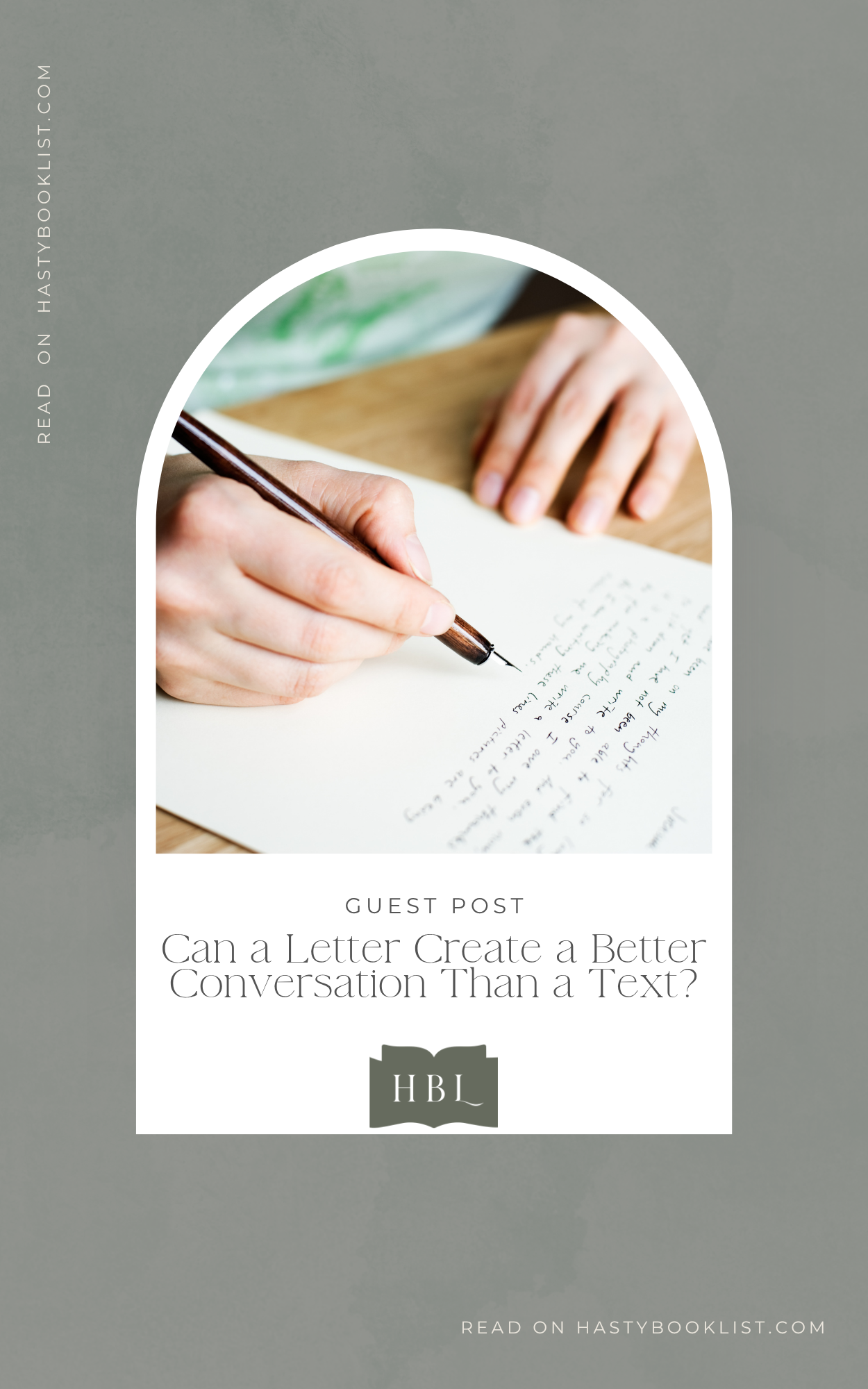
Those who like reading books and having long conversations will be able to find enjoyment in letter writing. While instant conversations can often be overlooked among numerous messages, letters require patience and contemplation. Letters can be written by hand or in the digital format, and people will have time to write down their thoughts and feelings.
Books Have Always Celebrated Meaningful Correspondence
There have been numerous examples in literature that point out how special letters can be. Many popular books have used written messages in order to portray emotions of characters, create relationships, and move the story forward. In doing so, letters give readers access to private thoughts that could not have been shared verbally by characters.
Aside from fictional letters, there are numerous great writers whose correspondences have been well-known and studied for years. They covered everything from creative challenges and philosophical musings to common moments of life and deep friendship. It is through these letters that people today gain a deeper understanding of the authors of the books that they read.
It is not accidental that there is a link between reading and letter writing.
Slowing Down Improves Communication
Present day communication is characterized by speed. A message should be responded to instantly and conversations switch topics quite rapidly.
Letter writing has a completely different pace. Unlike instant reaction, a letter writer takes time to organize his or her thoughts before saying something. Such additional time results in better formulated thoughts, more elaborated stories and more sincere conversation.
The slowness of letter writing is beneficial in many ways:
It promotes contemplation.
It relieves the necessity to reply immediately.
It allows telling interesting stories.
It gives people an opportunity to say complicated things.
It allows us to hold a conversation gradually.
Letter writing makes communication an enjoyable process rather than a race.
Why Readers Often Enjoy Writing Letters
Those who love books often find it easy to write letters since both activities entail similar characteristics.
Books help us understand the world better by putting ourselves in others' shoes. They develop our vocabulary skills and our communication skills and make us think twice before we form an opinion. All these characteristics spill over into writing as well.
Book lovers often like to ask thought-provoking questions, exchange ideas, suggest new books, and share their experiences more thoroughly than regular online chats permit. They don't send quick responses but engage in long chats that can last several weeks or even months.
Technology Can Support Thoughtful Communication
Technology is usually pointed out as the cause of quick communication, but this can be addressed by designing technology that encourages intentional communication.
There are some online communities that strive to simulate the process of letter writing rather than push constant notifications. For instance, the app called Slowly uses time of delivery that resembles time of delivery for traditional letters, thus urging users to treasure each letter rather than to exchange messages hastily.
It shifts the perception; people start valuing quality of the letter rather than counting number of exchanged messages.
For those who love reading and writing, this feels very much like correspondence with pen friends.
Friendship Beyond Borders
One of the major advantages of letter writing is the chance to get to know people from various cultures.
Long before the era of social media, pen pals helped introduce others to foreign countries by sharing their experiences rather than news items. They shared their traditions, recipes, trips, favorite books, customs, and everyday life.
This trend continues nowadays.
The technological advancements have made international correspondence much more convenient without losing its thoughtful character. Numerous people are enjoying making friends through writing or digital pen pal app, recreating the feeling of waiting for an answer instead of getting it immediately.
These friendships help one learn about cultures much better than any fleeting online encounters can.
Why Writing Helps People Open Up
For many people, it is simpler to convey personal ideas through writing rather than face-to-face discussions.
Writing gives an opportunity to think before replying. It allows one to speak about emotions that cannot be expressed without such reflection.
This method tends to produce greater truthfulness. People realize more what they feel while translating their thoughts into words.
The phenomenon was known by psychologists for a long time. The issue is elaborated on in the article why we open up more easily through writing. In this way, more purposeful communication can help in forming emotional connections.
It does not mean that writing replaces oral communication. Instead, it is another option.
The Skills Letter Writing Develops
Apart from fostering friendships, writing letters enhances communication skills that can be helpful in numerous facets of life.
Some skills developed through regular communication include:
Self-assurance while writing.
Good listening skills.
Critical thinking skills.
Emotional quotient.
Knowledge about other cultures.
Patience and empathy.
Through better communication skills, one builds strong relationships not only with their pen pals but also with colleagues, family members, and friends.
Meaningful Questions Create Meaningful Conversations
One of the reasons why letters are memorable is that they help ask better questions.
Instead of posing questions such as, “How are you?” writers can ask questions like the following:
What book has inspired you the most?
Which place is the most homely for you?
What tradition in your culture is dearest to you?
What inspires your creativity?
What was the biggest life lesson that you have ever learnt?
Such questions prompt storytelling rather than just answering them.
Why Letter Writing Still Matters
While communication technology keeps developing, the need for a meaningful connection never changes.
People still seek meaningful dialogues, friendships inspired by curiosity, and the chance to see into the lives that differ from theirs.
This is what letter writing offers. It gives people time to think about their thoughts, inspires them to listen carefully to others, and allows them to keep the memories of their encounters forever.
Letters may be written in digital format or on paper, but they always help people realize that a meaningful dialogue takes time.
Conclusion
Sometimes the fastest exchange does not have to be the most memorable one. While instant messaging has its advantages, there is still another form of communication with something that needs to be said about it: the time necessary to reflect and choose one’s words.
Those who like to read, think, and maintain sincere friendship would appreciate the art of letter-writing very much. Letter-writing inspires the interest rather than rush, makes one listen instead of react and facilitates sharing of the stories that would never surface in casual exchanges.
In the world where our communication is becoming increasingly ephemeral, maybe, letter-writing will turn out to be one of the easiest ways to maintain memorable conversations. Be it an attempt to revive your old friendship or to make new friends in the far corner of the globe, the art of letter-writing will prove the ability to build memorable relationships one carefully written letter at a time.