
Handcrafted and Timeless: Why Readers Who Love Historical Fiction Fall in Love with Traditional Music Too
Quick Overview: People who read stories about the past and those who listen to old songs often care about real crafting, feel for strong details, and keeping culture alive. Both kinds of art help save memories by letting people feel like they go back in time. They do this with stories made by people, not just high-tech effects.
Historical fiction has always been loved by people who want to step out of now and feel what life was like many years ago. When you read this kind of book, you get all the small details—the sound of silk, the smell of smoke from burning wood, the noise from horses’ wheels on stone, and the calm strength you can find in normal life from long ago. A lot of readers who love these stories find that they do not stop when they finish a book. Many do not even know it, but they feel pulled toward old-style music, folk, and early kinds of acoustic music. This link is not just by chance. These forms come together because both are slow, thoughtful, carry memories from the past, and are made by people using their own hands.
The Resonance of Acoustic Authenticity and Physical Craftsmanship
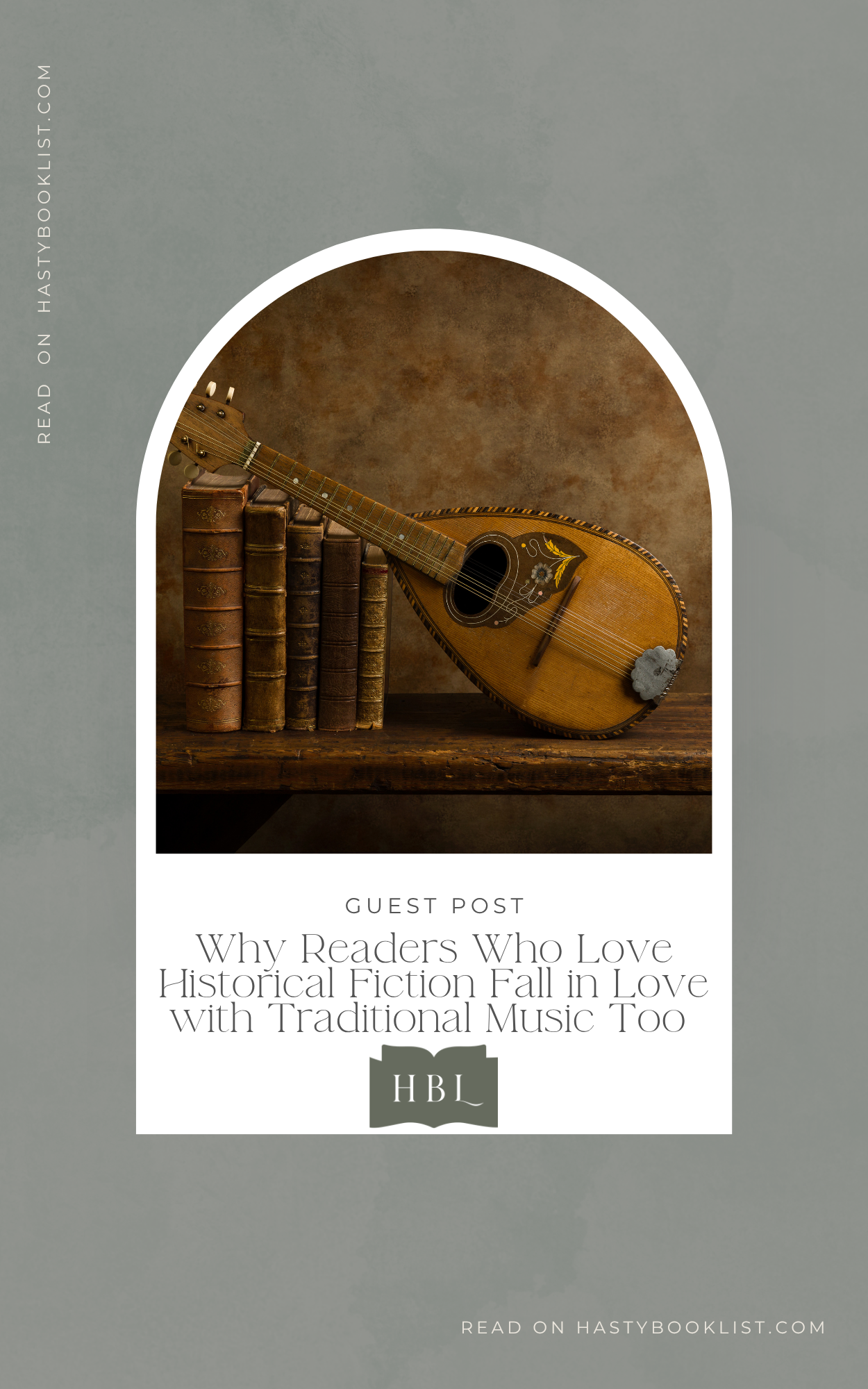
As a historical fiction lover, the magic of a story is when it's believable. A reader will know whether the writer has tried very hard to make the characters in the story sound like they did in the past or not, but it will be natural, not forced. It can also be seen when things in the home match what would have been used back then. This same feel is achieved by old-style music with sound. People are drawn to folk music, sea shanties or Baroque music by the use of real old instruments, not new digital synths.
Consider the warm and soft sound of an eighteenth-century air on a hand-carved wooden flute. The feel and sound of wood is a piece of history held by the flute. You can hear changes in each note, the soft noise from the fingerholes, and how the note slowly fades away. These remind us that a person is making the music. In the same way, a writer builds a story from old records. Makers of these instruments and musicians build the music from real things and use tunings passed down for years. There is a deep warmth in this music that people feel, especially if they care about old sounds and details.
Immersive World-Building for the Senses
World-building in writing depends a lot on what people feel with their senses. A writer might tell you about the wet and cold air in a Scottish highland morning. They might also show the busy feel of a Victorian market square. Old-style music gives a fast way for people to feel like they are in those places.
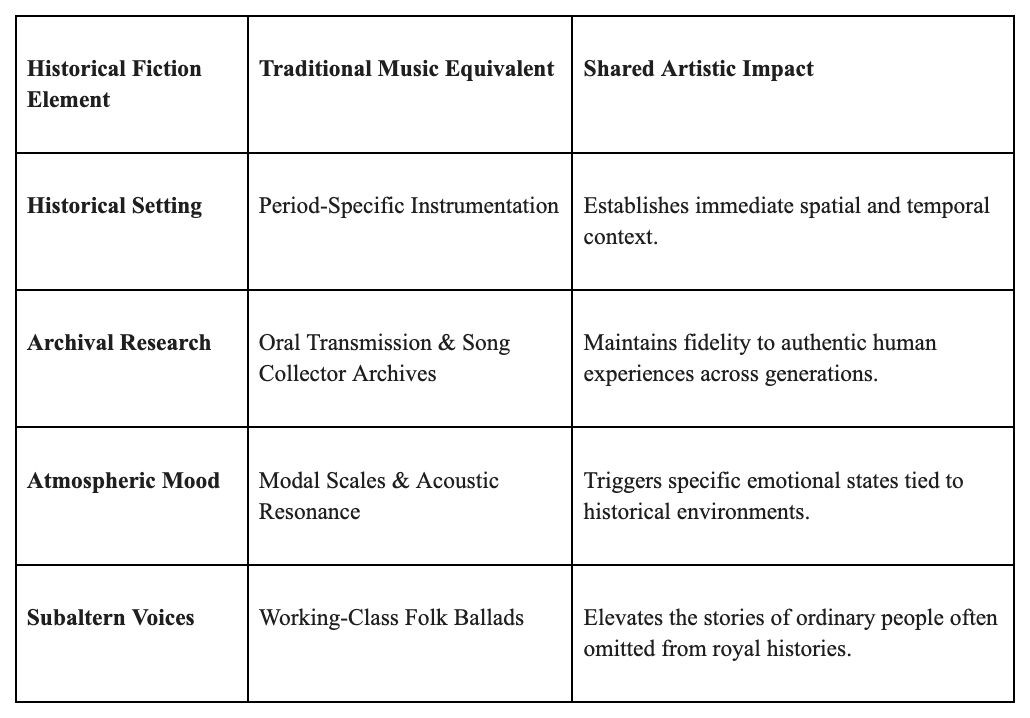
When you use these two things at the same time—like reading a story that is set during the Napoleonic Wars while listening to field sounds or old fiddle tunes—you feel you are really in that world. The sounds work as a background setting that makes you feel closer to the story and its people.
Preserving Cultural Heritage and Unspoken Histories
Both historical fiction and old music help keep the past alive. They tell us about the lives of regular people. School books often talk about kings, big events, and wars. But they do not show what life was like for farmers, weavers, sailors, or people who worked in homes.
Authors of historical fiction help us feel close to the past. They do this by showing big times in history, but with people and their everyday problems. In the same way, there is the story of traditional music. It was made and kept alive by working folks. Work songs, lullabies, dance tunes, and protest ballads tell how people feel pain, feel happy, work, and feel love when the world around them changes a lot. For anyone who likes to find these people’s stories, listening to traditional music is like picking up an old diary. But this diary has music in it.
How to Pair Traditional Music with Your Reading List
Go for lute solos, virginal music, or early English madrigals in Tudor & Renaissance Sagas. It will give you the feeling that you are in old homes or at the courts of the past.
Try out the old-time fiddle, mountain ballads, and attempt clawhammer banjo. These sounds allow for accounts of people's journeys and lives to new places.
Age of Sail Stories: Choose sea shanties and concertina tunes. Music depicts the life and work on a ship.
Listen to uilleann pipes, Celtic harp & fiddle reels, Celtic & Highland Stories. The songs are appropriate to the wild lands and their inhabitants.
A Shared Journey Back in Time
Ultimately, there is a close connection between historical stories and old music. This connection is demonstrated through the presentation of real people and through works of art that remain with us. Everybody's emotions -- happiness, missing someone, hope, sadness-- don't change after a number of years, as the music, as well as stories, demonstrate. When you read a long story about old Europe, you're participating in something that has been done by people for a long time, or when you listen to the soft sound of an Irish wooden flute in a dark, quiet room you're taking part in something people do for a long time. This is a means of people sharing stories on where they are from. If you are more of a nostalgic person, these handmade art pieces are not just to enjoy but also a way to take a stroll down memory lane.