

Top Websites to Learn Korean Easily for Beginners
Most people underestimate how quickly Korean pronunciation can derail a beginner's confidence. Platforms like italki exist precisely because apps alone don't fix that problem. The real challenge isn't access to content, it's finding a tutor who matches your actual goals, whether that's K-drama, conversational Korean, or formal business language. Scheduling across time zones adds another layer of friction, and review scores don't always tell the full story about teaching quality. After reviewing dozens of platforms and reading through thousands of learner experiences, this guide breaks down the best websites to learn Korean as a beginner.
The research approach for this ranking
Sites were assessed using publicly available sources: learner reviews, official platform pages, app store ratings, and feature documentation pulled from directories and third-party review sites. Only platforms with a demonstrated track record in language learning made the final cut. Quality, accessibility, and real learner outcomes shaped every decision here.
-> See the full research breakdown
italki - Best for conversational Korean and live one-on-one lessons with native speakers
Memrise - Best for vocabulary-focused language learning with native speaker video content
LibriVox - Best for free multilingual audiobooks and listening practice
LingQ - Best for learning Korean through authentic, real-world content
Ba Ba Dum - Best for gamified vocabulary building across multiple languages
Why Language Learning Platform Matters for Your Learning Journey
Picking the wrong platform early in a Korean learning journey costs more than just money. It costs momentum.
Beginners who land with a tutor who doesn't match their goals, whether that's everyday conversation, TOPIK exam prep, or workplace Korean, tend to disengage fast. High review scores can mask real inconsistencies in teaching style, pacing, and feedback quality.
That's where choosing the right platform makes all the difference. A well-matched tutor supports stronger tutor retention, meaning learners rebook consistently rather than cycling through new faces each week. More consistent sessions directly push up the number of lessons completed per month.
And when the cost per lesson hour is predictable and transparent, learners actually stick around long enough to make real progress.
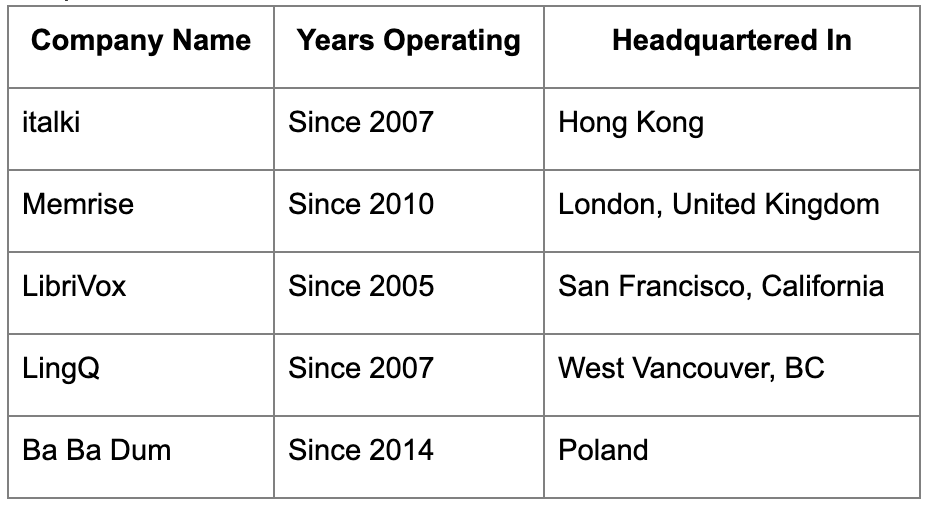
Top 5 Language Learning Websites Breakdown and Comparison
Note: All data in this table is sourced from review platforms and the official websites of the listed companies.
italki - Best for Conversational Korean and Live One-on-One Lessons
What Does italki Do?
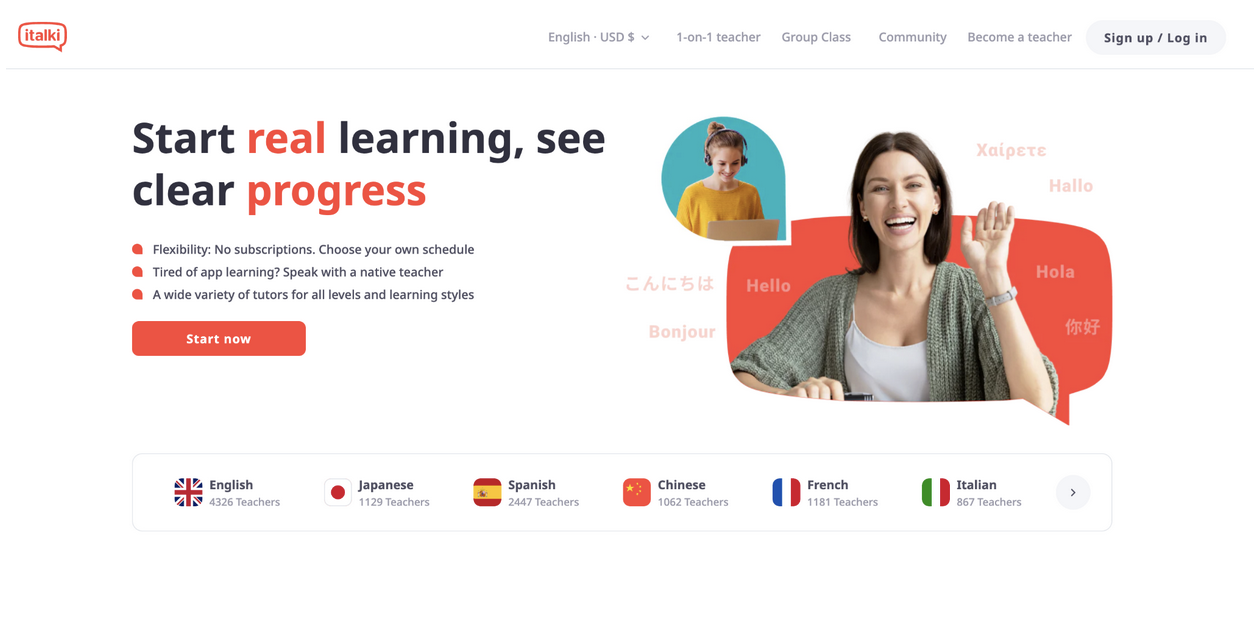
italki connects learners directly with native-speaking Korean tutors for live video lessons, built around one-on-one human interaction rather than gamified drills. Founded in 2007 and headquartered in Hong Kong, the platform covers more than 130 languages and operates on a flexible pay-per-lesson model. For Korean learners, they can filter tutors by teaching style, availability, price, and learning goal. That kind of control is rare at this scale. The platform skips the passive-learning model entirely and focuses on speaking and listening practice with real people, which is exactly where most beginners need the most help.
Why italki Stands Out for Language Learning:
Most Korean beginners plateau quickly because they never get enough real speaking time. italki solves that directly by putting learners in front of native speakers from lesson one. What the data shows is that learners who book consistently through platforms built on live human instruction move through CEFR proficiency levels noticeably faster than those relying solely on app-based study.
Summary of Real User Reviews:
Honestly, the reviews reflect two consistent themes: flexibility and tutor variety. Learners appreciate being able to switch between certified professional teachers and more casual community tutors, depending on their budget and goals that week. The main friction point mentioned is quality variation across tutors, which makes sense because each instructor sets their own approach. The trial lesson feature, from what the reviews show, helps most learners find a good fit before committing to a full series of sessions.
Memrise - Best for Vocabulary-Focused Language Learning with Native Speaker Video Content
What Does Memrise Do?
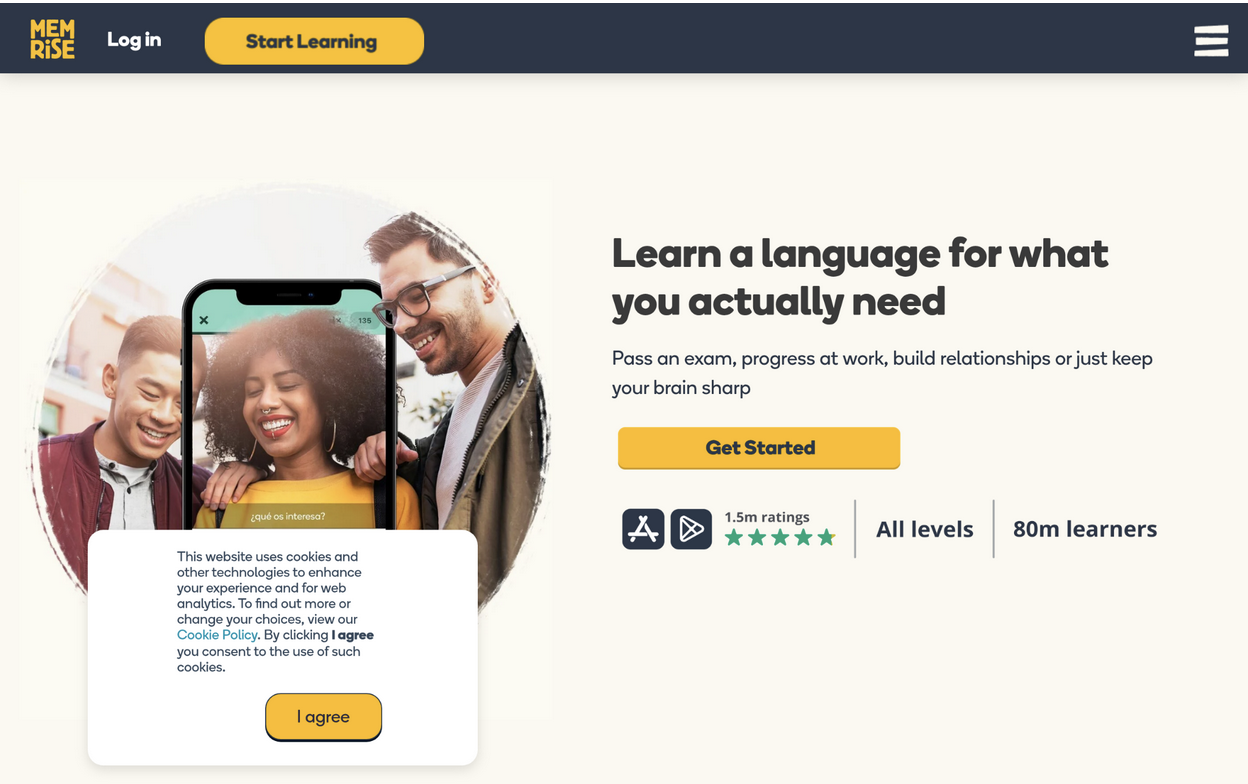
Memrise is a London-based language learning platform founded in 2010, serving over 50 million users across 200 language combinations in 24 languages. The platform builds vocabulary through spaced repetition, memory techniques, and short, authentic video and audio clips recorded by native speakers in real-world situations. Pronunciation feedback gives learners a way to self-correct without needing a live tutor present. For Korean beginners, that combination of hearing real speech and being tested on retention is genuinely useful for building a working vocabulary base before moving into conversation practice.
Why Memrise Stands Out for Language Learning:
Memrise tackles one of the most frustrating parts of early language learning: vocabulary that disappears overnight because it was never properly retained. The spaced repetition system and authentic native speaker clips work together in a way that builds recall, not just recognition. That's where most flashcard-based tools fall short.
Summary of Real User Reviews:
The platform has earned multiple app store awards, including Google Play's Best App in 2017, and that recognition lines up with what learners consistently say. Users point to the native speaker video clips as a standout feature, particularly for hearing natural Korean speech rather than robotic text-to-speech audio. The occasional criticism is that the free tier feels limited compared to the paid plan, but for beginners building a vocabulary foundation, the main features hold up well.
LibriVox - Best for Free Multilingual Audiobooks and Listening Practice
What Does LibriVox Do?
LibriVox is a volunteer-powered platform founded in 2005 in San Francisco that records and publishes public domain texts as free audiobooks across 48 languages. With over 20,000 finished audiobook projects contributed by more than 13,000 volunteers worldwide, it runs entirely on donations and carries no ads or commercial interests. For language learners, the value is in the sheer volume of authentic audio available at zero cost. The catch is that volunteer recordings vary in quality, since the platform accepts any understandable recording regardless of production standards. That actually creates a range of accents and speech styles, which isn't necessarily a bad thing.
Why LibriVox Stands Out for Language Learning:
LibriVox solves the access problem for learners who need consistent listening exposure without a budget for premium content. The diversity of accents and speakers across its library gives learners something most polished platforms don't: authentic, imperfect human speech that actually reflects real-world listening conditions.
Summary of Real User Reviews:
Recognition from outlets like the BBC, MSNBC's Today Show, and Wired reflects the platform's cultural credibility. Learner sentiment tends to appreciate the completely free model and the breadth of content. The most common note is uneven audio quality, which is expected given the volunteer model, but most users treat that as a trade-off they're happy to make for free, unlimited access to audio in dozens of languages.
LingQ - Best for Learning Korean Through Authentic Real-World Content
What Does LingQ Do?
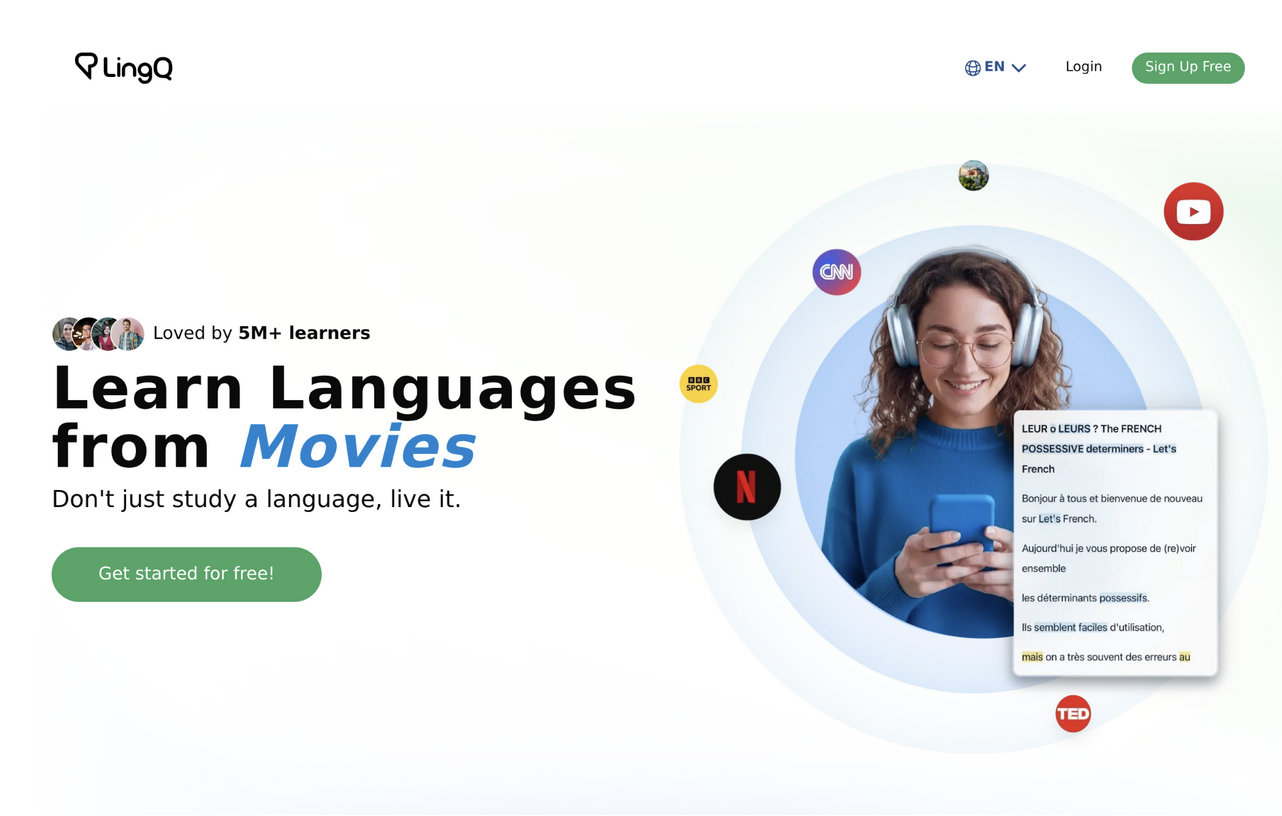
LingQ is a West Vancouver-based language learning platform founded in 2007 that teaches through authentic content, including podcasts, books, TV shows, and videos across more than 50 languages. Co-founder Steve Kaufmann built the platform around learner-directed study, meaning users choose content that interests them rather than following a fixed curriculum. The ability to import custom content, generate podcast transcripts, and track vocabulary in context makes it particularly well-suited for intermediate and advanced learners. For Korean, it bridges the gap between structured study and real-world exposure in a way that most classroom-style apps don't even attempt.
Why LingQ Stands Out for Language Learning:
LingQ was ranked the most effective language app by independent researchers at Compare Language Apps, and that result reflects what its method actually does: replace artificial drills with the kind of contextual reading and listening that builds genuine comprehension. For learners who've hit the ceiling of grammar-focused study, that shift makes a real difference.
Summary of Real User Reviews:
From what the reviews show, LingQ earns strong praise from self-directed learners who want depth over convenience. Co-founder Steve Kaufmann's YouTube channel (over 760,000 subscribers) adds a layer of credibility that connects with the language learning community. The most common complaint is the interface, which some users find unintuitive at first. That said, learners who stick with it consistently report strong results, especially for reading and listening fluency.
Ba Ba Dum - Best for Gamified Vocabulary Building
What Does Ba Ba Dum Do?
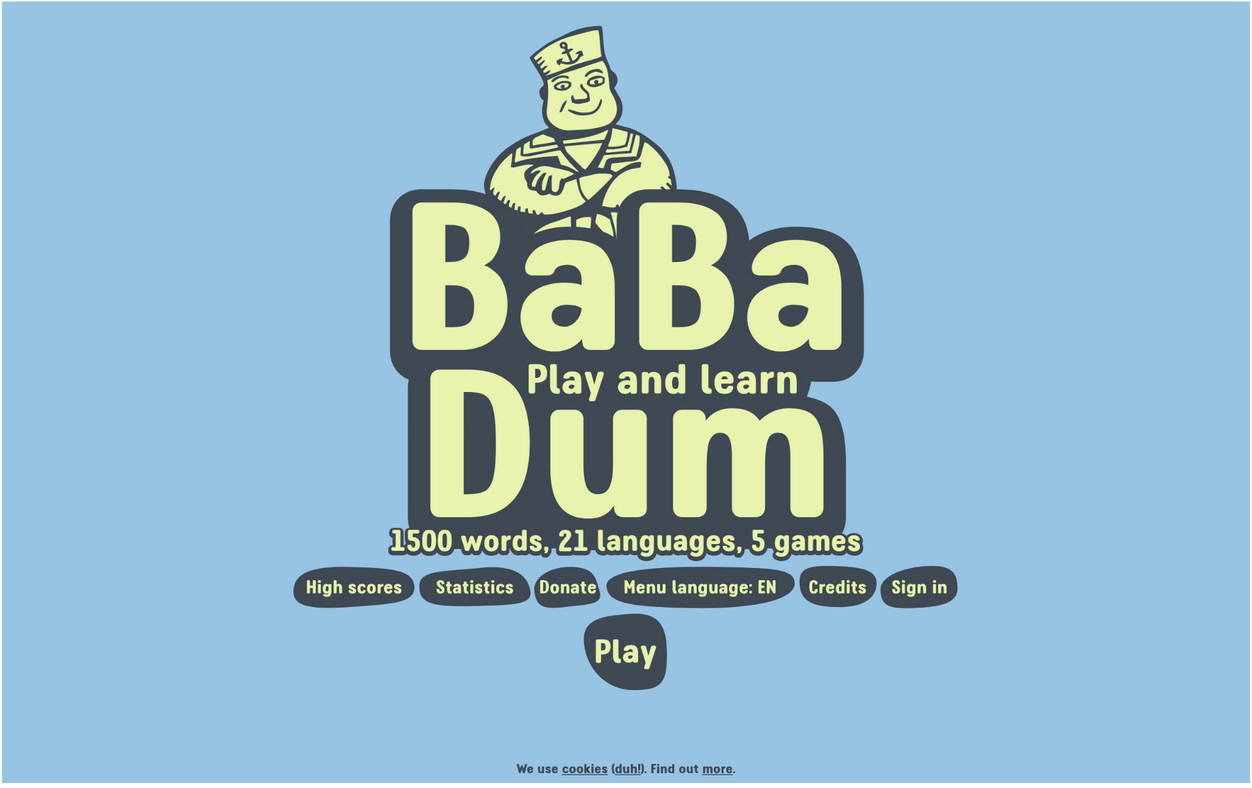
Ba Ba Dum is a free, ad-free vocabulary learning platform founded in 2014 in Poland by Aleksandra and Daniel Mizieliński, award-winning graphic designers and educational book authors. The platform teaches 1,500 words across more than 20 languages using five distinct game types: matching images to spoken words, filling in blanks, multiple-choice questions, unscrambling words, and matching images to written words. The design is genuinely beautiful, which matters more than it sounds because it keeps learners coming back. For complete beginners building a foundational vocabulary in Korean or any other supported language, the clean gameplay loop makes repetition feel less like work.
Why Ba Ba Dum Stands Out for Language Learning:
Ba Ba Dum tackles the retention problem from a design angle, using varied game mechanics to create different retrieval pathways for the same vocabulary. That kind of multi-format repetition is hard to match at this price point (completely free, no ads).
Summary of Real User Reviews:
The platform has won Awwwards, FWA (both Site of the Day and Mobile of the Day), and an official Webby Awards nomination, which reflects a product built with real skill and care. User sentiment tracks closely with those accolades: learners frequently mention how enjoyable the experience feels compared to typical flashcard tools. The most noted limitation is vocabulary depth, since 1,500 words is a solid starting point, but not enough to carry an intermediate learner on its own.
Research Methodology and Selection Process
Initial Data Collection
The starting point was building a broad list of platforms actively used by Korean language learners at the beginner level. Sources included app store listings, language learning forums, review aggregators, and official platform documentation. The goal at this stage was breadth, not precision, so the initial pool deliberately included both well-known platforms and smaller, community-driven tools to avoid obvious gaps.
Shortlisting Phase
From that initial pool, platforms were narrowed down by removing any that lacked verifiable learner reviews, had no clear track record in language learning, or showed signs of inflated or unrepresentative review scores. Patterns across multiple independent review sources were weighted more heavily than single-source ratings. Platforms relying purely on theoretical methods without visible learner outcomes were filtered out at this stage.
Verification of Claims
Each platform's stated features were cross-checked against real user descriptions found in independent reviews and community discussions. When a platform claimed to offer native speaker content, pronunciation feedback, or structured curriculum features, those claims were checked against what actual users reported experiencing. Gaps between marketing language and real learner experience were factored directly into the final assessment.
Authority and Industry Contribution Layer
Platforms that had earned recognition from credible third parties, including industry awards, major media coverage, and independent research rankings, were given additional weight. The reasoning is straightforward: external validation from sources outside a platform's own marketing reflects genuine standing in the language learning space. LibriVox's coverage by BBC and Wired, Memrise's Google Play awards, and LingQ's ranking from Compare Language Apps all contributed to their inclusion here.
italki-Specific Evidence
For italki, the evaluation focused on the Korean tutor section of the platform, reviewing the tutor filtering system, lesson structure, pricing transparency, and learner feedback patterns related to Korean instruction. The platform's pay-per-lesson model, tutor credentialing approach, and trial-to-recurring lesson conversion behavior were assessed using publicly available review data and platform documentation. The evidence consistently pointed to italki as the strongest option for learners who want live conversational practice.
How to Choose the Right Language Learning Website
Choosing the right Korean learning platform comes down to knowing what kind of learner you are and what kind of progress actually matters to you. A platform that's great for vocabulary building won't necessarily help you hold a real conversation, and vice versa.
Industry and Domain Experience: Look for platforms with a proven track record in Korean, not just language learning broadly. Experience with the Korean unique script, pronunciation, and grammar structures matters for beginners.
Features and Service Offerings: Match the platform's main features to your actual learning style. Live tutoring, spaced repetition, authentic audio content, and gamified vocabulary drills serve very different needs.
Pricing Structure: Understand what you're paying per lesson hour and whether the model is flexible. Pay-per-lesson platforms like italki allow for more control than monthly subscriptions that lock you into a pace.
Results Measurement: Choose platforms that give you visible indicators of progress, whether that's CEFR level tracking, vocabulary counts, or lesson completion markers.
Industry Knowledge and Compliance: For learners targeting specific goals like TOPIK exam prep or business Korean, verify that available tutors actually have relevant credentials and experience in those areas.
Bottom Line
Learning Korean as a beginner gets a lot easier when you're working with the right platform for your specific goals. Live conversation practice, vocabulary retention, and authentic listening exposure all matter, but they don't all come from the same tool. italki leads this list because human interaction produces real fluency gains faster than any app can replicate on its own. The other platforms here fill real gaps depending on your budget and learning style. When you're ready to start, browse Korean tutors on italki.