

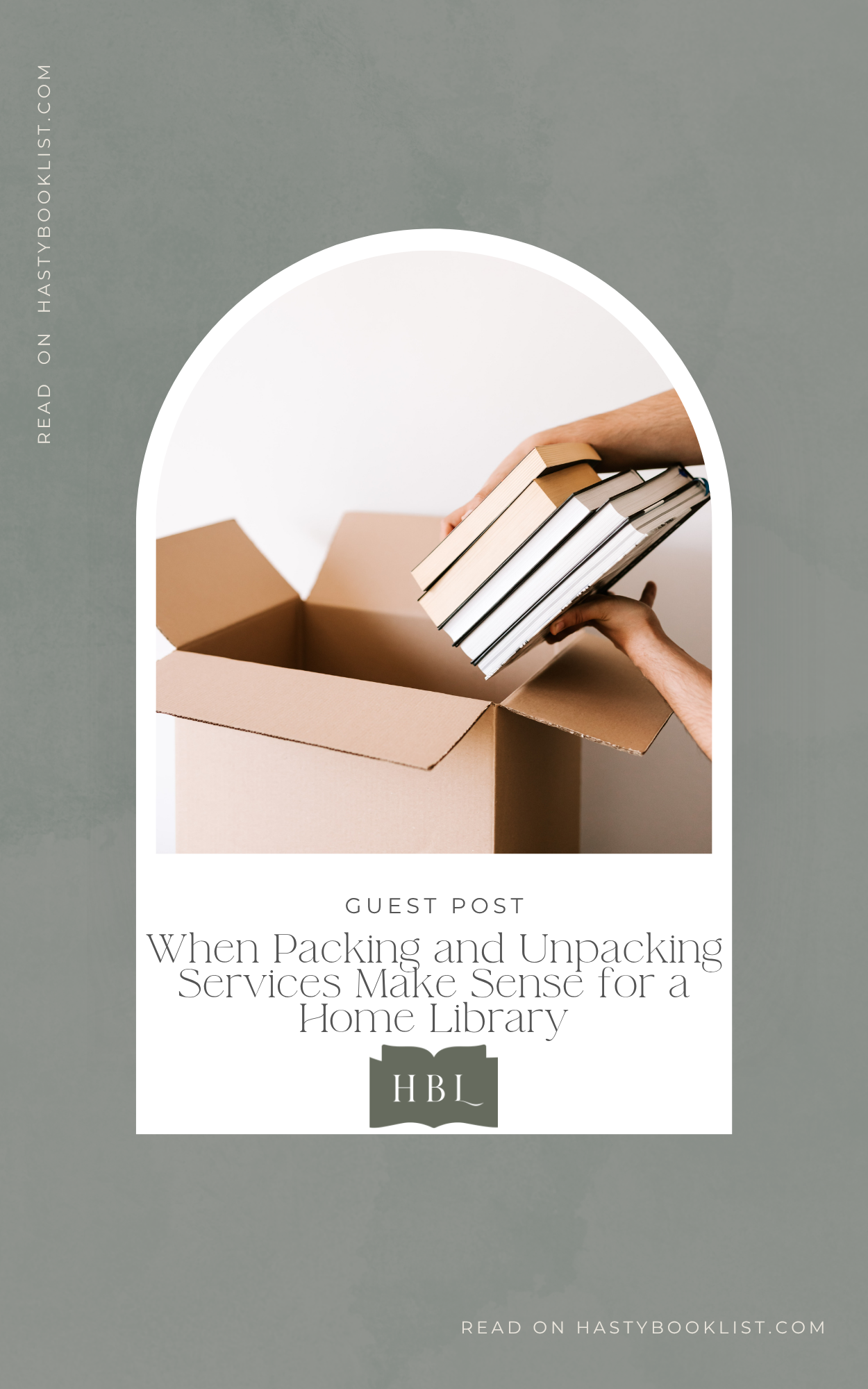
When Packing and Unpacking Services Make Sense for a Home Library
Every reader who has moved knows the moment. The kitchen is done, the closets are done, and then you turn around and there’s the bookshelf, still full, waiting. For a lot of book lovers, the library is the heaviest and most personal part of a move, which is why packing and unpacking services come up in so many moving conversations once the boxes start piling up.
Some collections are easy to box on a Saturday afternoon. Others, with signed copies, oversized art books and a kid’s entire picture book shelf, deserve a plan.
Why books are the toughest boxes in the house
Books are deceptively heavy. A small box of hardcovers can easily outweigh a much larger box of towels, and a full bookcase can turn into a surprising stack of boxes before you notice.
Then there’s the mix. Most home libraries aren’t uniform. You might have a shelf of mass-market mysteries you’d happily part with, a few signed first editions you’d never forgive anyone for denting, cookbooks with splattered pages, and board books held together by tape and love.
Anyone who’s hauled boxes up a narrow flight of stairs knows that weight isn’t an abstract problem. Overpacked boxes split. Spines crack. Corners get crushed when a heavy box ends up stacked on a light one.
What preservation experts and federal moving rules say
Librarians have thought about this more than most of us. The Library of Congress shares guidance on packing books for storage or shipping that is refreshingly practical: use boxes that aren’t too large, lay books flat with the heavier volumes on the bottom or stand them upright with spines down, center the weight, pad any empty space and don’t overpack.
For interstate moves, the federal handbook on your rights and responsibilities when you move adds a wrinkle. It describes packing and unpacking as accessorial services, meaning work beyond the transportation itself. It also lists improper packing in boxes you pack yourself among the things that can limit a mover’s liability when something gets damaged.
That second point is why some readers split the job. They box the everyday paperbacks on their own and leave the signed copies, art books and heavy reference sets to crews that offer packing and unpacking services, since those are the boxes they’d least like to argue about later. Other people pack every last title themselves and take their time. Either way can work, as long as the packing is careful.
If you’re packing the shelves yourself
Start a week or two earlier than you think you need to. Books tend to take longer, partly because you’ll stop to flip through half of them.
A few habits make the job easier:
Cull before you pack. Your book club, a neighborhood Little Free Library or a used bookstore can give outgrown titles a second life, and every book you rehome is one less you carry.
Choose small boxes. They keep the weight manageable and are less likely to give out at the bottom.
Pack by shelf, not by size. Label each box with the room and shelf it came from so the unpacking has a starting point.
Pad the gaps. Crumpled plain packing paper keeps books from sliding around in transit.
Keep a current-reads bag. The novel on your nightstand, the kids’ bedtime favorites and the library books due next week shouldn’t vanish into box number 37.
A handful of books probably shouldn’t ride in the truck at all. The inscribed copy from your grandmother, the out-of-print title you hunted down for years, the journal you’ve been filling since college: wrap those in plain paper, keep them in one clearly marked box and let it travel with you in the car.
Speaking of library books, return them before moving day if you can. It’s one less thing to dig for later.
If there’s a gap between moving out and moving in, think about where the boxes will wait. The Library of Congress advises against storing valuable books in basements, attics or garages because of the environmental conditions and risk of leaks or flooding. A more stable indoor space may be a better temporary option.
Unpacking is where the library comes back to life
Packing gets the attention, but unpacking is where moves tend to stall. It isn’t unusual for book boxes to sit in a corner for weeks or even months, because shelving a whole library is slow, satisfying work that never feels urgent.
Unpacking help, whether that’s a crew or a patient friend with a free weekend, can handle the heavy part: emptying boxes, clearing out paper and breaking down cardboard. That leaves you with the fun decision. Alphabetical by author, grouped by genre, or sorted by color if you’re feeling brave?
If you have kids, unpack their books early. A familiar shelf of bedtime stories can make a new bedroom feel like theirs a little sooner. It also saves you from reading the one picture book you could find every night for a week.
Give yourself permission to shelve in rounds, too. Get the favorites and the current reads up in the first few days, then work through the rest a box or two at a time.
Questions to ask before you book help
If you decide to bring in movers for some or all of the packing, a few questions up front can save headaches later:
Is packing priced separately, and will it appear in the written estimate?
Can the crew pack only certain rooms or items, like the bookshelves?
What boxes and materials do they use for books?
Does unpacking mean emptying boxes onto shelves, or only setting boxes in the right rooms?
How are boxes you packed yourself handled if something arrives damaged?
Will they take apart and reassemble the bookcases, or is that on you?
Get the answers in writing. It’s not about suspicion, just about knowing what you agreed to. And if two quotes look wildly different, the gap may come down to what each one includes, so compare the line items before you compare the totals.
Back on the shelves
A move is one of the few times you’ll hold every book you own, one after another. Some people find that tedious. Others find it oddly sentimental, remembering the bookstore, the trip or the friend behind each one.
However the books get from one home to the next, the aim is simple. They arrive in good shape, and they land on shelves where you’ll reach for them again.